Bud Billiken Parade
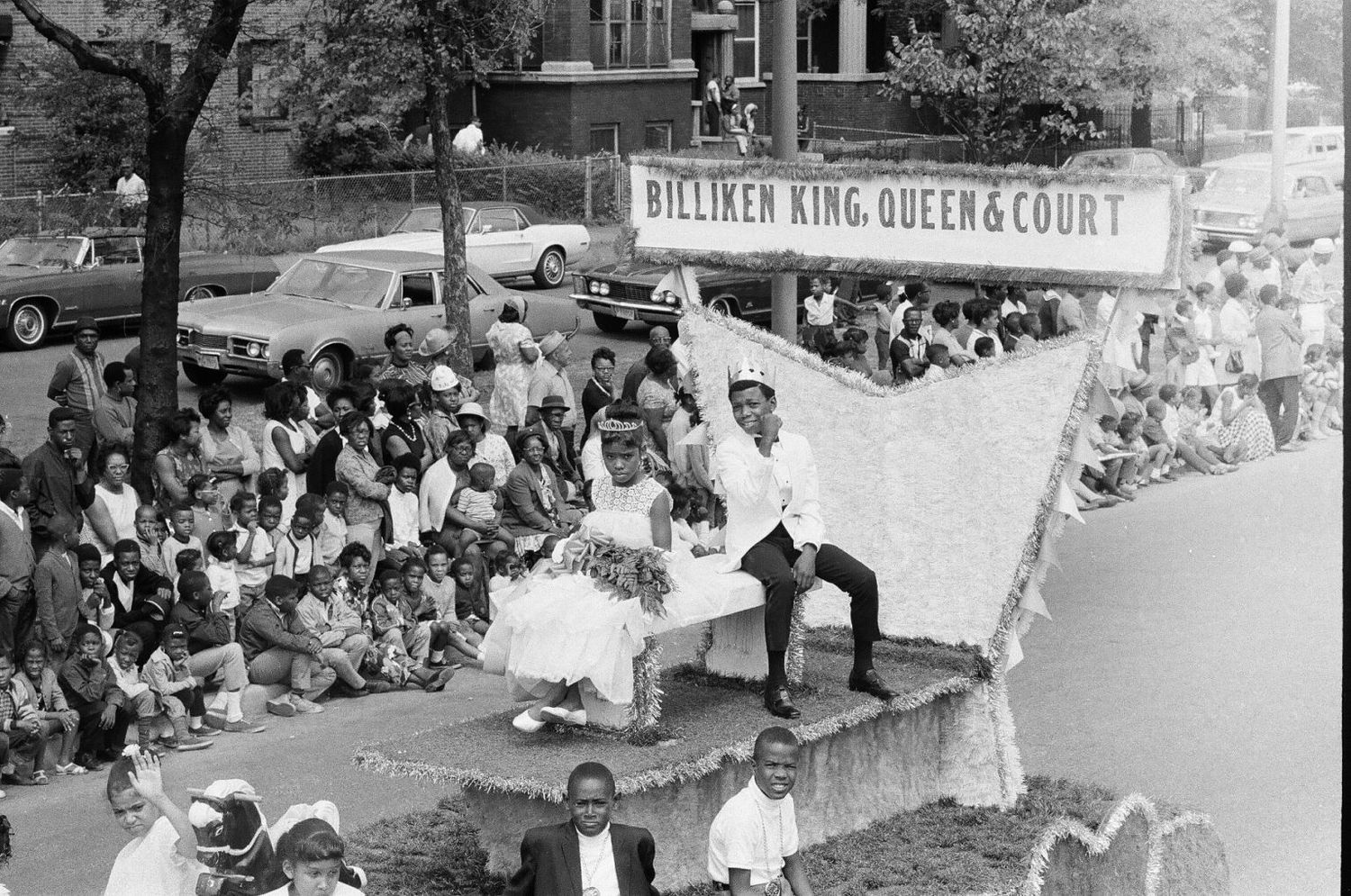
A black and white photograph of a float for the Bud Billiken Day Parade king, queen, and court, where a boy sits with a happy expression, and a girl sits with a solemn expression, surrounded by five other children while spectators watch from the sidewalk. Taken August 10, 1968. Photo Source: Chicago Sun-Times collection, CHM; Bob Black, photographer
There’s a celebration on the South Side of Chicago every second Saturday of August. The Bud Billiken Parade, an annual tradition since 1929, is the largest African American parade in the country and viewed and attended by over one million people each year. This celebration started with a modest gesture to honor newspaper carriers and became a cultural institution.
The parade was started by Robert Sengstacke Abbott, who founded the African American newspaper, the Chicago Defender. Born in Georgia in 1868 to parents who had once been enslaved, Abbott moved to Chicago after completing his education at Hampton Institute. Readers: remember this issue? Abbott was one of the individuals who benefited from an HBCU education. He studied law at the Kent College of Law in Chicago, but struggled to get a job as a Black lawyer. So, he channeled his ambitions into journalism and launched the Chicago Defender in 1905.
Within two decades, the newspaper became the most influential Black publication in America, with over 200,000 readers in Chicago and beyond. The Defender played a critical role in the Great Migration by connecting Southern Black communities with opportunities in the North. It was also an outspoken advocate for racial equity; a front-page heading on every issue said, “American Race Prejudice Must Be Destroyed.”
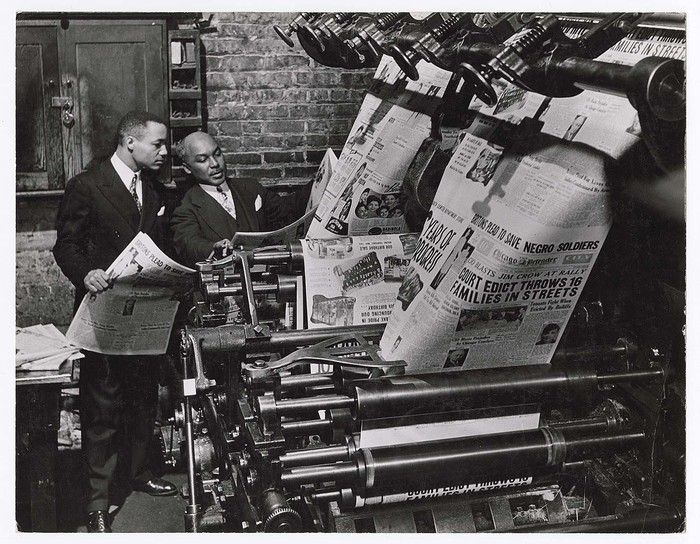
A black and white photograph of Abbott (right) showing a Chicago Defender issue to Charles P. Browning (left), the advertising director of the Chicago Defender, to the left next to printing presses. Photo Source: Gordon Coster, LIFE Magazine Collection, 2005.
In 1923, while dining at a Chinese restaurant, a Billiken figurine caught Abbott’s eye. These small, mischievous-looking statues were thought to represent good luck. Inspired by this symbol, Abbott launched Chicago Defender Jr., a page in the paper that was “written” by fictional, 10-year-old editor named “Bud Billiken.” A column offered guidance, encouragement, and entertainment for young readers, and would publish reader-submitted works. He also created the “Bud Billiken Club,” where kids could apply to be members and would receive a little badge. The column would publish the names of members each week. By the early 1930s, there were thousands of names listed, creating an archive of young lives so profound that it was preserved in the Chicago Public Library.
“As I was reading the Chicago Defender a lovely paper of our Race, I came across some beautiful poems written by some of the members of your club. It filled my heart with joy to read such sweet poems. I am a little girl 9 years old, and I wish to join your club. If there is any space for me. I go to school and am in the fifth grade. My mother gets the Defender every week. Here is a poem I am sending:
Down in the sunny South, where I was born,
Where beautiful flowers are adoring,
The daisies white and the purple lily.
This is where the land is hilly."
–A letter and poem submitted to the Chicago Defender by Ruth McBride of Oak Hill, Alabama, via the Penn-Capital Star
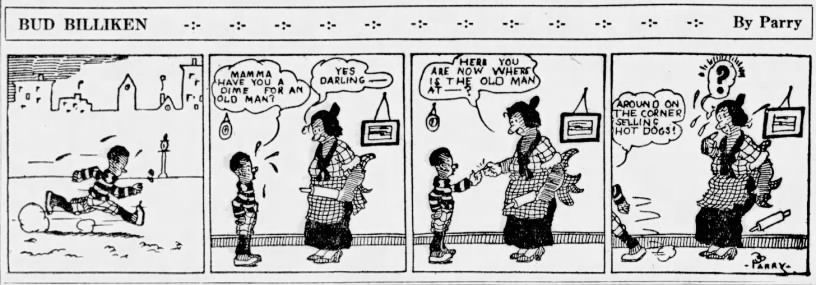
A black and white comic strip for the youth readers of the Chicago Defender, which depicts a kid cheekily getting money from his mother. Published on January 30, 1926. Photo Source: Wikimedia Commons
David Kellum, who helped start the Bud Billiken Club, had the idea of organizing a parade. He was a longtime parade coordinator, and wanted to create something that could celebrate the paper’s newsboys who, without fail, distributed hundreds of thousands of newspapers every day. He also thought it would be a special day for the children who read the newspaper to connect in real life. From its first day on August 11, 1929, until now, the parade has run annually except in 2020, when it was canceled due to the global pandemic.
It travels along what is now Martin Luther King Drive through the historic Bronzeville neighborhood, the cultural heart of Chicago during the Great Migration era, home to thriving businesses, jazz clubs, and institutions that shaped African American urban life.
As the parade continued, it gained fervent supporters, including Marjorie Stewart Joyner. She was a philanthropist and entrepreneur who joined the parade’s organizing team and provided funding to help it scale. We’re learning about her in a future issue in this series. Stay tuned! She became president of the parade after Abbott passed away in 1940. And in the decades that followed, she stewarded Abbott’s vision while growing the parade with care.
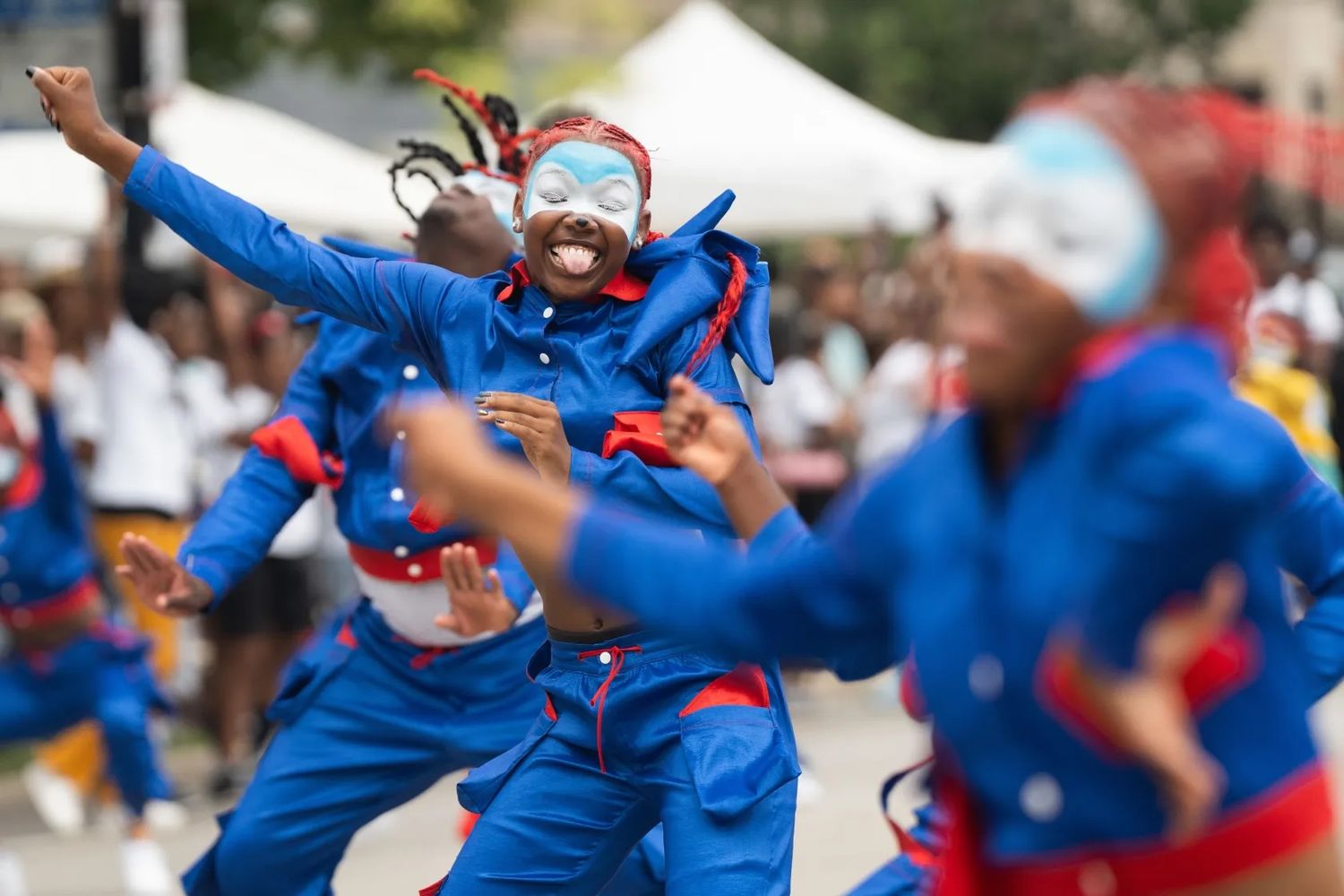
Members of the Empiire Dance Company perform during the annual Bud Billiken Parade along Martin Luther King Drive in Bronzeville in 2023. Photo Source: Pat Nabong/Sun-Times
Now, the parade includes drill teams, drum and bugle corps, and dance troupes. It’s often graced by appearances from major political figures, entertainers, and athletes. The day also includes a festival in Washington Park where families gather for barbecues, live music, and celebrations that often extend into the evening. The blend of the two creates space for both organized performance and spontaneous joy.
For nearly a century, families have made attendance an annual ritual, passing down traditions across generations. Grandparents who marched in the parade as children now bring their own grandchildren to watch floats pass by. The Bud Billiken Parade has endured alongside Chicago as a forever celebration of its Black youth.
Reflection Questions
What does it say about a community creates a tradition specifically to celebrate its children? How might this have shaped young people's sense of self-worth in Chicago over the decades?The parade began as a way to recognize newspaper carriers doing hard work. What does this tell us about whose contributions get celebrated, and how might that shape what a community values?Why is it significant that families pass down the tradition of attending this parade across generations? What gets preserved when these kinds of rituals continue?
Learn More
Watch the entire 2025 Bud Billiken Parade on YouTube, or read this recap in the local paper.Explore photos of the Bud Billiken Parade throughout history.Learn the history of the Chicago Defender.Explore the archives of the Chicago Defender.
Never miss a story
Get stories of overlooked and untold Black history in your inbox, free every week.