Juneteenth
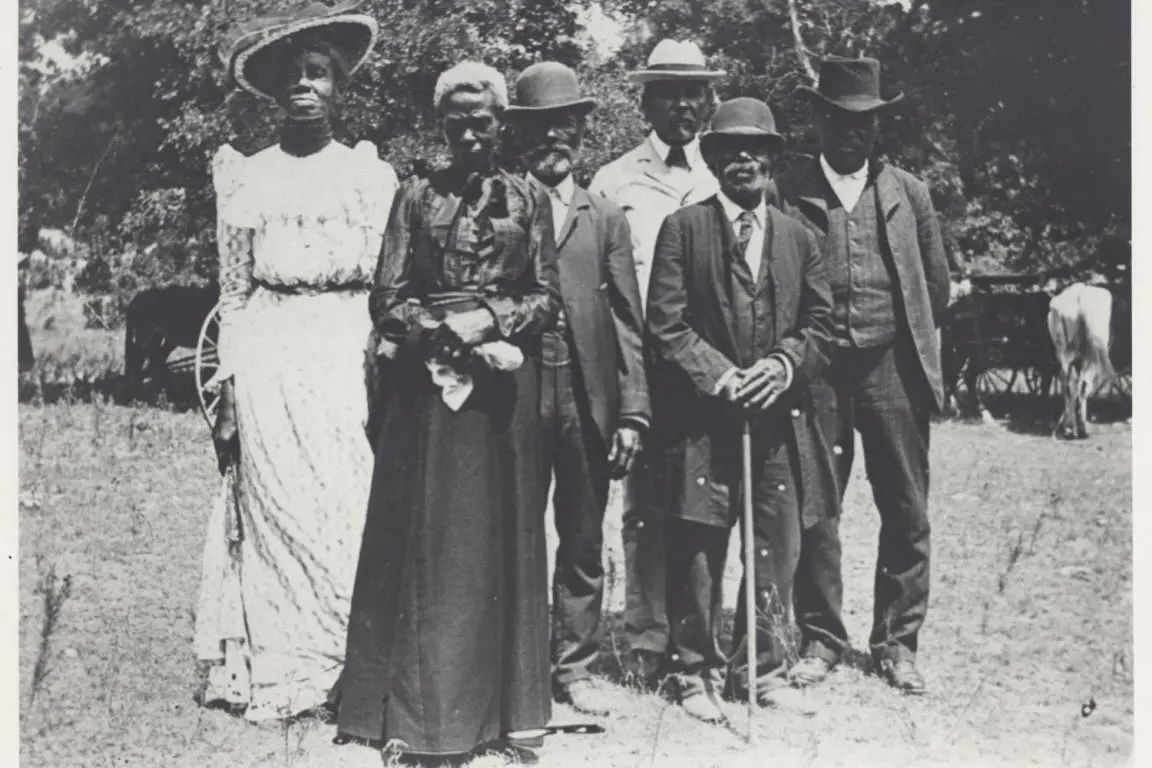
A black and white photograph of an unnamed group of six Black people celebrating Juneteenth on June 19, 1900 held in East Austin. Each are looking at the camera with solemn expressions on their faces and wearing sharp formal attire. Photo Source: Austin History Center.
June 19, 2026 marks the 161st anniversary of Juneteenth, also known as Freedom Day or Emancipation Day. It commemorates the day in 1865 when Union soldiers arrived in Galveston, Texas, and brought news that slavery had been outlawed more than two years earlier.
History books taught us that the Emancipation Proclamation abolished slavery when Abraham Lincoln signed it in 1862. But the Emancipation Proclamation was more of a military strategy. By proclaiming that all enslaved people in the states that made up the Confederacy were free (History), President Lincoln made it clear where the North stood against the Confederacy's goals. He aimed to dissuade countries opposed to slavery from aligning with the Southern states and encourage Black Americans to serve in the Union Army.
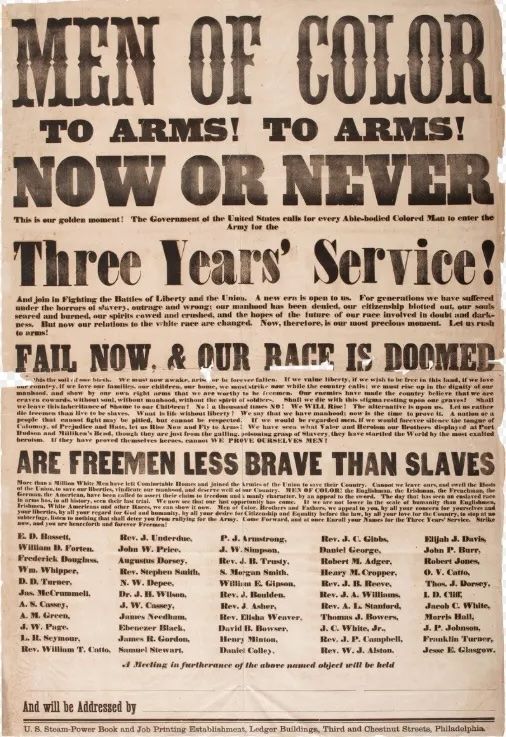
An image of a Civil War broadside calling on all "Men of Color" to join the Union Army. More than 200,000 African Americans enlisted. About half were recruited from Confederate states. Image Source: Smithsonian National Museum of African American History and Culture
States seceding from the Union, like Texas, were unconcerned with the President's political motivations. In fact, Texas still had state laws that made freeing enslaved people illegal. It wasn't until the North sent troops to Texas, boots on the ground, to enforce this proclamation. With this news, the enslaved and freed African American communities rejoiced, cementing an annual tradition into local culture that spread across the state. On June 7, 1979, the Texas Legislature passed a bill declaring Juneteenth a state holiday.
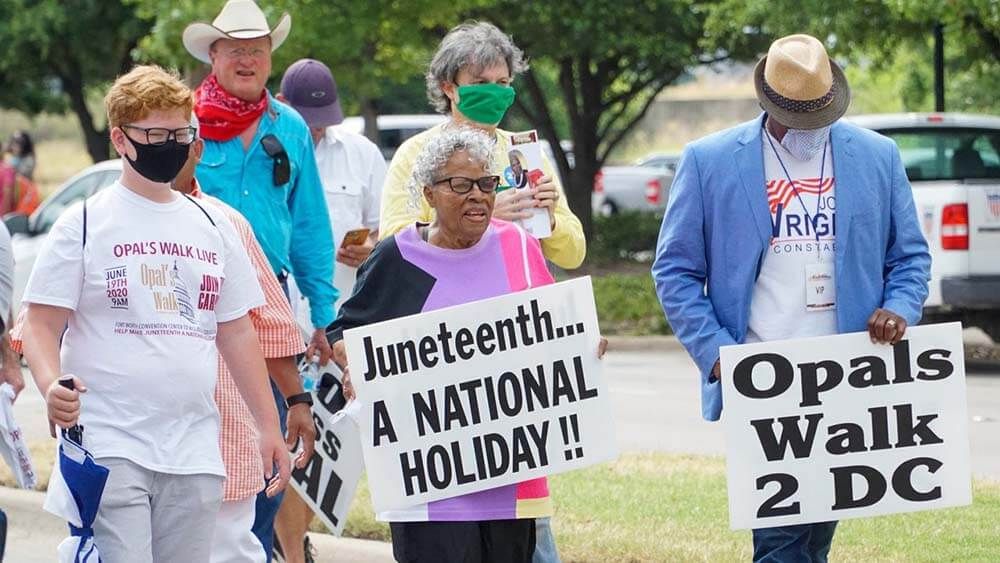
A photo of Opal Lee (center) leading a two-and-a-half mile walk in Fort Worth in 2020 to promote Juneteenth becoming a national holiday. Photo by Austin James for PCMA.
From there, the fight to make Juneteenth a federal holiday took decades of grassroots organizing, spearheaded by Miss Opal Lee, a 98-year-old activist from Fort Worth, Texas. Starting in her 80s, Lee organized annual 2.5-mile walks, representing the 2.5 years it took for news of the Emancipation Proclamation to reach Texas. At 89, she conducted a symbolic walk from Fort Worth to Washington, D.C., departing in September 2016 and arriving in January 2017. She repeated the trek in summer 2019, and led a pandemic-friendly caravan in 2020. Her persistence paid off. In 2019, she started a Change.org petition which grew to over 1.6 million signatures, one of the largest in the company's history.
During the nationwide racial reckoning of summer 2020 sparked by the police killings of George Floyd, Breonna Taylor, Rayshard Brooks and other Black Americans, Juneteenth gained more prominence. On June 17, 2021, President Biden signed legislation making Juneteenth a federal holiday (NYTimes), the first addition since Martin Luther King Day, which was established in 1986. Biden awarded Lee the Presidential Medal of Freedom, the nation's highest civilian honor, for her work.
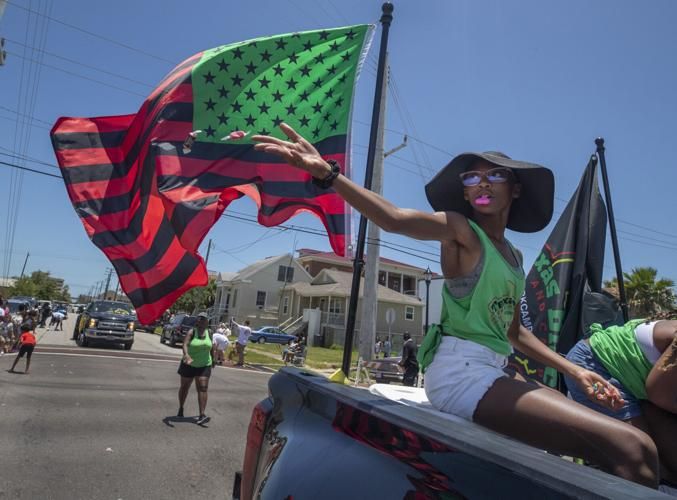
Bria Butler, 11, tosses candy from the back of a pickup truck during the annual Juneteenth celebrations in Galveston, TX in 2022. Photo taken by Stuart Villanueva for Galveston News.
Americans are marking the 161st anniversary of emancipation with festive meals, music, gatherings and "freedom walks." Traditionally, celebrations have included parades and marches. People also celebrate the holiday by organizing for civil rights, reading books about African American heritage and history, attending festivals and musical performances, and dining at Black-owned restaurants.
It's important to note that Juneteenth didn't officially end slavery for everyone. On paper, that didn't happen until the 13th Amendment went into effect in December 1865, which stated that "neither slavery nor involuntary servitude, except as a punishment for crime whereof the party shall have been duly convicted, shall exist within the United States, or any place subject to their jurisdiction" (National Archives). But that exception clause—"except as a punishment for crime"—created a loophole that persists today. Millions of incarcerated people perform labor for pennies per hour, continuing a system that disproportionately impacts Black Americans. The same amendment that abolished slavery preserved a pathway for its continuation under a different name.
Beyond that, free did not mean equal. Enslaved people were no longer enslaved, but they didn't gain the right to vote, own land, bear arms, attend integrated schools, or marry outside their race. Freedom without rights left newly emancipated people vulnerable to violence, exploitation, and economic subordination. Black codes and later Jim Crow laws restricted where Black people could live and work, what jobs they could hold, and how they could move through public space.
Without genuine protection and equal opportunity, celebrating Juneteenth risks becoming performative—a gesture rather than a commitment. Commemorating June 19th requires acknowledging that the work of emancipation remains unfinished. It means examining how systems of forced labor persist in prisons, detention centers, and exploitative workplaces. It means recognizing that economic freedom requires not just the absence of slavery but access to fair wages, safe working conditions, and opportunities for advancement. The holiday asks us to carry forward the intention of liberation in our daily choices and the policies we support.
Reflection Questions
Miss Opal Lee walked 1,400 miles in her 80s and 90s to make Juneteenth a federal holiday. What action could you take in your own community to inspire others to take action?The 13th Amendment's exception clause allowed forced labor to continue in prisons. How does understanding this history change the way you think about the criminal legal system today?Freedom without rights left newly emancipated people vulnerable to exploitation and violence. What does genuine freedom require beyond legal protections? How can you help create those conditions?
Learn More
Listen to Laura Smalley, who was enslaved as a child on this day, talk about what it felt like to hear the announcement here.Watch this short explanatory video on Juneteenth by Heather Cox Richardson.Explore these recipes for a Juneteenth celebration curated by Nicole Taylor, the author of the cookbook “Watermelon and Red Birds.”Juneteenth is not without its criticsRead about how this small town decided to remove Juneteenth as a city holiday.Read writer Annette Gordon-Reed’s reflection on growing up celebrating Juneteenth.
Never miss a story
Get stories of overlooked and untold Black history in your inbox, free every week.