A. Philip Randolph
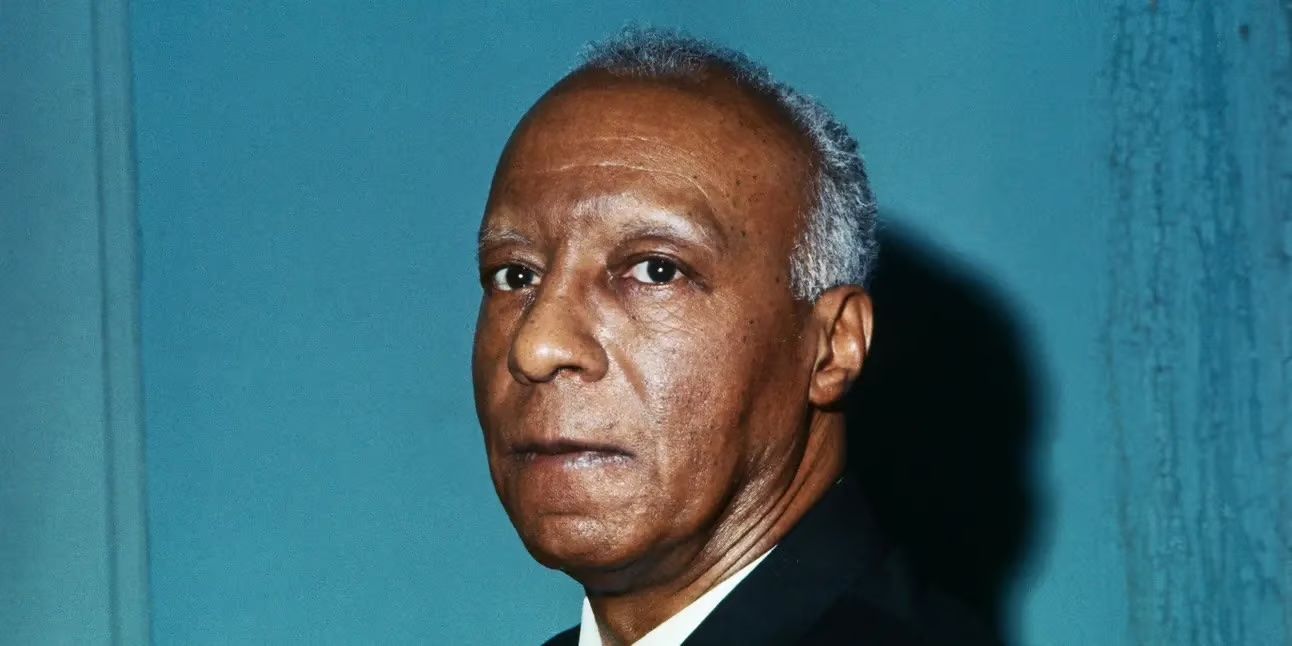
Day 1: A. Philip Randolph
A. Philip Randolph transformed American labor and civil rights through founding the Brotherhood of Sleeping Car Porters and organizing the March on Washington for Jobs and Freedom. His strategic approach to civil rights through economic empowerment created lasting change in American labor and civil rights movements.
In 1925, a group of Pullman porters sought out A. Philip Randolph in Harlem. They needed someone to lead their fight against the Pullman Company, which employed the largest number of Black workers in the country. The porters faced grueling working conditions: 400-hour months, poverty wages, and constant humiliation. They had to respond to passengers with a subservient smile and answer to the name "George" - a demeaning practice referencing George Pullman, the company's founder.
Randolph was an unlikely choice for a labor leader. The son of an AME minister, he was an intellectual who had co-founded The Messenger, a radical Black magazine. He had never worked as a porter. But he understood something fundamental: Black Americans couldn't achieve civil rights without economic power.
"The essence of trade unionism is social uplift," Randolph said. "The labor movement traditionally has been the haven for the dispossessed, the despised, the neglected, the downtrodden, the poor." He took on the challenge of organizing the Brotherhood of Sleeping Car Porters (BSCP), knowing it would be an uphill battle against one of America's most powerful corporations.
“
The labor movement traditionally has been the haven for the dispossessed, the despised, the neglected, the downtrodden, the poor.
A. Phillip Randolph
The Pullman Company fought back viciously. They fired union supporters, hired spies to infiltrate meetings, and tried to paint Randolph as a dangerous radical. Many porters were afraid to join openly - they would quietly pay dues but wouldn't admit to membership. The company had a powerful ally in Marcus Garvey, who told his followers that unions would destroy job opportunities for Black workers.
But Randolph was patient and strategic. He built support networks through Black churches and newspapers. He emphasized dignity as much as dollars, connecting labor rights directly to civil rights. After 12 years of organizing, the Brotherhood won its first contract in 1937, becoming the first Black-led union to receive a charter from the American Federation of Labor.
The victory transformed both labor and civil rights organizing. The Brotherhood became more than a union - it was a training ground for civil rights activists. Local BSCP offices doubled as civil rights centers. Porters distributed Black newspapers along their routes, spreading information through Black communities across the country. They helped register voters and raised money for civil rights causes.
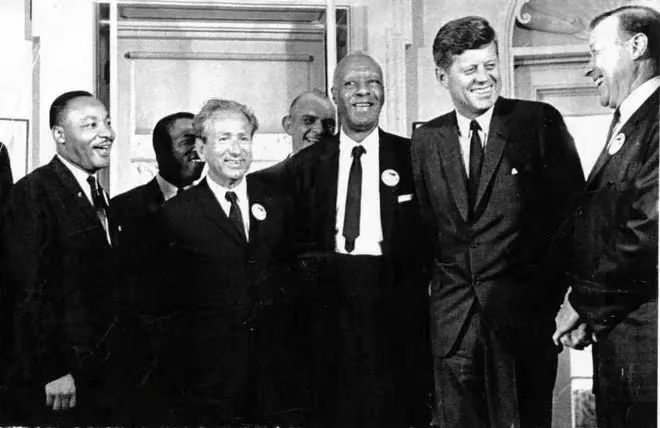
A. Philip Randolph stands next to President John Kennedy during a meeting that resulted from the March on Washington in 1963. With them were Martin Luther King Jr. (left), American Jewish Congress Rabbi Joachim Prinz (second from left) and labor leader Walter Reuther (right). The Washington march turned out to be a pivotal event in the struggle for civil rights. Photo Source: Florida Times-Union
Randolph's influence grew beyond the Brotherhood. In 1941, he threatened to lead 100,000 Black Americans in a march on Washington to protest discrimination in the defense industry. President Franklin D. Roosevelt, fearing such a demonstration during wartime, issued Executive Order 8802, banning discrimination in defense industries and creating the Fair Employment Practice Committee.
This victory showed Randolph the power of mass protest, setting the stage for his crowning achievement. In 1963, he served as director of the March on Washington for Jobs and Freedom. He insisted that the march focus on both economic and civil rights - its full name emphasized both "Jobs" and "Freedom." On August 28, 1963, over 250,000 Americans gathered at the Lincoln Memorial. When Martin Luther King Jr. delivered his "I Have a Dream" speech, he was speaking at an event that Randolph had spent decades preparing the ground for.
Randolph understood that rights without resources were hollow. He built power by connecting economic and racial justice, creating lasting change through patient, strategic organizing. His methodology - combining labor and civil rights, using economic pressure to achieve social change, and building coalitions across racial lines - created a template for modern social justice movements.
Reflection Questions
Consider the connection between economic justice and civil rights in your own community. How do you see labor rights and civil rights intersecting today? What role can you play in supporting both?
The porters used their mobility and networks to spread information and organize across the country. How can you use your own position and networks to support social justice movements?
Learn More
Read "Rising from the Rails: Pullman Porters and the Making of the Black Middle Class" by Larry Tye to understand how the Brotherhood helped create Black economic mobility.Explore resources from the A. Philip Randolph Pullman Porter Museum in Chicago, which preserves the legacy of the Brotherhood and its role in labor and civil rights history.Watch "10,000 Black Men Named George," the 2002 film starring Andre Braugher as Randolph, chronicling the formation of the Brotherhood.Access the A. Philip Randolph papers at the Library of Congress, which contain correspondence, speeches, and organizing materials spanning his career.Explore the National Museum of African American History and Culture's collection of Brotherhood of Sleeping Car Porters materials, including union badges, newsletters, and photographs.Watch "Miles of Smiles, Years of Struggle," an oral history project featuring interviews with former Pullman porters about their experiences.Study contemporary labor organizations like the Coalition of Black Trade Unionists, which carries forward Randolph's legacy of connecting workers' rights and civil rights.
Never miss a story
Get stories of overlooked and untold Black history in your inbox, free every week.