Henry Box Brown
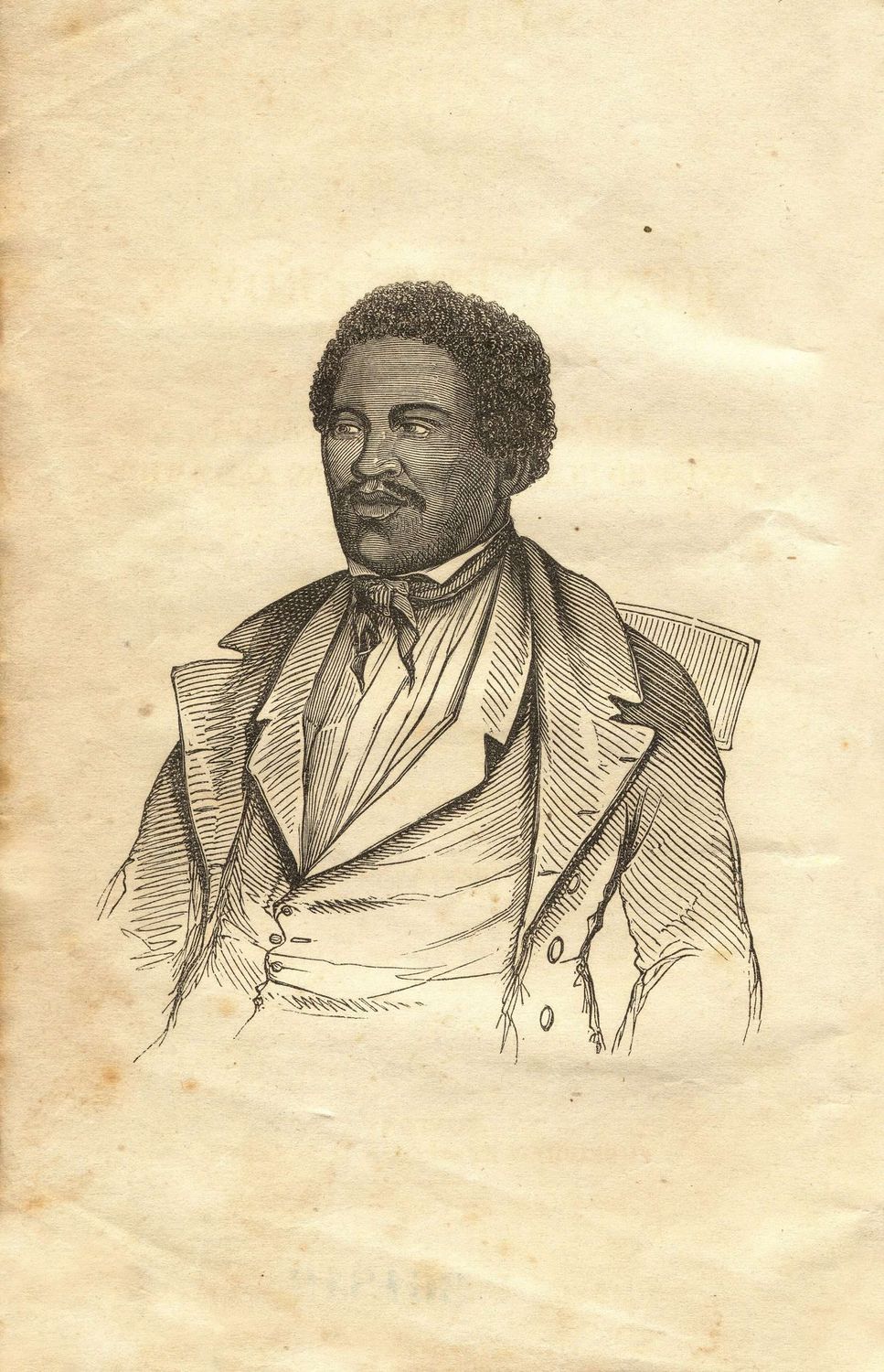
An engraved illustration of Brown, seated, wearing a suit and a contemplative gaze, published in Narrative of Henry Box Brown, Who Escaped from Slavery, Enclosed in a Box 3 Feet Long and 2 Wide. Written from a Statement of Facts Made by Himself. With Remarks Upon the Remedy for Slavery (1849). Source: Library of Congress
Henry Brown was a public speaker and magician whose story and work was critical for the end of slavery in the 19th century. While enslaved, he had himself shipped North in a wooden box to escape.
Henry Box Brown was born enslaved on a plantation in Louisa County, Virginia and forced to work at a tobacco factory in the city. He was married to another enslaved woman named Nancy, who was held captive by a different enslaver. Together they had three children, with a fourth on the way. Though they lived on separate properties, Brown was permitted to visit his family regularly. However, in 1848, Brown's wife and children were suddenly sold to a Methodist minister and slave trader from North Carolina.
Mourning their loss, Brown was adamant about securing his freedom. He got in contact with Samuel A. Smith, a white shopkeeper who sympathized with abolitionists, and James C.A. Smith, a free Black man, both part of the Underground Railroad, a network of Black people and white abolitionists who created pathways for enslaved people to find freedom up north. Many believe the Underground Railroad worked through secret, underground passageways, but that wasn’t common. Instead, they found various routes to transport people up North undercover. A small, growing pathway at the time was using the mail system. So, they devised a plan to ship Brown up north in a shipping box that was just 3 feet long, 2 1/2 feet deep, and 2 feet wide (Library of Congress).
"
Much of what we call the Underground Railroad was actually operated clandestinely by African Americans themselves through urban vigilance committees and rescue squads that were often led by free Blacks.
David Blight, Passages to Freedom: The Underground Railroad in History and Memory
On the day of his escape, Brown spent 27 hours inside the box, which traveled over 300 miles north to Philadelphia via wagon, ferry, and railway. Because many people didn’t know there was a person inside, the box was handled roughly. Even though it was marked “this side up,” it was often flipped upside down, and once remained so for 18 miles.
Ultimately, he arrived in the safe hands of the Pennsylvania Anti-Slavery Society in Philadelphia and William Still, a freed Black man who was known as one of the leaders of the Underground Railroad movement (Dickinson).
Rather than disappearing into the anonymity of freedom, Brown chose to become a public figure in the abolitionist movement. He used his story as a testament to ending slavery in the U.S. He adopted the middle name "Box" as a testament to what he overcame and traveled across the Northern U.S. and Europe outlining the horrors of enslavement and the reason for freedom. A drawing of himself emerging from the box, often referred to as “The Resurrection of Henry Box Brown”, acted as a powerful piece of anti-slavery propaganda in the U.S. As the Library of Congress states, "the box itself became an abolitionist metaphor for the inhumanity and spiritual suffocation of slavery" (Library of Congress).
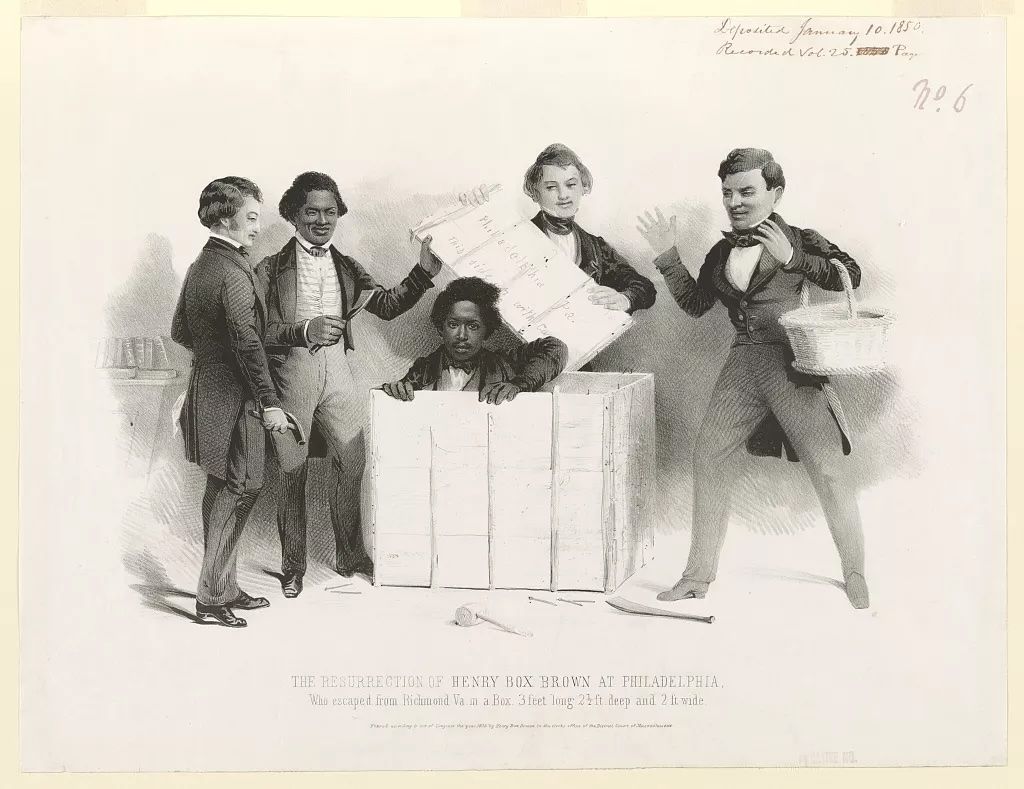
An engraving of four men, presumably those present when he arrived in Philadelphia, standing around a large box from which Brown is emerging, the tools for the removing the lid on the ground. Image Source: Library of Congress.
In July 1849, he published the first edition of his autobiography, "Narrative of the Life of Henry Box Brown, Written by Himself," which became an important addition to the genre of slave narratives.
When the Fugitive Slave Act of 1850 passed, freed or escaped Black people were at risk. With a high profile, Brown could have been targeted, so he relocated to England, where he continued his anti-slavery work. During his decade abroad, he expanded his repertoire beyond his escape story to include songs, magic acts, mesmerism, and a panorama show called "Mirror of Slavery" (British Library). His performances evolved from straightforward anti-slavery lectures to elaborate magic shows where he would disappear and reappear from the same type of box that had carried him to freedom.
Brown returned to the United States in 1875, continuing his career as a magician and performer. He married his second wife, Jane, and they had children together. The couple eventually settled in Toronto, Canada, where Brown was able to purchase property and maintain his economic independence through his performances.
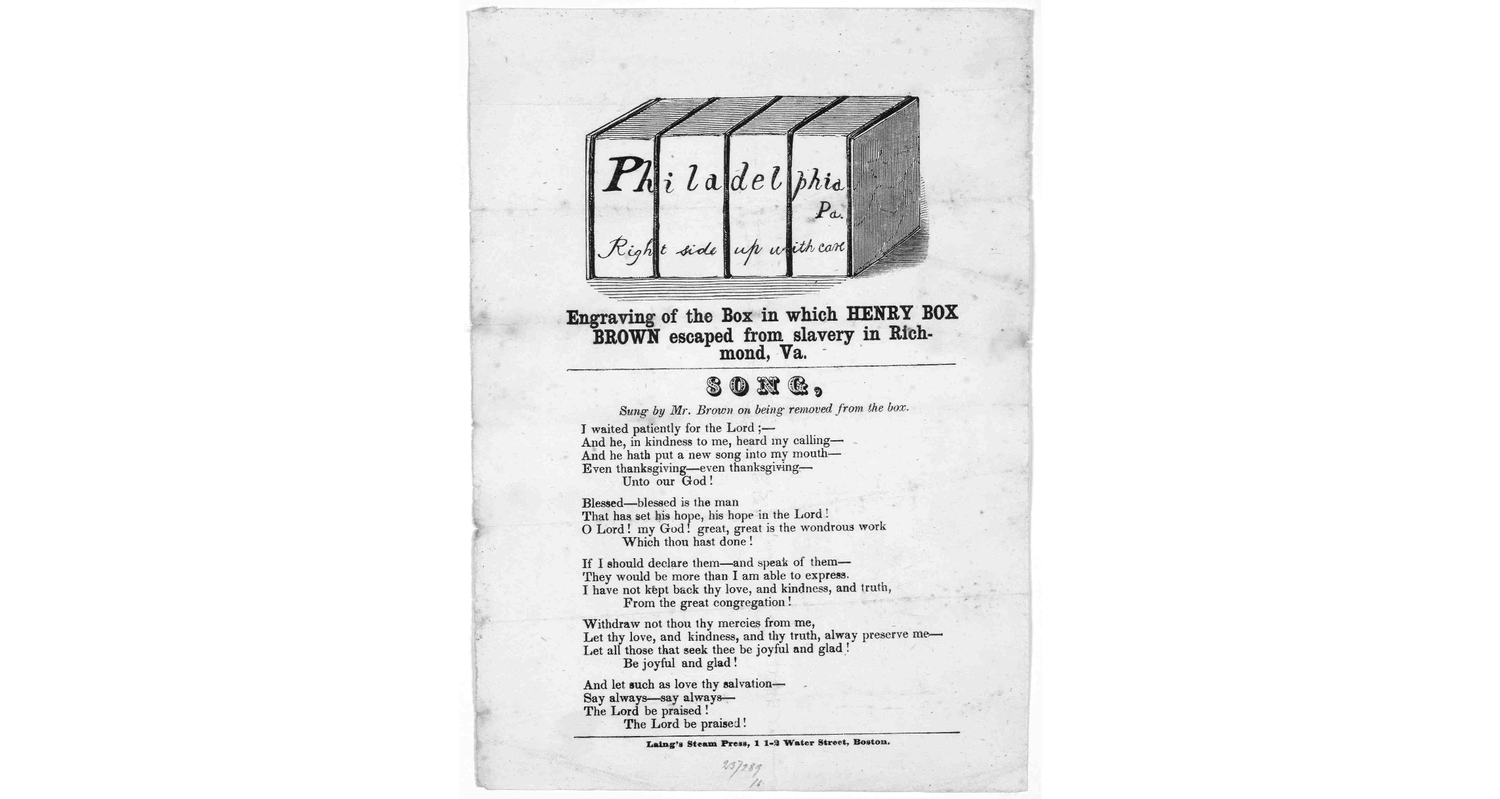
A black and white engraving of the box in which Henry Box Brown escaped from slavery in Richmond, Va. Followed by the lyrics to the song sung by Mr. Brown on being removed from the box. Image Source: Library of Congress.
Henry "Box" Brown died in 1897 and left behind an extraordinary legacy. His daring escape, influential activism, and remarkable performance career all showcased his determination to demand better for himself and those around him. He paved the way for generations of Black magicians and performers, and models the power in staying true to one’s voice.
Reflection Questions
Henry “Box” Brown used performance as a way to educate people and encourage them to take action. Consider: Which artist(s) do you admire today? What does their work educate people on? How does their art encourage others to take action?Henry “Box” Brown’s narrative was powerful because he told his direct, individual experience with a violent system. Why is it important to listen to those directly impacted by systemic issues? How does their experience differ from those in power?
Learn More
Watch "Box Brown", a feature film about Henry Box Brown directed by Rob Underhill and Aravind Ragupathi, starring Mike Wiley.Read "The Many Resurrections of Henry Box Brown" by Martha J. Cutter, which examines how Brown's story continues to influence modern Black performance art. Read “The (Afro) Future of Henry Box Brown: His-story of Escape(s) through Time and Space,” by Danielle A.D. Howard, a comprehensive look at the Afrofuturism embedded in Brown’s work.
Never miss a story
Get stories of overlooked and untold Black history in your inbox, free every week.