Opal Lee
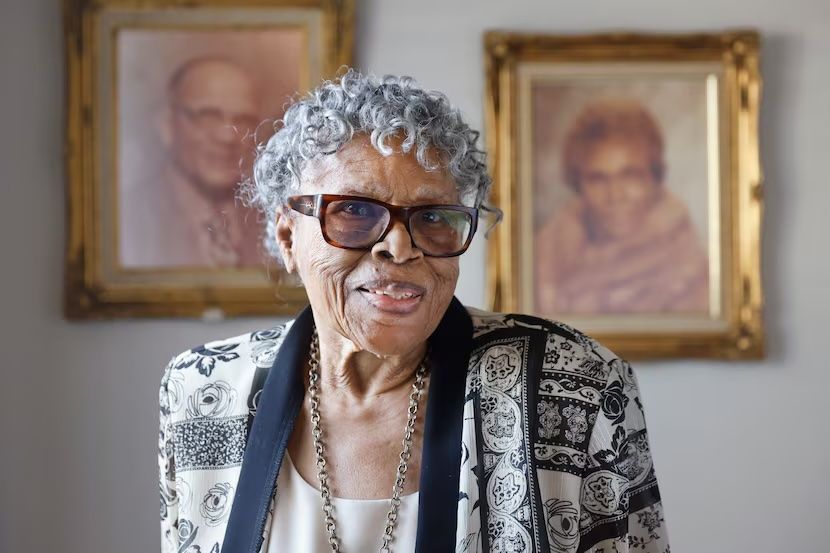
Opal Lee was just twelve years old when an angry white mob burned down her family's home. They had lived there for only four days. This incident occurred on June 19, 1939—a date that would become even more significant in Lee's life decades later.
Lee was born in Marshall, Texas, in 1926, and her family moved to Fort Worth when she was ten. She graduated from I.M. Terrell High School at age 16, earned her bachelor's degree from Wiley College in 1952, and later received a master's degree in counseling from North Texas State University. She worked as an elementary school teacher for 15 years while also working nights at Convair, then served as a school counselor for nine years before retiring in 1977.
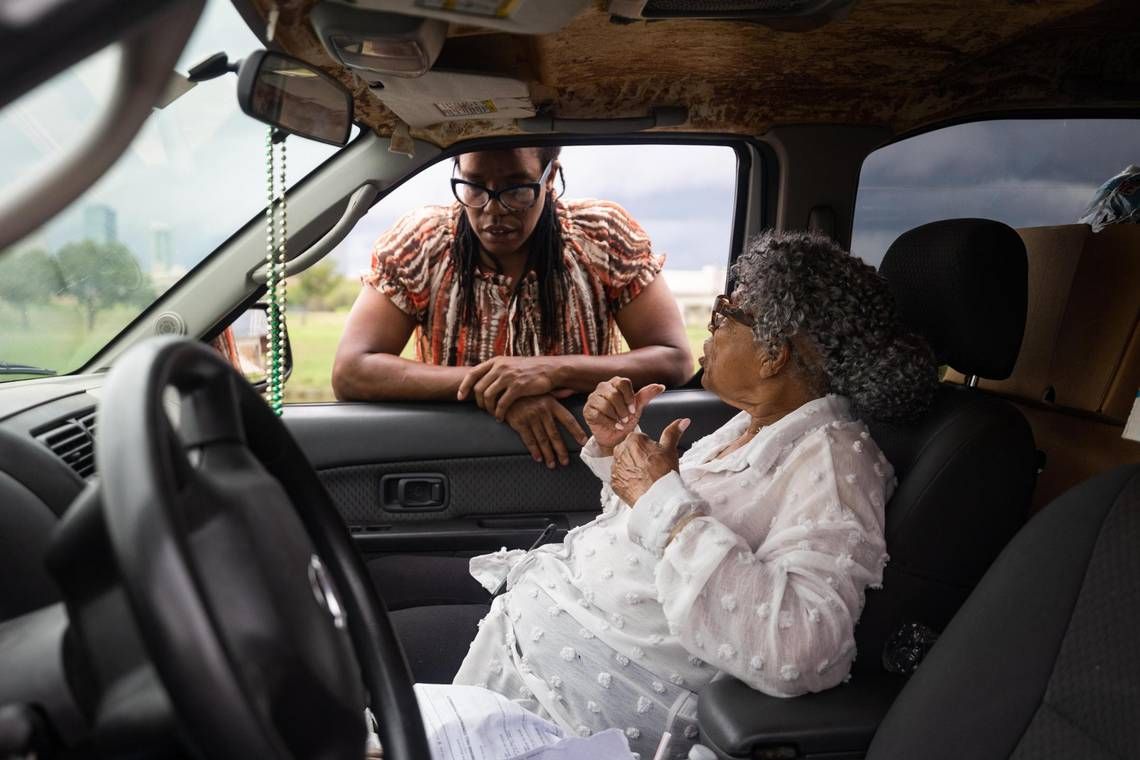
Amani Latimer Burris chats with Opal Lee while dropping off grocery boxes for farm manager Greg Joel on Sept. 1 at Opal’s Farm in Fort Worth. Photo Source: Yffy Yossifor from Star Telegram.
Following retirement, Lee became involved in Fort Worth community organizing. She helped found the Tarrant County Black Historical and Genealogical Society and organized Fort Worth's annual Juneteenth celebrations. In 1994, she established Unity Unlimited Inc., a nonprofit that fosters community unity and provides educational activities.
In the 1980s, Lee began leading annual bus tours for Fort Worth city leaders through economically depressed areas, pointing out landmarks important to marginalized communities and emphasizing the need for more comprehensive investment.
Lee's most visible campaign centered on making Juneteenth a federal holiday. In 2016, at age 89, she began walking from Fort Worth to Washington, D.C., covering 2.5 miles daily to represent the two and a half years between the Emancipation Proclamation and when the news reached Texas. She promoted a petition through Change.org that gathered 1.6 million signatures.
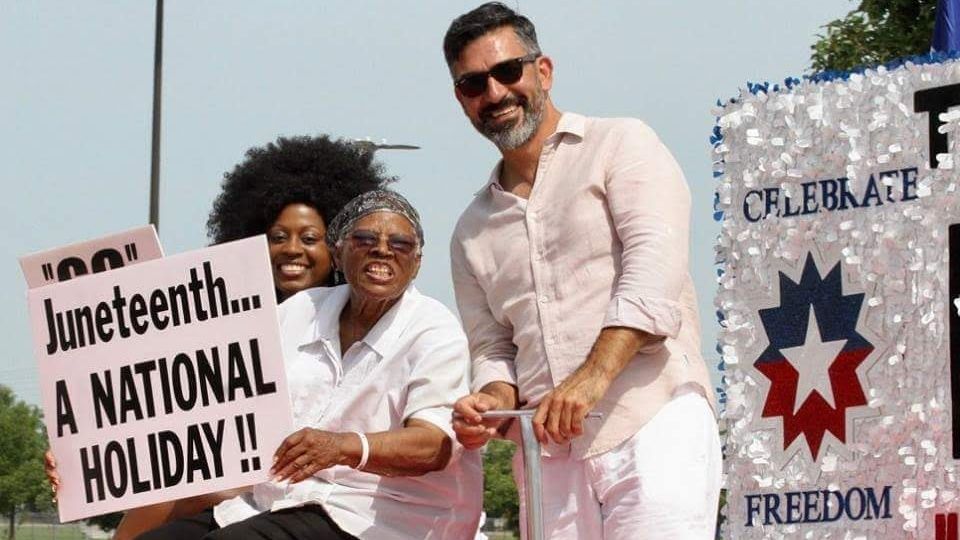
Lee, center, is seated on a float wearing a white shirt and black pants, holding a sign that says “Juneteenth…A NATIONAL HOLIDAY!!” flanked by two other demonstrators. Photo Source: Fort Worth Juneteenth Committee
On June 17, 2021, President Joe Biden signed legislation making Juneteenth the eleventh federal holiday. Lee as an honored guest at the ceremony. Now, the day commemorating when enslaved African Americans in Galveston, Texas, finally learned of their freedom, two and a half years after the Emancipation Proclamation is considered alongside other traditions – a major acknowledgment of the horrors of slavery. For her advocacy work, Lee was nominated for a Nobel Peace Prize in 2022 and received the Presidential Medal of Freedom in 2024.
Meanwhile, other parts of Lee’s work were in full bloom – literally. In 2019, Lee’s nonprofit organization started Opal's Farm, which now spreads across five acres of urban farm along the Trinity River in Fort Worth's United Riverside neighborhood. In 2022, the farm produced over 5 tons of food, providing fresh produce to local food banks and offering reduced-price vegetables to SNAP customers at farmers markets across the county, which
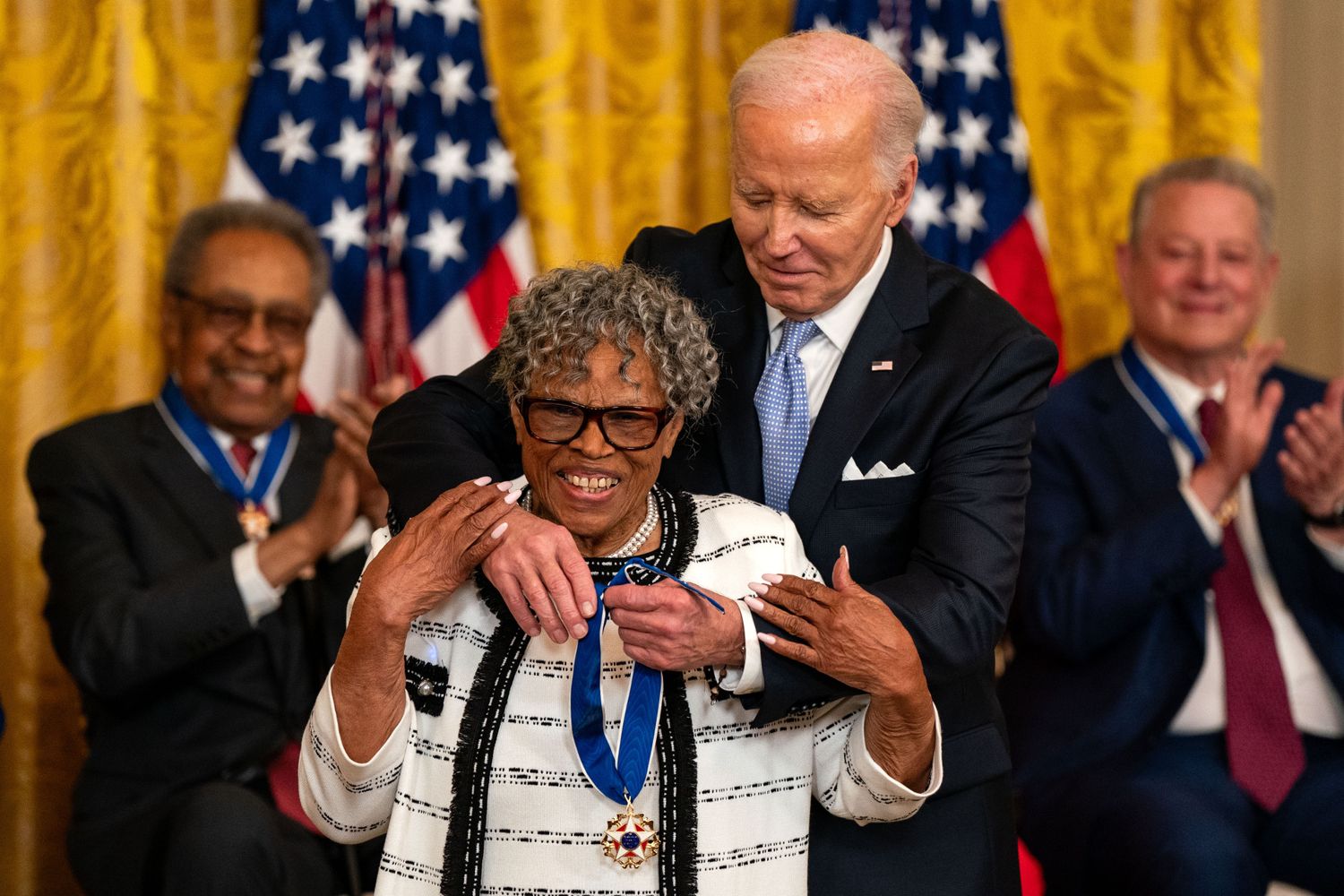
U.S. President Joe Biden presents the Presidential Medal of Freedom to educator and activist Opal Lee during a ceremony in the East Room of the White House on May 3, 2024 in Washington, DC. Photo Source: Getty
At 98, Lee continues to lead annual Juneteenth walks and is still actively organizing in her community. In 2024, she moved into a new home built on the same lot where her family's house was burned down 85 years earlier. The National Juneteenth Museum, of which she’s a member of the executive board, is scheduled to open in Fort Worth in 2026.
Lee's organizing work made it possible for all of us to commemorate this holiday and, honor her enduring spirit. She shows how persistence makes possibility, and why it’s important to remember as a path forward.
Reflection Questions
Lee connected her personal experience to broader community organizing around both historical recognition and economic issues. How can communities today connect historical awareness with addressing current inequalities?Consider how Lee's work addresses multiple community needs simultaneously through projects like Opal's Farm. What opportunities exist in your community to combine different approaches to social change?
Learn More
Opal Lee wrote and recorded an open letter to President Trump. Watch it here.Watch Opal Lee reflect on the racist mob that burned her home in 1939.Listen to this NPR's "All Things Considered" interview where Lee discusses her work to solidify the holiday, the Presidential Medal of Freedom and ongoing work.Learn about Opal Lee’s tremendous march in this short documentary.
Never miss a story
Get stories of overlooked and untold Black history in your inbox, free every week.