Jerry Rescue
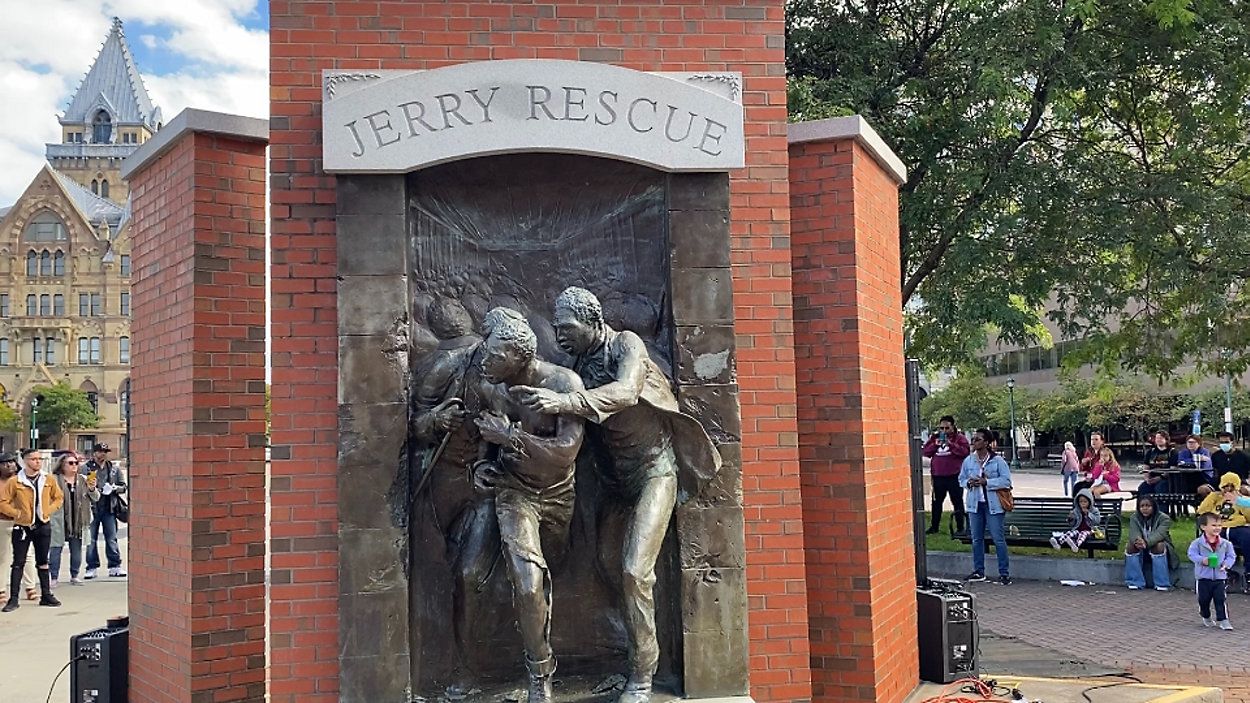
Jerry Rescue Day
The Fugitive Slave Act of 1850 dictated that all law enforcement officials, even in free states, arrest anyone suspected of escaping enslavement. It incentivized “good citizens” to join in, announcing that anyone who found an escaped enslaved person would be given $10 (and only $5 if the person was deemed free, which incentivized turning freed people back to enslavement). Those who were found not complying with the rules, including concealing someone running from enslavement or providing, made them liable to a fine of $1,000 (equivalent to $37,800 in 2024) and imprisonment. The law denied anyone accused the right to testify in their own defense or receive a jury trial. The law effectively turned every free state into a hunting ground for slave catchers.
Secretary of State Daniel Webster visited Syracuse, New York in May 1851 to declare that the law "will be executed in all the great cities - here in Syracuse - in the midst of the next Anti-Slavery Convention, if the occasion shall arise." His threat would soon be tested.
On October 1, 1851, William Henry—known as Jerry—was working as a barrel maker in Syracuse. He was born into enslavement in North Carolina around 1811 but escaped, fleeing to Syracuse because of its strong community of abolitionists. He had built a life as a freed skilled craftsman, but was often harassed. That day, he found himself surrounded by five marshals who arrested him on false theft charges. It was only after they detained him that they said he was being seized under the Fugitive Slave Act. As was protocol at the time, he was dragged to the office of Commissioner Sabine for an arraignment hearing to determine whether Jerry would remain free in New York or sent to a plantation in Missouri as the property of John McReynolds, who claimed Jerry as his.
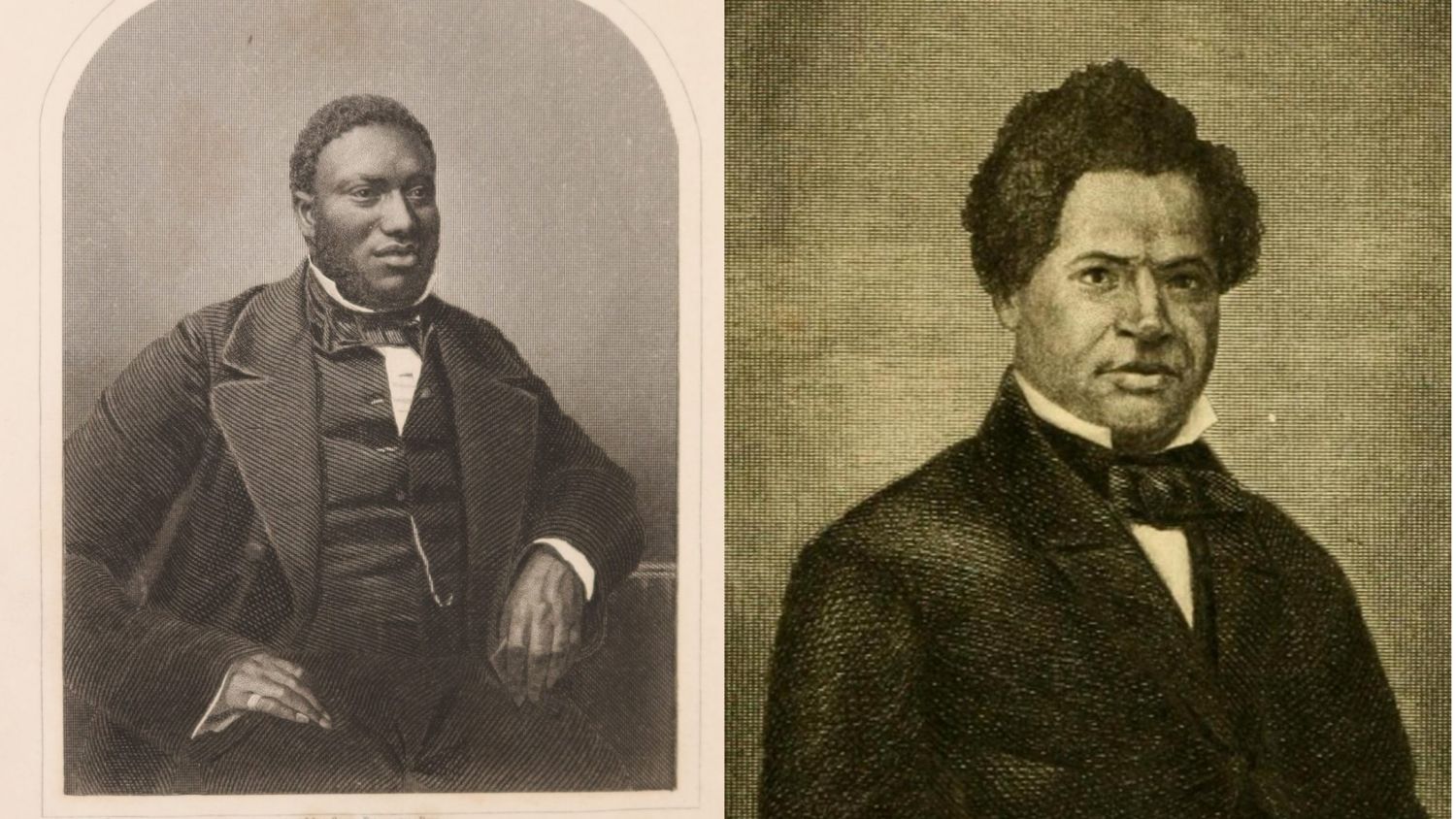
Lithographs of Rev. Samuel J. May (left) and Rev. Jermain Wesley Loguen of Syracuse (right). Image Sources (from left): Hear About There, New York Almanack.
The timing was no accident. The Liberty Party, the first national political party in the United States dedicated specifically to the abolition of slavery, was holding its state convention that day, and thousands of abolitionists were gathered in the city. The arrest was believed to be a form of public protest to antagonize the visitors. Word of Henry’s arrest spread quickly through the convention, reaching two key figures: Reverend Jermain Wesley Loguen, a Black man who had escaped enslavement in Tennessee and became Syracuse's leading Underground Railroad conductor, and Reverend Samuel J. May, a white Unitarian minister and fierce abolitionist.
The abolitionists rang church bells to send a signal across the city. A crowd grew quickly outside the commissioner's office where Henry was being held. They swarmed the building and overpowered guards, briefly freeing Henry, but he was recaptured before being able to remove his shackles. The authorities, now aware of the growing dissent, postponed the hearing until evening and moved it to a larger room at the police station.
But the crowd didn't disperse. It grew. By evening, between 2,000 and 3,000 people had gathered, led by Black and white abolitionists, many equipped with axes, clubs, and a battering ram. In a speech by Rev. Samuel J. May to the Convention of Citizens of Onondaga County delivered just two weeks after Henry’s rescue, May captured the sentiment of the crowd in stirring terms:
“But when the people saw a man dragged through the streets, chained and held down in a cart by four or six others who were upon him; treated as if he were the worst of felons; and learnt that it was only because he had assumed to be what God made him to be, a man, and not a slave—when this came to be known throughout the streets, there was a mighty throbbing of the public heart; an all but unanimous up rising against the outrage. There was no concert of action except that to which a common humanity impelled the people. Indignation flashed from every eye. Abhorrence of the Fugitive Slave Bill poured in burning words from every tongue. The very stones cried out.”
Rev. Samuel J. May
They stormed the police office, they broke down the jail door, overwhelmed the guards, and freed Jerry, despite being shot at by marshals inside. For four days, abolitionists hid Henry in Syracuse, first at the home of Caleb Davis, a local butcher known for his anti-abolitionist views—making it an unlikely hiding place. Then they moved him to other safe houses. On the fifth day, they transported Jerry by wagon to Mexico, New York, then to Oswego on Lake Ontario, where he crossed into Kingston, Ontario, Canada. There, beyond the reach of American slave catchers, Henry lived as a free man until his death in 1853.
Dozens were indicted for their participation in the rescue, but the proceedings dragged on for two years. Only one person was ultimately ever convicted on a minor charge, and by the start of the Civil War, all the charges were dropped. The failed prosecutions sent a powerful message: Syracuse would not cooperate with the recapture of escaped slaves.
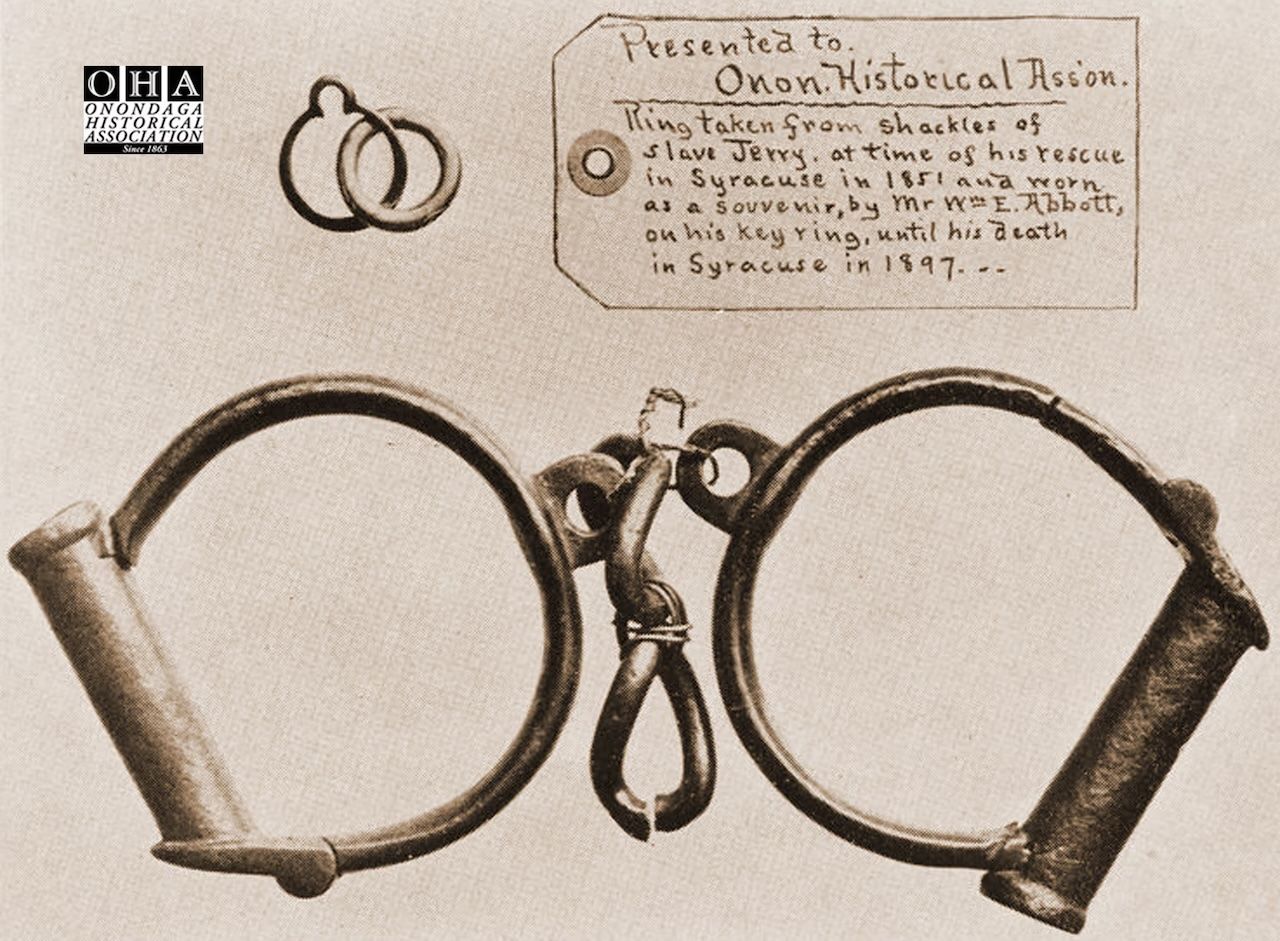
A vintage black and white photograph of the manacles removed from “Jerry” after his escape. They were filed off by a local blacksmith, Peter Lily, at the Watson home on Irving Avenue. They are on display at the Onondaga Historical Association’s Museum in downtown Syracuse. Image Source: Onondaga Historical Association
The Jerry Rescue became a defining moment for the abolitionist movement. Syracuse residents began mockingly calling out "Where's Jerry?" when they saw slavecatchers in town. The city declared October 1 as Jerry Rescue Day and held annual commemorations featuring speeches by Frederick Douglass, Gerrit Smith, and other prominent abolitionists. These celebrations continued until 1859, when Gerrit Smith refused to participate, frustrated that America had not maintained its collective commitment to the safety and dignity of enslaved people.
In the 1850s, Syracuse named a building in Clinton Square the Jerry Rescue Building. Though that structure no longer stands, the city erected a monument in Clinton Square in 1990 to commemorate the event. The structure a statue of three people, Henry, shirtless with broken shackles on his wrists, being helped to safety with the assistance of
Rev. Jermain Wesley Loguen and Rev. Samuel J. May to acknowledge their work in the rescue.
The Jerry Rescue demonstrated that the Fugitive Slave Act could be resisted through collective action, and likely sparked others, including the liberation of Shadrach Minkins in Boston in 1851. These acts of resistance made the law increasingly difficult to enforce and helped build momentum toward abolition. Today, we can learn from the brave people who defied unjust laws and violent practices to keep their neighbors safe and fight for justice and liberation for all.
Reflection Questions
Which current events does this story remind you of? What parallels can you make between Syracuse and Minneapolis, or other cities where major confrontations like this have taken place?The Jerry Rescue showed how people of different races worked together to resist an unjust law. What unjust systems today require similar courage and coalition-building to confront?Consider how ordinary Syracuse residents—craftspeople, clergy, and merchants—took extraordinary risks to free Jerry. What role can everyday people play in challenging injustice in their own communities today?
Learn More
Watch this ten-minute overview of Jerry Rescue day and the Underground RailroadLearn about other key abolitionist sites in SyracuseExplore other stories of abolitionist resistance to the Fugitive Slave Act
Never miss a story
Get stories of overlooked and untold Black history in your inbox, free every week.