Marian Anderson
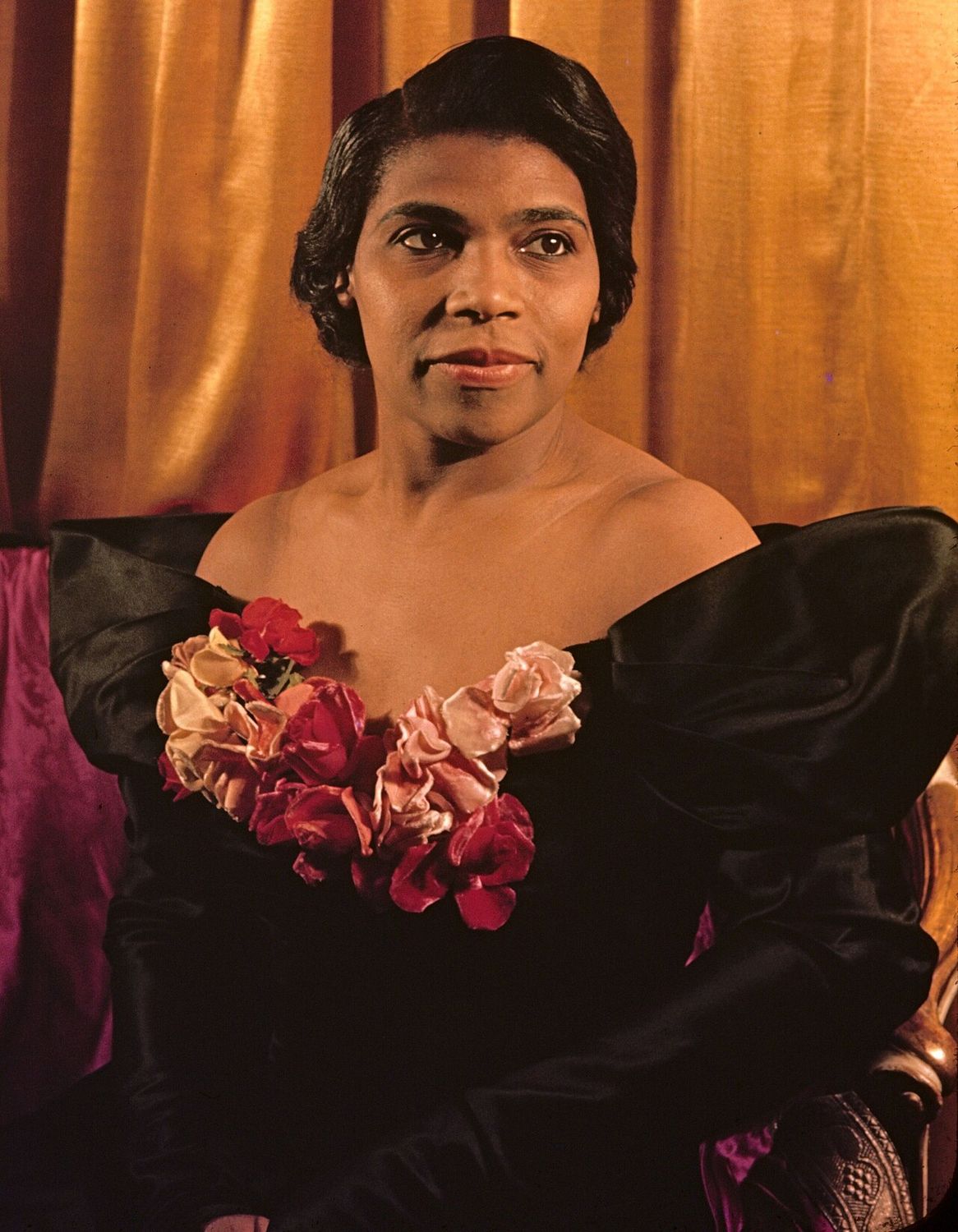
Anderson’s powerful contralto voice transcended racial barriers. Her 1939 performance at the Lincoln Memorial sparked a cultural awakening, ultimately paving the way for integration at America's most prestigious musical venues.
Marian Anderson was born on February 27, 1897, in Philadelphia to working-class parents and showed singing talents at an early age. At just six years old, she joined her Baptist church's junior choir, quickly earning the nickname "The Baby Contralto."
When Anderson was 12, her father died from work-related injuries, leaving her mother to support three daughters through domestic work. Despite financial hardship, Anderson's community recognized her exceptional talent. Local supporters raised funds for her vocal training, first with Mary Saunders Patterson and later with Agnes Reifsnyder and Giuseppe Boghetti, who wept upon hearing her rendition of "Deep River." Her voice developed to become deep and velvety—capable of spanning three octaves.
After winning the prestigious Lewisohn Stadium competition in 1925, defeating 300 rivals to perform with the New York Philharmonic, Anderson struggled to find other career opportunities, stymied by the racism inherent in society. Like many Black American artists of her era, Anderson found Europe more receptive to her artistry.
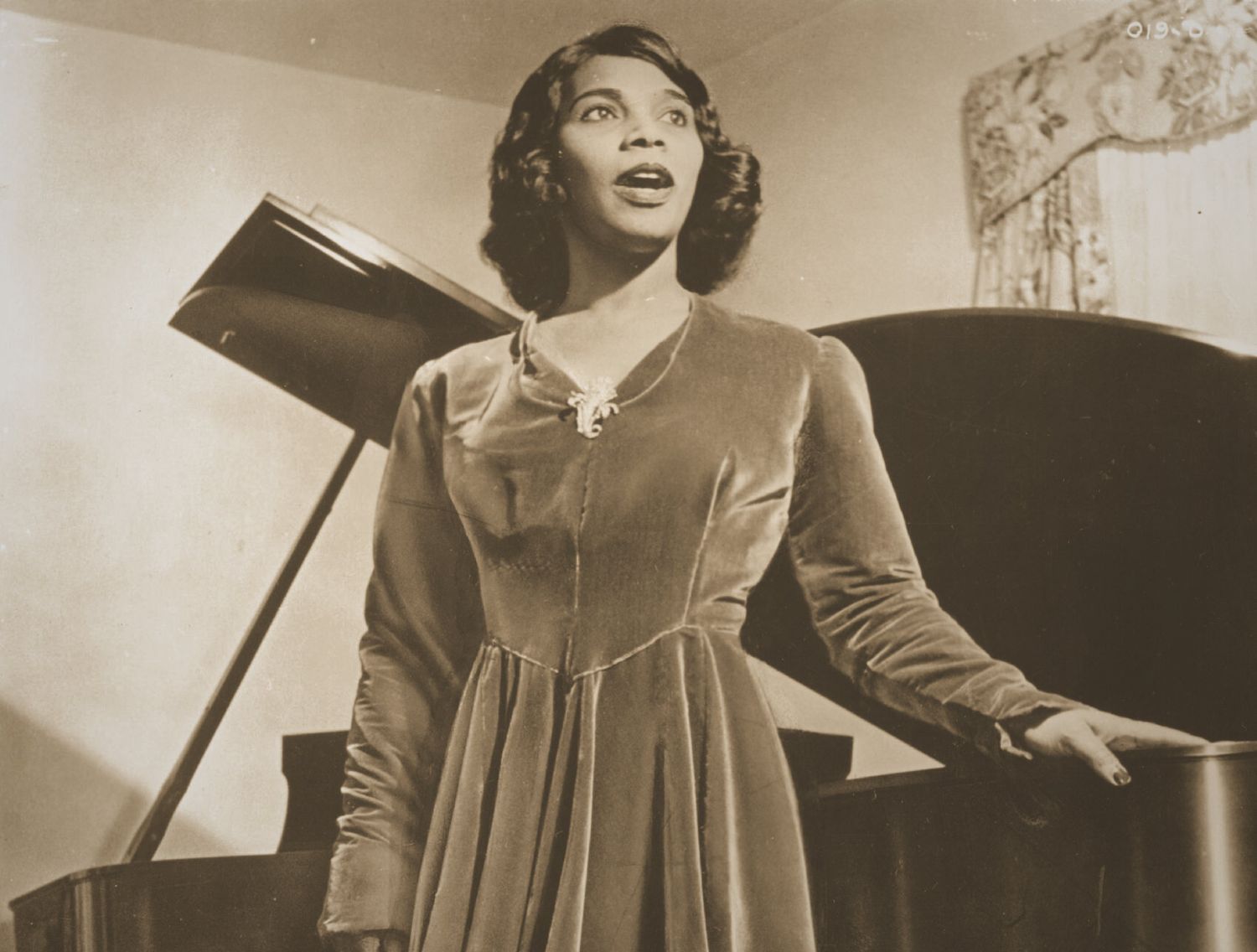
A sepia toned photograph of Anderson, standing against a grand piano, wearing a velvet dress and singing, circa 1935. Photo Source: Michael Ochs Archives/Getty Images
She toured European concert halls throughout the 1930s, leaving audiences spellbound and critics reaching for superlatives. Finnish composer Jean Sibelius was so moved he dedicated his song "Solitude" to her, declaring, "The roof of my house is too low for your voice." Legendary conductor Arturo Toscanini pronounced her gift even more dramatically: "Yours is a voice such as one hears once in a hundred years."
Marian Anderson's name became etched into history in 1939, when, despite her well-renowned renditions of patriotic tunes, she was denied the opportunity to perform at Constitution Hall in DC because of her race. This venue was run by the Daughters of the American Revolution, an organization for women who were descendants of American patriots. This caused outrage in the media, especially when Eleanor Roosevelt, the First Lady, resigned from the DAR in protest of the organization's discriminatory policy. She worked with her husband and the NAACP to organize a concert for Anderson on the steps of the Lincoln Memorial on Easter Sunday, April 9, 1939. The concert attracted a crowd of over 75,000 people and was broadcast nationally, making it a significant event in the fight for civil rights—and even inspiring then-10-year-old Martin Luther King, Jr. who listened on the radio. Watch an excerpt of her performance here.
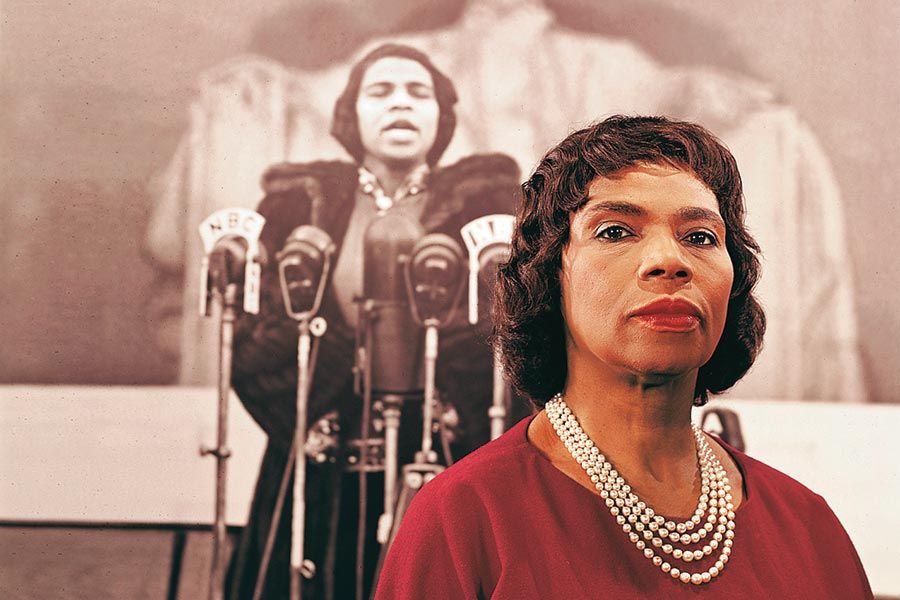
A color photograph of Anderson, wearing a red dress and pearls, standing proudly in front of a large black and white photograph of herself singing to the crowd from the steps of the Lincoln Memorial on April 9, 1939. Photo Source: Philadelphia Magazine.
Anderson's approach to confronting racism was characteristically strategic and dignified. Rather than direct confrontation, she insisted on "vertical seating" at her performances, ensuring Black audience members could access all sections of otherwise segregated venues. By 1950, she refused outright to perform where audiences remained segregated, using her artistic stature as leverage for social change.
In 1955, at age 58, Anderson became the first African American to perform as a regular company member with the Metropolitan Opera. She served as a cultural ambassador during the Cold War, touring 14 countries in Asia under State Department sponsorship. Her voice graced presidential inaugurations for both Eisenhower and Kennedy, and in 1963, she performed at the March on Washington where Martin Luther King Jr. delivered his "I Have a Dream" speech. She received numerous accolades, including the Presidential Medal of Freedom, the Congressional Gold Medal, and the Grammy Lifetime Achievement Award.
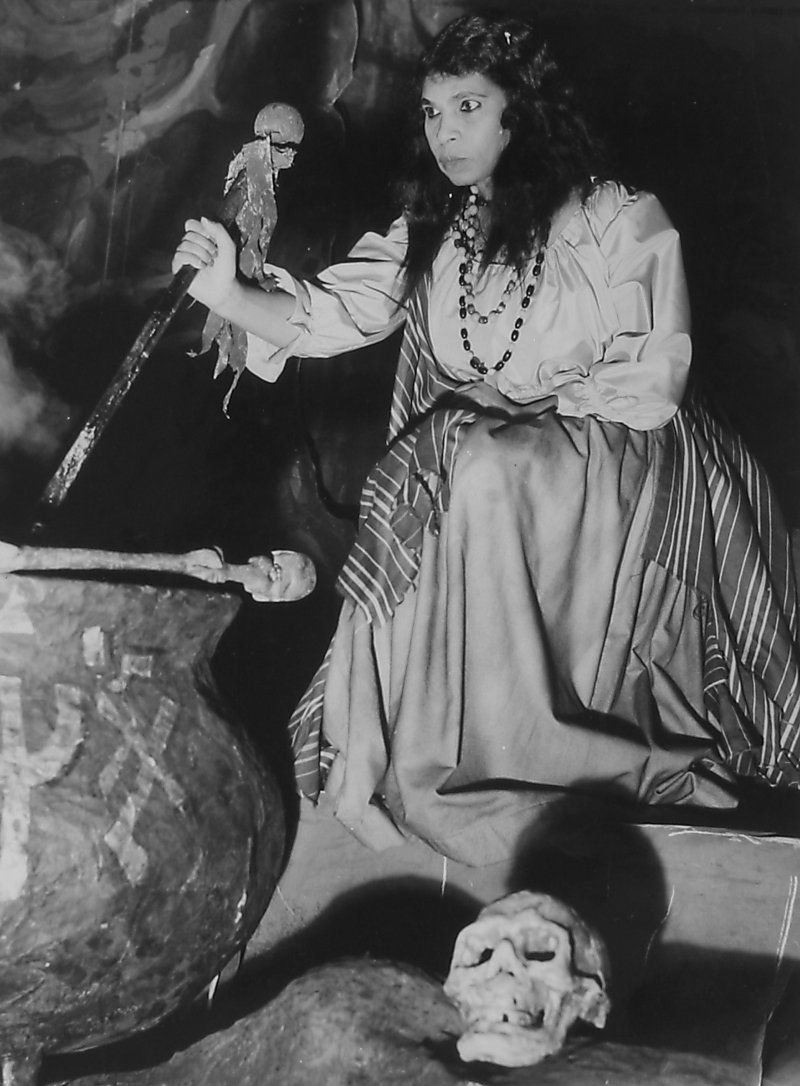
A black and white photograph of Anderson wearing a draped dress and holding a mallet, as Ulrica while performing for the Metropolitan Opera. Photo Source: PBS.
Throughout her remarkable journey, Anderson maintained that her ultimate purpose extended beyond music and activism. "The knowledge of the feelings other people have expended on me has kept me going when times were hard," she said. "That knowledge has been a responsibility, a challenge and an inspiration. It has been the path to development and growth."
When Marian Anderson died in 1993 at age 96, she left behind a legacy that defied expectations and transformed opportunities for other talented artists like her. Her voice broke barriers simply through its profound beauty and the dignity of the person from whom it came.
Reflection Questions
Marian Anderson used "vertical seating" as a strategic approach to challenge segregation rather than direct confrontation. How may her methods of protest inform contemporary movements for social justice?Anderson's story demonstrates how artistic excellence became a powerful force for social change. In what ways can cultural and artistic expression continue to advance civil rights and challenge discrimination in today's society?
Learn More
Visit the Marian Anderson Historical Residence Museum Watch Marian Anderson: The Whole World in Her Hands, on PBS American Masters (streaming on Amazon Prime)Read My Lord, What a Morning, an autobiography by Marian AndersonRead the children’s book When Marian Sang: The True Recital of Marian Anderson.
Never miss a story
Get stories of overlooked and untold Black history in your inbox, free every week.