
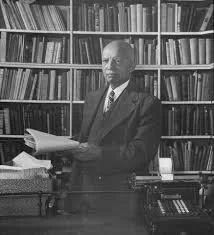
"The Negro History Bulletin" by Dr. Carter G. Woodson
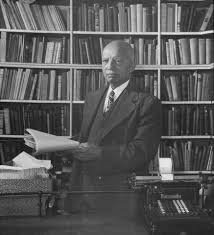
An educator and scholar, author and historian, Dr. Carter G. Woodson devoted his life to the preservation and education of Black history. His time spent pursuing higher education taught him that the official school curriculum was designed to uphold anti-Black sentiment, only contributing to the inequities in society.
He is most known for establishing Negro History Week in 1926, which led to the appointment of Black History Month that we celebrate (and often commercialize) today. Woodson chose the second week in February because it contained the birthdays of two major influences in Black life at the time: Abraham Lincoln (February 12) and Frederick Douglass (February 14). Related: Born into slavery, Douglass didn’t know his exact birth date, but he chose to celebrate on February 14th (Smithsonian).
But that’s only one of his many contributions. He also founded the Association for the Study of Negro Life and History, an organization committed to “collecting records pertaining to Black America’s past and disseminate the truth about African American history” (Willing to Sacrifice” Carter G. Woodson, the Father of Black History, and the Carter G. Woodson Home, NPS). The organization was later renamed the Association for the Study of Afro-American Life and History in 1973, and is referred to as ASALH for the remainder of this article.
At the request of Dr. Mary McLeod Bethune, founder of Bethune-Cook College, advisor to President Franklin D. Roosevelt, and the first woman president of ASALH from 1936 to 1951 (Women’s History), the ASALH published the “Negro History Bulletin,” a monthly newsletter curated by Black leaders that provided a comprehensive overview of Black history. The resource was designed to provide middle and high school teachers with enough context to create lesson plans for their students. The February 1941 issue, for example, highlights Black history in Central and South America (JSTOR). This work was accompanied by a series of Negro History clubs for Black educators and other individuals passionate about learning their history, annual conventions, and celebrations to honor Negro History Week (“Carter G. Woodson, White Philanthropy and Negro Historiography, JSTOR).
“We should emphasize not Negro history, but the Negro in history. What we need is not a history of selected races or nations, but the history of the world void of national bias, race hate and religious prejudice.”
Now referred to as the Black History Bulletin, this publication is still produced and distributed by the ASALH. But its mission remains the same. The publication centers articles on “articles on all aspects of Black history, especially those written with a focus on (1) middle school U.S. history; (2) high school U.S. history; (3) teacher preparation U.S. history methods” (ASALH website). You can purchase the latest Black Family Theme Bulletin Vol 83 #2 2020 on their website.
To this day, independent reporting and publishing is still a critical component of preserving and distributing Black history in America. The rise of digital newsletters (like the one you’re reading) makes it easier for journalists, historians, and educators to disseminate useful information directly. Google Docs has proved to be a powerful way to share actionable resources related to protests. Physical bulletins, often referred to as zines, are disseminating critical information on systemic injustices (consider this series on youth incarceration, curated by Mariame Kaba of Project NIA and Lisa Lee of the Jane Addams Hull-House Museum).
And it’s necessary because many school curriculums today still fail to provide a comprehensive overview of Black history in the U.S. Now, states across the country have implemented legislation to limit how Black history is taught in schools. Just a few weeks ago, the state of Florida barred students from participating in an AP course on Black history because it's "historically inaccurate," "significantly lacks educational value," and conflicts with state law (NPR).
REFLECTION QUESTIONS
What Black-led media organizations are you subscribed to? How many Black journalists, educators, historians, etc. are you learning from each month?
How can you continue to center Black history in your own education each month? For your children, peers, colleagues, etc?
What is your school district's stance on accurate history? How does that affect your community's perspective on Black history?
Black History Month Themes Through the Years
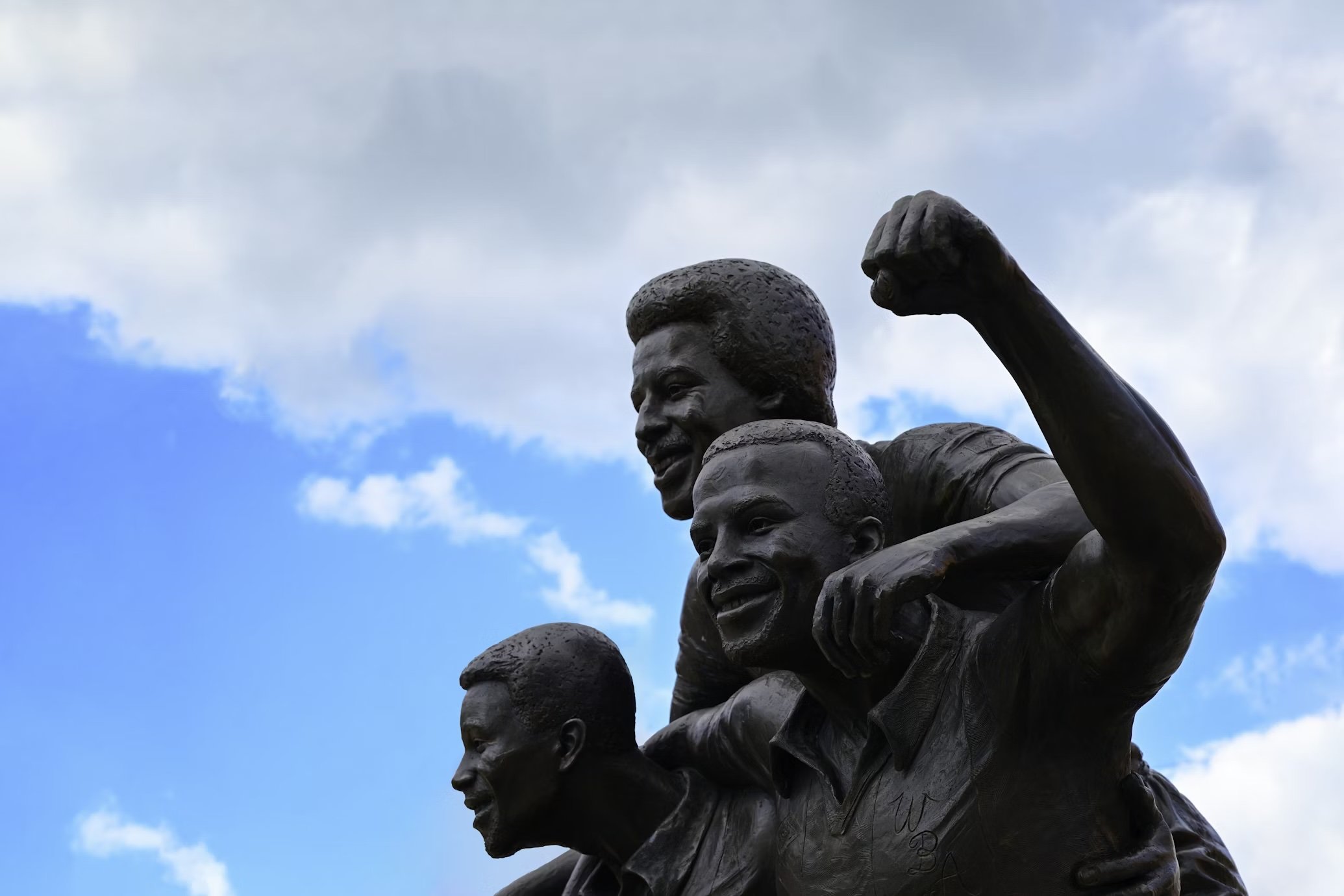
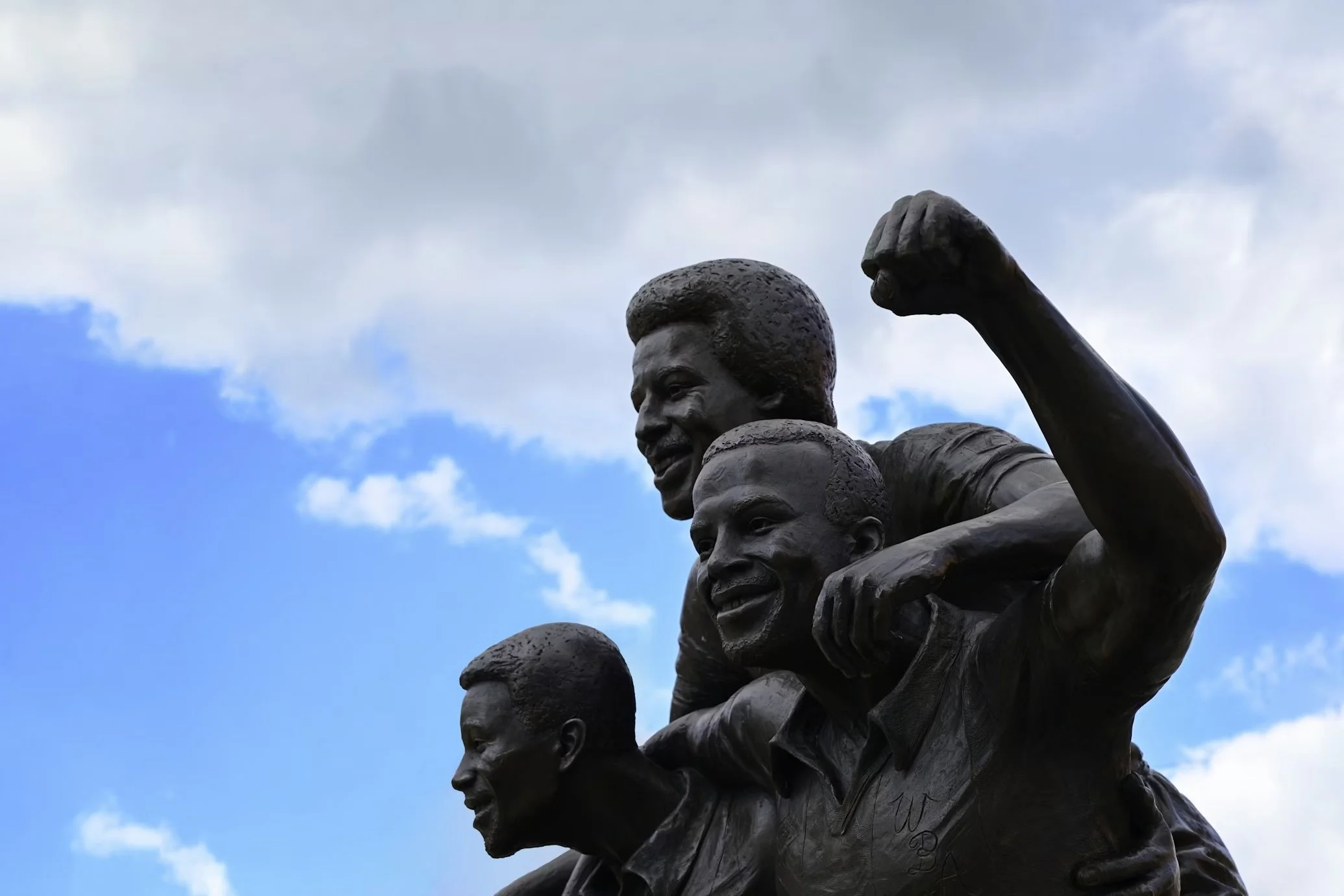
Photo of the statue "The Celebration,” a tribute to 3 pioneers & football icons that battled discrimination. Taken by Paulina Milde-Jachowska for Unsplash.
An educator and scholar, author and historian, Dr. Carter G. Woodson devoted his life to the preservation and education of Black history. His time spent pursuing higher education taught him that the official school curriculum was designed to uphold anti-Black sentiment, only contributing to the inequities in society.
He is most known for establishing Negro History Week in 1926, which led to the appointment of Black History Month that we celebrate (and often commercialize) today. Woodson chose the second week in February because it contained the birthdays of two major influences in Black life at the time: Abraham Lincoln (February 12) and Frederick Douglass (February 14).
He also founded the Association for the Study of Negro Life and History, an organization committed to “collecting records pertaining to Black America’s past and disseminate the truth about African American history” (“Willing to Sacrifice” Carter G. Woodson, the Father of Black History, and the Carter G. Woodson Home, NPS).
The organization was later renamed the Association for the Study of Afro-American Life and History in 1973, and since, it has stewarded Black History Month by providing tools and resources for all to celebrate. They also choose the theme of Black History Month each year, the theme that we’ve echoed in our newsletter series since its start in 2020.
Here’s a list of the Black History Month themes since 1928.
1928 — Civilization: A World Achievement
1929 — Possibility of Putting Negro History in the Curriculum
1930 — Significant Achievements of the Negro
1931 — Neglected Aspects of Negro History
1932 — What George Washington Bicentennial Commission Fail to Do
1933 — Ethiopia Meets Error in Truth
1934 — Contribution of the Negro in Poetry, in Painting, in Sculpture and in Science
1935 — The Negro Achievements in Africa
1936 — African Background Outlined
1937 — American Negro History from the Time of Importation from Africa up to the Present Day
1938 — Special Achievements of the Race: Oratory, Drama, Music, Painting, Sculpture, Science and Inventions
1939 — Special Achievements of the Race: Religion, Education, Business, Architecture, Engineering, Innovation, Pioneering
1940 — Negro Labor
1941 — The Career of Frederick Douglass
1942 — The Negro in Democracy
1943 — The Negro in the Modern World
1944 — The Negro and the New Order
1945 — The Negro and Reconversion
1946 — Let Us Have Peace
1947 — Democracy Possible Only Through Brotherhood
1948 — The Whole Truth and Nothing but the Truth
1949 — The Use of Spirituals in the Classroom
1950 — Outstanding Moments in Negro History
1951 — Eminent Negroes in World Affairs
1952 — Great Negro Educators (Teachers)
1953 — Negro History and Human Relations
1954 — Negro History: A Foundation for Integration
1955 — Negro History: A Contribution to America’s Intercultural Life
1956 — Negro History in an Era of Changing Human Relations
1957 — Negro History
1958 — Negro History: A Factor in Nationalism and Internationalism
1959 — Negro History: A Foundation for a Proud America
1960 — Strengthening America Through Education in Negro History and African Culture
1961 — Freedom and Democracy for the Negro after 100 years (1861-1961)
1962 — Negro History and a New Birth of Freedom
1963 — Negro History Evaluates Emancipation (1863-1963)
1964 — Negro History: A Basis for the New Freedom
1965 — Negro History: Freedom’s Foundation
1966 — Freedom from Racial Myths and Stereotypes Through Negro History
1967 — Negro History in the Home, School and the Community
1968 — The Centennial of the Fourteenth Amendment Afro-American History Week
1969 — Changing the Afro-American Image through History
1970 — 15th Amendment and Black America in the Century (1870-1970)
1971 — African Civilization and Culture: A Worthy Historical Background
1972 — African Art, Music, Literature; a Valuable Cultural Experience
1973 — Biography Illuminates the Black Experience
1974 — Helping America Understand
1975 — Fulfilling America’s Promise: Black History Month
1976 — America for All Americans
1977 — Heritage Days: The Black Perspective; the Third Century
1978 — Roots, Achievements and Projections
1979 — History: Torch for the future
1980 — Heritage for America
1981 — Black History: Role Model for Youth
1982 — Afro American Survival
1983 — Afro Americans in the United States
1984 — Afro Americans and Education
1985 — Afro American Family
1986 — Afro American Experience: International Connection
1987 — Afro Americans and the Constitution From Colonial Times to the Present
1988 — Constitutional Status of Afro-Americans in the 21st Century
1989 — Afro Americans and Religion
1990 — Seventy-Five Years of Scholarly Excellence: A Homage to Our Forebearers
1991 — Educating America: Black Universities and Colleges, Strengths and Crisis
1992 — African Roots Experience New Worlds, Pre-Columbus to Space Exploration
1993 — Afro-American Scholars: Leaders, Activists and Writers
1994 — Empowering Black Americans
1995 — Reflections on 1895: Douglass, Du Bois & Washington
1996 — Black Women
1997 — African Americans and Civil Rights; a Reprisal
1998 — Black Business
1999 — Legacy of African American Leadership for the Present and the Future
2000 — Heritage and Horizons: The African American Legacy and the Challenges for the 21st Century
2001 — Creating and Defining the African American Community: Family, Church Politics and Culture
2002 — The Color Line Revisited: Is Racism Dead?
2003 — The Souls of Black Folks: Centennial Reflections
2004 — Before Brown, Beyond Boundaries: Commemorating the 50th Anniversary of Brown v. Board of Education
2005 — The Niagara Movement: Black Protest Reborn, 1905-2005
2006 — Celebrating Community: A Tribute to Black Fraternal, Social and Civil Institutions
2007 — From Slavery to Freedom: Africans in the Americas
2008 — Carter G. Woodson and the Origins of Multiculturalism
2009 — The Quest for Black Citizenship in the Americas
2010 — The History of Black Economic Empowerment
2011 — African Americans and the Civil War
2012 — Black Women in American Culture and History
2012 — President Barack Obama National Black History Month Proclamation
2013 — At the Crossroads of Freedom and Equality: The Emancipation Proclamation and the March on Washington
2014 — Civil Rights in America
2015 — A Century of Black Life, History and Culture
2016 — Hallowed Grounds: Sites of African American Memories
2017 – The Crisis in Black Education
2018 – African Americans in Times of War
2019 – Black Migrations
2020 – African Americans and the Vote
2021 – The Black Family: Representation, Identity and Diversity
2022 – Black Health and Wellness
2023 – Black Resistance
2024 — African Americans and the Arts
2025 — African Americans and Labor
2026 — A Century of Black History Commemorations