African Burial Ground
By 1625, the Dutch West India Company was shipping enslaved Africans to build New Amsterdam, the city that would become New York. This labor force cleared the land, built military forts and commercial spaces, and widened old Lenape trails into roads wide enough for wagons, including the one that would become Broadway. They also constructed the wall along the southern tip of Manhattan that gave Wall Street its name.
When the English took control in 1664, they deepened the city's investment in the slave trade. The city's name, after all, was for James II, the Duke of York, a key investor in the Company of Royal Adventurers Trading to Africa, England's primary slave trading enterprise. They built official slave trading posts across the city, the largest of which was the Meal Market, located on the pier at the foot of Wall Street. By 1703, over 42% of households held slaves, and by the mid-1700s, Africans made up more than 20% of New York's population, making colonial New York the largest urban concentration of enslaved people outside of Charleston, South Carolina.
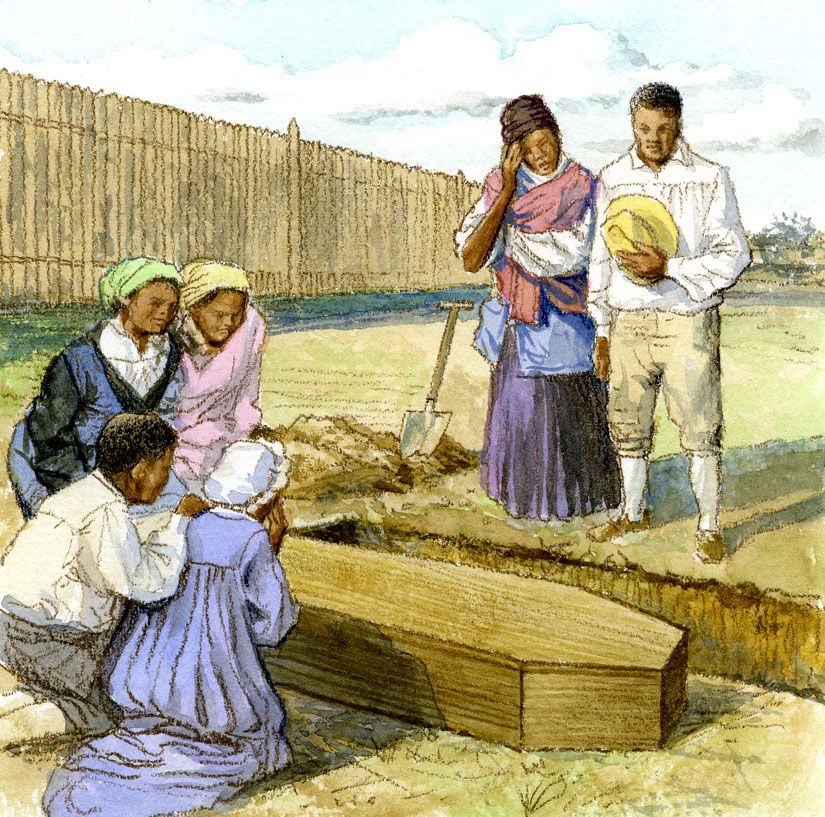
When enslaved or freed people passed away, however, there were few options for honoring them with a proper burial. The city's churches refused to bury Black New Yorkers. Trinity Church, located near Wall Street, banned African people from their cemeteries entirely in 1697. So families carried their dead past the Wall Street wall, two blocks north of where City Hall is located today, to a plot of land in a ravine.
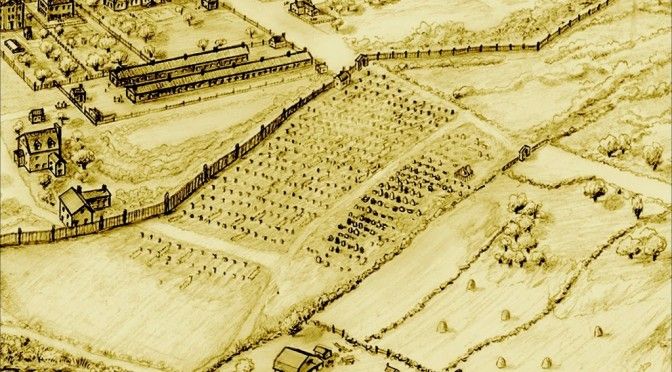
An illustration of the African Burial Ground from the 1700s, depicting rows and rows of tombstones on the right of a wall separating a more rural space from a more urban space. Image Source: NPS
Afraid that gatherings at this space would give enslaved and freed African people a place to mobilize and plan revolt, the city tried to control how this space was used. They passed laws capping funeral processions at twelve people and banning burials at night, a direct response to traditional African burial rituals. Medical students would dig up graves and steal bodies for research. But families held true to their rituals, and continued to lay their loved ones to rest with dignity. This burial ground grew to cover more than six acres and held the remains of as many as 20,000 people, nearly 40 percent of them children.
As the population of the city grew in the late 18th and 19th centuries, city planners began to expand the urban development of lower Manhattan, filling the nearby ravines with soil. A new cemetery for Black people had opened in the Lower East Side, giving a closer, more accessible space for locals to honor their dead. The original burial ground was buried under 25 feet of fill and forgotten. In 1795, the land was sold off as house lots.
For nearly two centuries, New Yorkers walked over that ground every day. Then, in 1991, construction began on a 34-story office building at 290 Broadway, right on the site of the burial ground. Archaeologists were convinced that the urban development from centuries before had already destroyed the buried remains, but when the excavation unearthed skeletal remains, it was clear that wasn't the case.
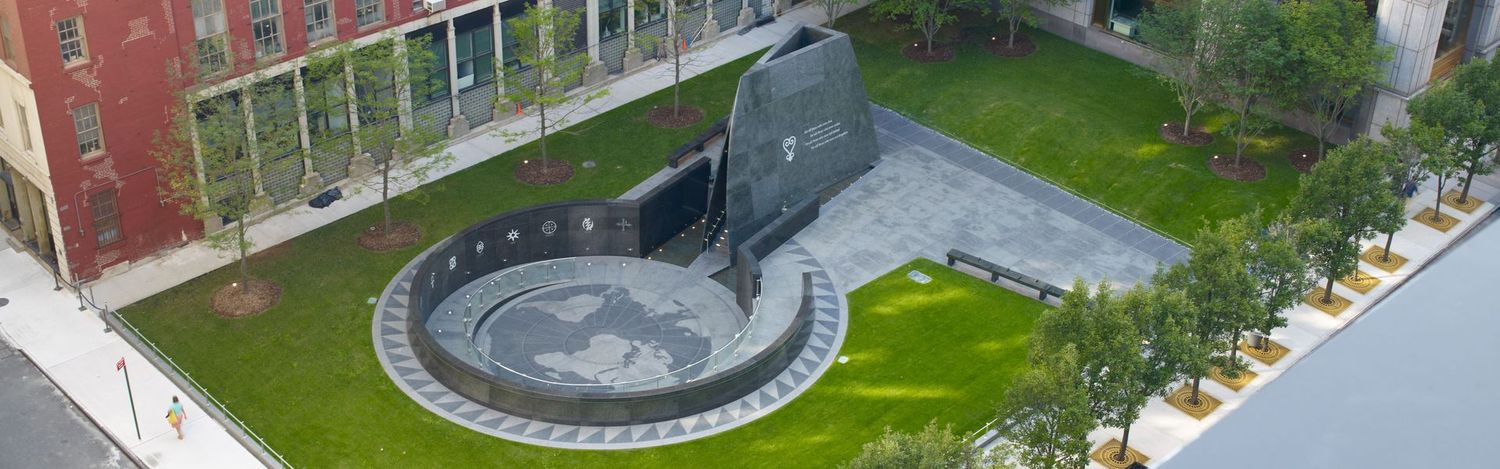
An aerial photograph of the African Burial Ground memorial, which was made a national monument in 2006. The memorial includes a 4-foot high, black granite structure designed to resemble both the hull of a slave ship and a traditional African home, representing the journey and the memory of the dead. The circuar shape is designed as a sacred space for reflection and remembrance, featuring, among other symbols, the Egyptian Ankh, representing life. Image Source: NPS
This caused an end to the development of the building, and a start to a much more tender project. First, there were the 419 remains exhumed from the site during the excavation. These were sent to Howard University's Department of Anthropology. The team was able to learn much about the hardships of enslavement on the remains. It also helped them document the different regions of Western Africa present in the population based on the burial rituals evident in how each body was laid to rest. Meanwhile, President George Bush designated the site for a memorial to honor those resting beneath.
In 2003, each of the 419 remains were returned to their original resting place. Each was placed in a hand-carved wooden coffin made in Ghana, and reinterred during a sacred, week-long ceremony known as the "Rites of Ancestral Return." Nearly ten thousand people gathered as seven crypts, sixty coffins each, were lowered into the ground, closing a difficult chapter in the city's history.
On February 27, 2006, President Bush signed a Presidential Proclamation naming the African Burial Ground a national monument—the first ever dedicated to Africans of early New York and Americans of African descent. The memorial opened in 2007, and the visitor center followed in 2010. Now, you can visit the space at 290 Broadway to learn more about its history, stories of some of the people buried there, and pay your respects—to the 15,000 people resting underneath and the millions more lost in the horrors of enslavement.
Reflection Questions
What does it mean that a burial ground this significant was forgotten for nearly 200 years? Who benefits from that kind of forgetting?The descendant community fought to control how their ancestors were studied, memorialized, and returned. What does their fight tell us about who usually gets to decide how history is preserved and who doesn't?The people buried in the African Burial Ground built the infrastructure of a city that denied them basic rights. Where do you see that same contradiction today?
Learn More
Read stories of some of those resting in the African Burial Ground (note: not suitable for young readers)Read more about what Black burial grounds teach us about healing and remembrance.Read the final report from researchers at Howard University on the African Burial GroundTo learn more about the history of the African Burial Ground, read The African Burial Ground in New York City: Memory, Spirituality, and Space by Andrea E. FrohneListen to architect Nicole Hollant-Denis talk about her experience designing the monument at the African Burial Ground in this interview
Never miss a story
Get stories of overlooked and untold Black history in your inbox, free every week.