Freedom's Eve
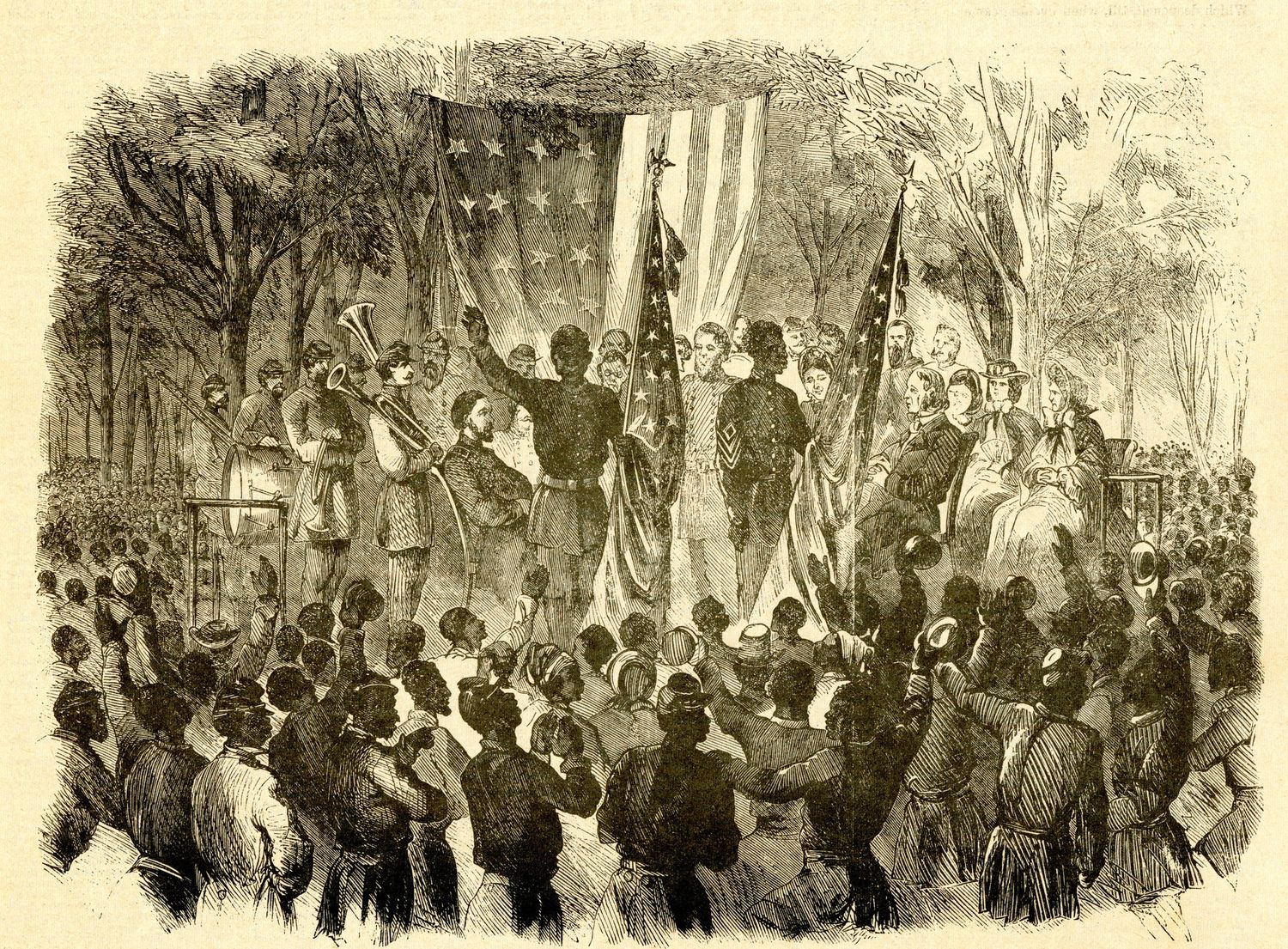
An illustration depicting a group of Black people celebrating the Union victory of the Civil War, depicted by a group of soldiers on a stage with two Black soldiers at the forefront holding American flags. Image Source: The Gullah Geechee Cultural Heritage Corridor Commission
Juneteenth honors the date that Union troops traveled to Galveston, TX to enforce the Emancipation Proclamation, which legally freed enslaved people living in Confederate-controlled states. Some believe that enslaved people hadn't heard the news, but that's likely untrue. Many enslaved people knew about the shift and watched slaveowners suppress this information and refuse to enforce it.
When Union troops arrived in places like Galveston, they only reinforced what enslaved communities had been eagerly anticipating. Some even held celebrations on New Year's Eve in anticipation of the event. The occasion was known as "Watch Night" or "Freedom's Eve," and has influenced Black cultural New Year's Eve observances ever since. The idea was inspired by the Watch Nights of Protestant churches, where communities would anticipate the return of Jesus. But here, it was applied to a more earthly form of liberation — the promise of a political action, not a religious one.
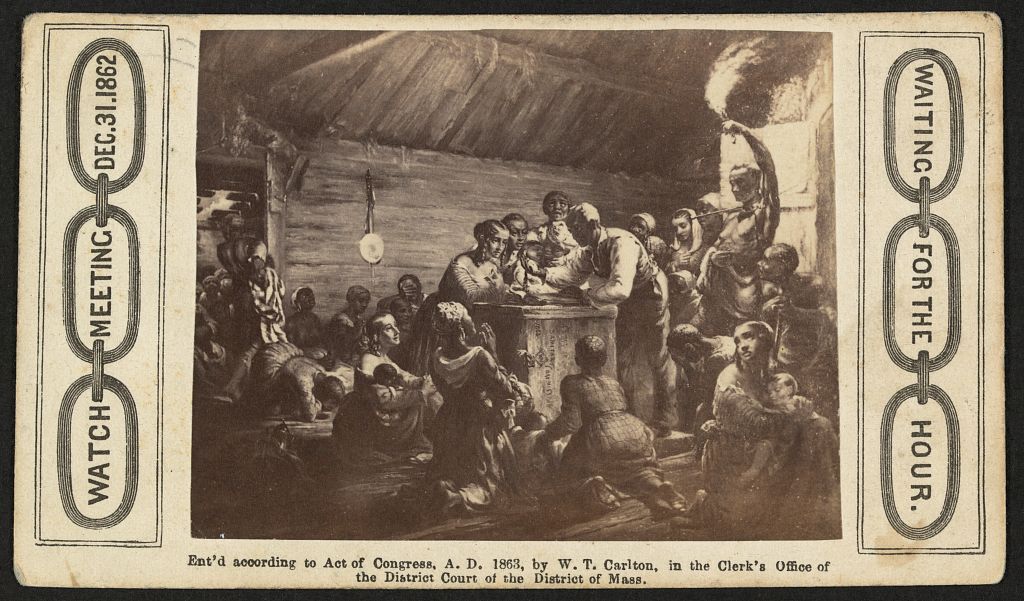
A flyer promoting the first Watch Night Service. The center depicts a group of people huddled together. On the sides, enclosed in linked chains, are the words “Watch Meeting Dec. 31 182 (left)” and “waiting for the hour” (right). Image Source: National Museum of African American History and Culture
Lincoln announced a preliminary version of his proclamation on September 22, 1862, after the Battle of Antietam. It authorized the freeing of all enslaved people in Confederate states if they refused to return to the Union by January 1, 1863. The Union wasn't doing so well at this time. The Battle of Antietam was the bloodiest in American history, followed by the Union's surrender at the Battle of Harpers Ferry, and two major losses in Fredericksburg and Chickasaw Bayou. Advisors urged Lincoln to delay or abandon the proclamation, but Lincoln refused. He told a White House visitor, "The promise must now be kept, and I shall never recall one word."
But his personal assurances didn't make it in the headlines, so African American communities, buoyed with hope, counted down until the new year. On the evening of December 31, 1862, enslaved and freed African Americans congregated to anticipate the proclamation taking effect. Most of these celebrations were in secret, as there were laws forbidding both enslaved and freed people from gathering. These celebrations were often rooted in worship, and faith leaders would lead prayers and other practices from Christianity, Islam, and indigenous faiths. As midnight neared, many gathered would practice a call and response chant, singing out "Watchman, watchman please tell me the hour of the night." In return the minister replies "it is three minutes to midnight"; "it is one minute before the new year"; and "it is now midnight, freedom has come."
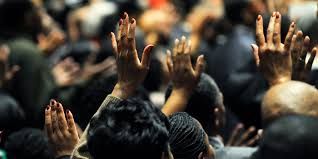
A closeup photograph of melanated hands lifted in praise at a congregation. Photo Source: LightStock / Larry Dixon Jr.
In a speech on December 28, days before the implementation of the Emancipation Proclamation, Frederick Douglass reflected on the significance of this date in an uplifting speech:
This is scarcely a day for prose. It is a day for poetry and song, a new song. These cloudless skies, this balmy air, this brilliant sunshine, (making December as pleasant as May,) are in harmony with the glorious morning of liberty about to dawn upon us. Out of a full heart and with sacred emotion, I congratulate you my friends, and fellow citizens, on the high and hopeful condition, of the cause of human freedom and the cause of our common country, for these two causes are now one and inseparable and must stand or fall together.
Frederick Douglass, December 31, 1862
These celebrations were usually paired with a feast of collard greens, which represent prosperity, and black-eyed peas, which represent luck and fortune. Together, they reflected the possibility and potential of a new year. To this day, many African American communities eat these foods — particularly black-eyed peas — on New Year's Eve to invite good fortune into the new year.
Many Black churches still host Freedom's Eve services on New Year's Eve, where communities worship, pray, and congregate for the freedoms we still deserve. The times have changed. This vision hasn't. And we’ll continue to set our sights on a more just and liberatory new year.
Reflection Questions
Why do you think President Lincoln chose to announce the Emancipation Proclamation in September 1862 but wait until January 1, 1863 to put it into effect? What might have been the advantages and disadvantages of giving the Confederacy this three-month warning period?This issue describes how enslaved people risked punishment to gather even before the Emancipation Proclamation. What does this tell us about the importance of faith and community in resistance?Enslaved people had been escaping to Union lines and demanding wages even before the Emancipation Proclamation was signed. How did this help push the government toward ending slavery? What does this tell us about who the real agents of change were during this period?
Learn More
Watch this panel discussion on the historic impact of the signing of the Emancipation Proclamation and the passage of the 13th Amendment on the African American family unit—and how this holiday still resonates today.Watch this short video of Teddy Reeves, Ph.D. Curator of Religion, will give a brief overview of the religious traditions of a Watch Night service and a non-denominational blessing for the year to come.To introduce Freedom’s Eve to children, read this picture book: Freedom's Eve: A Story of Watch Night by Pamela Courtney and illustrated by Keisha Morris Read Troubled Refuge: Struggling for Freedom in the Civil War by Chandra Manning or Freedom National: The Destruction of Slavery in the United States, 1861-1865 by James OakesRead more about the slave codes that limited enslaved people’s opportunities to gather, learn and sustain themselves.
Never miss a story
Get stories of overlooked and untold Black history in your inbox, free every week.