Benjamin Fletcher
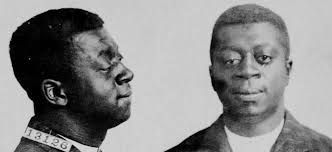
Day 10: Benjamin Fletcher
Benjamin Fletcher's work with the Industrial Workers of the World in the early 20th century demonstrated how radical labor organizing could transcend racial divisions. As one of the most prominent Black members of the IWW, Fletcher showed how industrial unionism could fight simultaneously against capitalism and racism, particularly through his groundbreaking organization of Philadelphia's interracial longshoremen unions.
When Benjamin Fletcher began organizing dock workers in Philadelphia in the 1910s, he faced a daunting challenge. The shipping industry traditionally used racial divisions to prevent worker solidarity, pitting Black and white laborers against each other. But Fletcher, nicknamed "The Black Wobbly," had a different vision – one of industrial unionism that would unite all workers regardless of race.
Fletcher joined the Industrial Workers of the World in 1912, attracted by their radical vision of "One Big Union" and their explicit rejection of racial discrimination. Unlike most unions of the era, the IWW actively recruited Black members and fought against workplace segregation. Fletcher became not just a member, but a leader, serving as one of the few Black organizers in any labor union of the period.
His greatest success came with organizing Philadelphia's dock workers. Through tireless effort and compelling oratory, Fletcher built Local 8 of the Marine Transport Workers Industrial Union, a remarkably integrated union where Black and white workers shared leadership positions and fought together for better conditions. Under his leadership, Local 8 controlled much of the Philadelphia waterfront by 1916, winning better wages and workplace conditions for all workers.
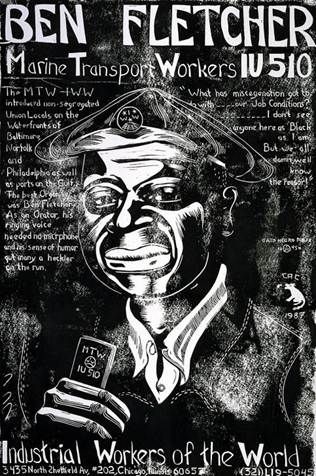
A black and white hand-drawn poster of Fletcher promoting his leadership as part of the IWW, published in 1979. Photo Source: libcom.com
"The employing class knows no color line. They recognize no race when it comes to exploiting workers," Fletcher would tell crowds of workers. His message resonated because he connected racial and economic justice, showing how employers used racism to divide workers and prevent them from organizing effectively.
However, Fletcher's success made him a target. In 1917, during the federal government's crackdown on the IWW, he was arrested along with 100 other Wobblies on charges of espionage and sedition. Despite the dubious nature of the charges, Fletcher was convicted and sentenced to ten years in prison. He served nearly three years before receiving a presidential commutation in 1922.
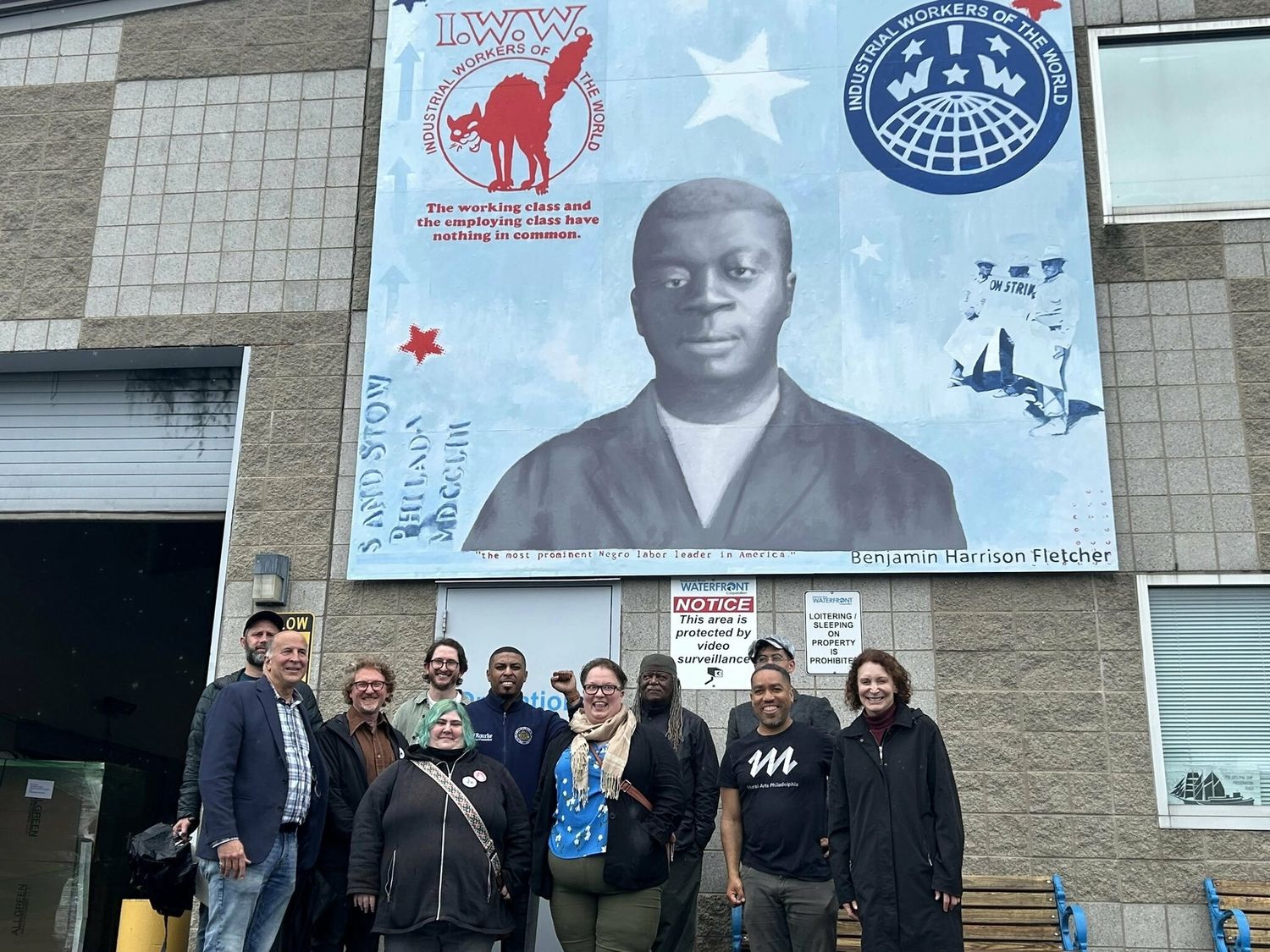
A mural celebrating Ben Fletcher – “The Black Wobbly” – was unveiled in Philadelphia on May 18, 2024. Image depicts a photograph of the mural with a group of community members below it, posing for the camera. Photo Source: Labor Heritage Power Hour
After his release, Fletcher continued organizing, though under intense surveillance. He maintained his commitment to industrial unionism and racial equality, serving as a bridge between the labor and civil rights movements. His work demonstrated that effective labor organizing could overcome racial divisions and build genuine solidarity among workers.
Reflection Questions
Fletcher believed that racism and economic exploitation were interconnected systems. How do you see these systems still operating today, and what lessons can we learn from Fletcher's approach to fighting both simultaneously?
Consider how Local 8's integration challenged the racial norms of its time. What role can labor unions play today in promoting racial equity and justice?
Learn More
Read "Ben Fletcher: The Life and Times of a Black Wobbly" by Peter Cole for a comprehensive biography of Fletcher's life and work.Explore the IWW's historical archives to learn more about their early commitment to racial equality and industrial unionism.Research current labor organizations working to unite workers across racial lines, such as Black Workers for Justice and the Coalition of Black Trade Unionists.Study the history of Philadelphia's Black labor movement through Temple University's Urban Archives collection.Examine contemporary dockworkers' unions like the International Longshore and Warehouse Union (ILWU) that continue Fletcher's legacy of fighting for both labor and civil rights.
Never miss a story
Get stories of overlooked and untold Black history in your inbox, free every week.