Velma Hopkins
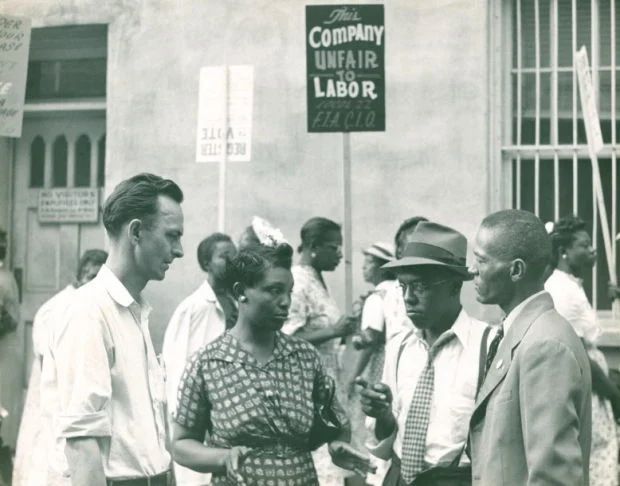
Day 9: Velma Hopkins
Velma Hopkins transformed Southern labor organizing through her leadership of the 1943 R.J. Reynolds strike, which demonstrated the power of Black women workers to organize effectively in the Jim Crow South. Her organizing strategies created a model for civil rights activism that would follow.
In 1943, Winston-Salem, North Carolina, was dominated by R.J. Reynolds Tobacco Company. The company employed thousands of Black workers, mostly women, in its tobacco processing plants. These workers endured brutal conditions: intense heat, tobacco dust that coated their lungs, and segregated facilities. They were paid far less than white workers and faced constant harassment from supervisors.
Velma Hopkins was one of these workers. Like many Black women in the tobacco industry, she spent long hours "stemming" tobacco – removing the tough central stem from tobacco leaves. It was exhausting work that paid poverty wages. But Hopkins saw something else in the tobacco factories: the potential for organized resistance.
"We didn't have any voice," Hopkins later recalled. "But we had numbers." Indeed, Black women made up the majority of the Reynolds workforce. If they could organize, they could force the company to listen.
In June 1943, Hopkins and other workers formed Local 22 of the Food, Tobacco, Agricultural and Allied Workers of America-CIO. They chose this union because it was one of the few that actively organized Black workers and promoted Black leadership. Hopkins emerged as a key leader, known for her ability to connect with workers and articulate their demands.
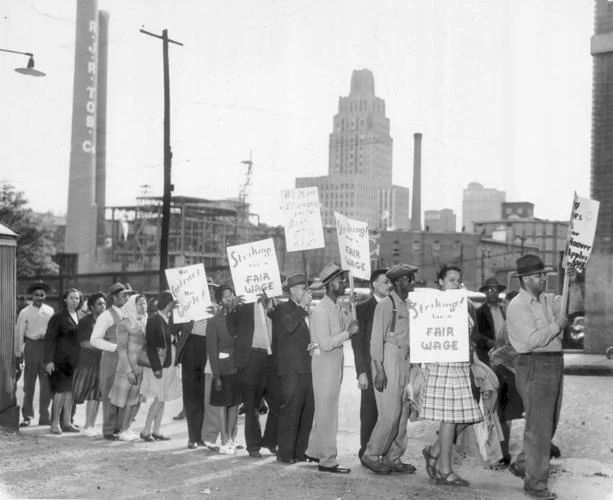
Velma Hopkins and other activists held several strikes at RJR, including a 38-day strike in 1947 that garnered nationwide attention. Photo Source: Winston Salem Journal.
When Reynolds refused to recognize the union, Hopkins helped organize a strike. On June 17, 1943, thousands of workers walked out. The sight was extraordinary: Black women, many wearing their white work uniforms, marching through the streets of a segregated Southern city, demanding their rights.
The strike challenged multiple power structures at once. It defied Reynolds' economic power, Jim Crow segregation, and patriarchal assumptions about women's roles. The strikers faced opposition from the company, city officials, and even some Black community leaders who feared white backlash.
But Hopkins and other leaders had built strong foundations in the community. They worked through churches, social networks, and neighborhood groups. They connected labor rights to civil rights, arguing that economic justice was inseparable from racial justice. They organized food distribution systems to support striking workers and their families.
The strike lasted only three days, but its impact was profound. Reynolds agreed to negotiations, leading to improved conditions and wages. More importantly, the strike demonstrated that Black workers, especially women, could organize effectively despite segregation and repression.
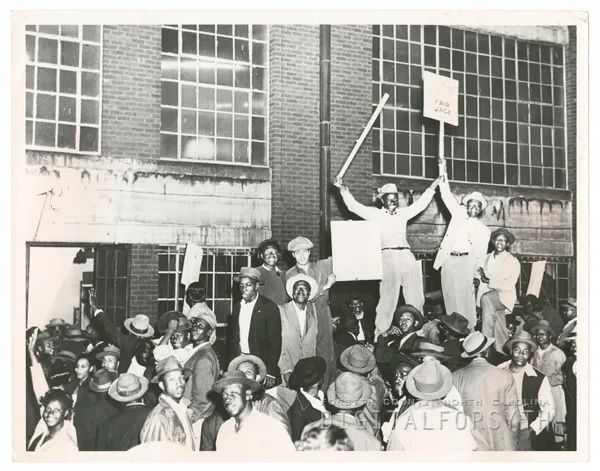
A black and white photograph of the worker strike at R. J. Reynolds Tobacco Company in 1947, depicting dozens of men protesting in front of a building, some hoisted on the shoulders of others. Photo Source: Digital Forsyth
Hopkins continued organizing after the strike. Under her leadership, Local 22 became a force for both labor and civil rights in Winston-Salem. The union registered voters, fought discrimination, and supported education initiatives. It provided a model of Black working-class activism that would influence the civil rights movement.
However, success brought backlash. In the late 1940s, as the Red Scare intensified, Local 22 was targeted for its left-wing politics and racial progressivism. Hopkins and other leaders were accused of being communists. The union faced increasingly hostile employers and government officials.
Despite these challenges, Hopkins persisted. When Local 22 was eventually destroyed by anti-communist persecution, she remained active in civil rights work. She understood that the struggle for justice had to continue, even when specific organizations were defeated. Her legacy lives on in the tradition of Black women's labor activism today.
Reflection Questions
Hopkins built power by connecting workplace organizing to community organizing. How can labor movements today build similar connections between workplace and community struggles?
Consider how Hopkins and other Black women workers organized despite multiple forms of oppression. What lessons can current movements learn from their strategies and resilience?
Learn More
Read "Civil Rights Unionism: Tobacco Workers and the Struggle for Democracy in the Mid-Twentieth-Century South" by Robert Korstad for a detailed account of Local 22.Visit the New Winston Museum to explore exhibits on the 1943 strike and tobacco worker organizing.Study the Tobacco Workers International Union records at the State Archives of North Carolina.Watch "Union Maids," a documentary featuring women labor organizers from Hopkins's era.Explore the African American Heritage Initiative of the National Park Service, which includes sites related to Black labor history.Research current Black-led labor organizing in the South through organizations like the Southern Workers Assembly.Visit the International Civil Rights Center & Museum in Greensboro, NC, which includes material on labor organizing in the tobacco industry.
Never miss a story
Get stories of overlooked and untold Black history in your inbox, free every week.