Black August
In the 1970s, California's prison system became a battleground for Black liberation. And this moment of resistance was sparked by George Jackson, a young and influential organizer. In 1960, he was arrested at just eighteen years of age after being accused of stealing $70 at a gas station. He was convicted and given an indeterminate sentence (a prison term with no fixed end date) of one year to life. By 1970, Jackson had spent a decade at California’s Soledad and San Quentin prisons, seven and a half of them in solitary confinement.
While incarcerated, Jackson dedicated himself to political study. He learned about class injustice, the inequities of capitalism, and the importance of revolution by reading works by leaders like Marx, Lenin, Mao, and Frantz Fanon. He became a Field Marshal of the Black Panther Party from inside San Quentin and helped organize other prisoners, leading study groups and forming the prison's Black Panther chapter. He published two books that gained wide readership outside prison walls—"Soledad Brother" and "Blood in My Eye."
"Settle your quarrels, come together, understand the reality of our situation, understand that fascism is already here, that people are already dying who could be saved, that generations more will live poor butchered half-lives if you fail to act. Do what must be done; discover your humanity and your love in revolution."
–George Jackson
Jackson’s influence and leadership were threatening to prison authorities, so, when a guard was killed, they pinned it on Jackson and two of his comrades, Fleeta Drumgo and John Clutchette. They were known as the "Soledad Brothers,” and they were all charged with murder in a flimsy case that made the public skeptical. Activists worked to raise awareness of the case and the historical injustices that many Black people faced in the criminal justice system. The trial attracted national attention and brought the voices of those incarcerated to the forefront of the burgeoning civil rights movement.
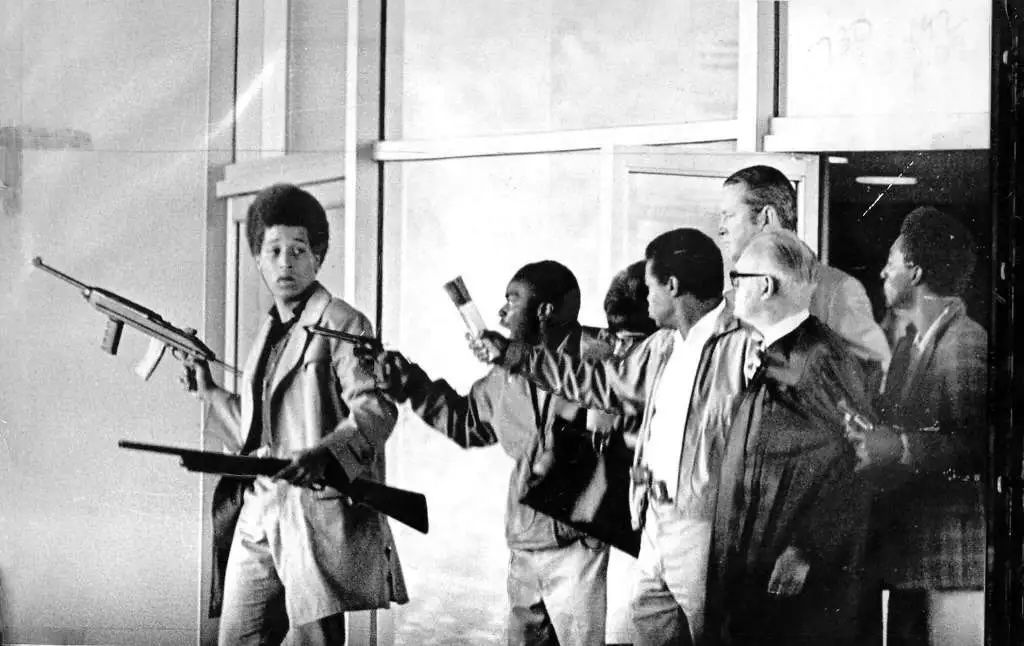
When it was clear that George Jackson would likely never be released from prison, his brother, seventeen-year-old Jonathan Jackson, decided to seek justice in his own way. On August 7, 1970, Jonathan Jackson raided the Marin County Courthouse, released three prisoners, took several courthouse staff hostage, and demanded the Soledad Brothers be released. Jonathan and two of the three freed inmates—James McClain and William Christmas—were killed in a resulting shootout. Ruchell Magee, the other freed inmate, survived, though he was wounded and returned to prison. This day was the inspiration for Black August; a day of resistance and direct action to protest unjust systems.
Just over a year after his younger brother's death, on August 21, 1971, George Jackson allegedly led a desperate prison break and was shot and killed while escaping. But this story is hotly contested, and those close to Jackson and familiar with the prison believe he was murdered by guards in a cover-up. Author James Baldwin even went on to say that “no Black person will ever believe that George Jackson died the way they tell us he did."
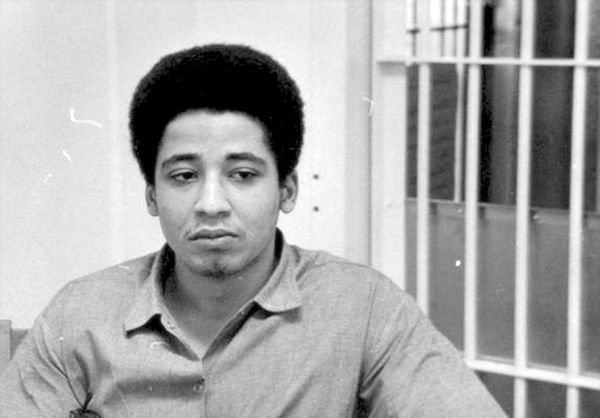
A black and white photograph of George Jackson while incarcerated, taken in 1970. He’s seated wearing a collared shirt, looking down and away from the camera in contemplation. Photo Source: African American Intellectual History Society
But Jackson’s influence had already made its way across the country, and imprisoned people were organizing everywhere to demand better living conditions, equitable treatment by guards, access to education, and adequate medical care. They filed lawsuits, organized strikes, and staged rebellions. The most famous came just weeks after George Jackson's death, when on September 9, 1971, about 1,500 prisoners at Attica Correctional Facility in New York seized control of the prison. They issued a manifesto with their demands and held the facility for four days before Governor Nelson Rockefeller ordered state troopers to retake it by force. At least twenty-nine prisoners were killed in the assault. None of them had guns.
In 1979, prisoners at San Quentin—where George Jackson, W.L. Nolen, James McClain, William Christmas, and Ruchell Magee had all been held—established Black August as a formal commemoration. The concept centered on the principle "study, fast, train, fight," four ways to take direct action against the injustices of the carceral system. Participants committed to fasting from sunrise to evening meal, abstaining from alcohol and drugs, limiting television to educational programming, engaging in political study, and exercising regularly. They wore black armbands in tribute to fallen freedom fighters. The month was originally chosen because of the deaths of George and Jonathan Jackson, in addition to other corresponding dates of injustice and resistance. And as the years have passed, more moments of history have been added to be reflected during this commemoration. Here’s a short list:
August 1619: The first enslaved Africans in the Americas arrived at Jamestown, VirginiaAugust 30, 1800: The date Gabriel Prosser's planned uprising against enslavement was set to launch in Richmond, VirginiaAugust 21, 1831: When Nat Turner launched his rebellion in Southampton County, VirginiaAugust 17, 1887: The birthdate of Marcus Garvey, founder of the Universal Negro Improvement AssociationAugust 1943: The Harlem Race Riot, sparked after police shot a Black soldier defending a Black womanAugust 28, 1963: The March on Washington for Jobs and Freedom, which rallied over250,000 people at the nation’s capital for racial equityAugust 11, 1965: The start of the Watts Rebellion in Los AngelesAugust 9, 2014: The death of Michael Brown, who was killed by police in Ferguson, Missouri, which sparked nationwide protestsAugust 21, 2018: A coordinated national prison strike began across facilities in multiple states
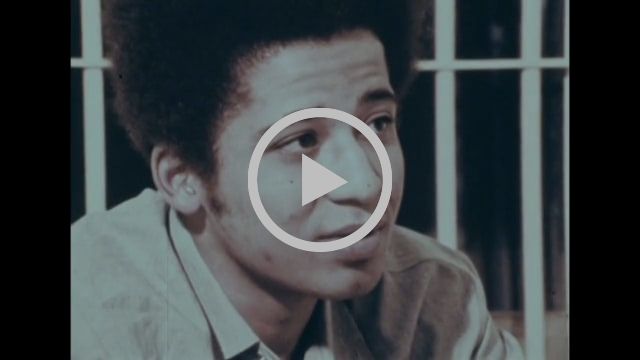
Watch this eye-opening short documentary from the early 1970s highlighting the inequities of the prison system. It features interviews with George Jackson, Georgia Jackson (George and Jonathan Jackson’s mother) and Angela Davis while she was still in the Marin County Courthouse Jail before her acquittal.
Now, Black August has become a time to inspire others to fight for liberation. There’s a particular focus on supporting political prisoners—revolutionaries imprisoned for their activism whom the U.S. government refuses to recognize as such. Dozens of former Black Panthers, Black Liberation Army members, and other radicals remain locked up decades after their arrests, their cases largely forgotten by the public. By doing so, we can see the connection of freedom fights across generations —from Nat Turner and Harriet Tubman through Marcus Garvey and Malcolm X to George Jackson and the Black Panthers.
Black August also highlights the broader impact of the carceral system on Black communities. As deindustrialization and economic changes pushed increasing numbers of Black people out of stable employment starting in the 1970s, incarceration rates skyrocketed. Prisons became warehouses for people the capitalist system no longer needed, disproportionately affecting Black, Latino, and Indigenous communities. This mass incarceration serves the same function as the overt terrorism of earlier eras—containing potential rebellion and maintaining racial hierarchies.
From the first enslaved Africans who arrived in 1619 through the prison organizers of today, August has been a month marked by resistance. Black August keeps that tradition alive, insisting that liberation requires continued struggle and that those who gave their lives fighting deserve to be remembered not with empty ceremonies but with renewed commitment to the cause they died for. Let each August be an invitation to learn more about the fight for abolition, the importance of protecting political protest, and to take direct action against injustice.
Reflection Questions
Black August emphasizes the principle "study, fast, train, fight" as forms of direct action and discipline. Which of these practices could you incorporate into your own life to deepen your commitment to justice? How might doing so change your approach to activism?The article traces resistance from 1619 through 2018, showing how August has repeatedly been a month of uprising and sacrifice. What current struggles for justice do you see as connected to this legacy?
Learn More
See how Black August was honored recently in Durham, North Carolina.Read more of George Jackson’s work, including his books “Soledad Brother” and “Blood in My Eye.”Black women–particularly Black trans women–are often overlooked in the movement for racial liberation. Read more about the women who have shaped Black August into what it’s known for today.Join Noname’s Book Club if you want to learn more about Black political resistance and Black liberation.Follow the work of the Malcolm X Grassroots Movement, a group that raises awareness of political prisoners.Watch “The Black August Hip Hop Project,” a 2010 documentary by dream hampton for the NY chapter of the Malcolm X Grassroots Movement.Read “Born in Blood: Death Work, White Power, and the Rise of the Black Guerilla Family”, a book that challenges the official state narrative of the organization.
Never miss a story
Get stories of overlooked and untold Black history in your inbox, free every week.