Rosa Parks Day
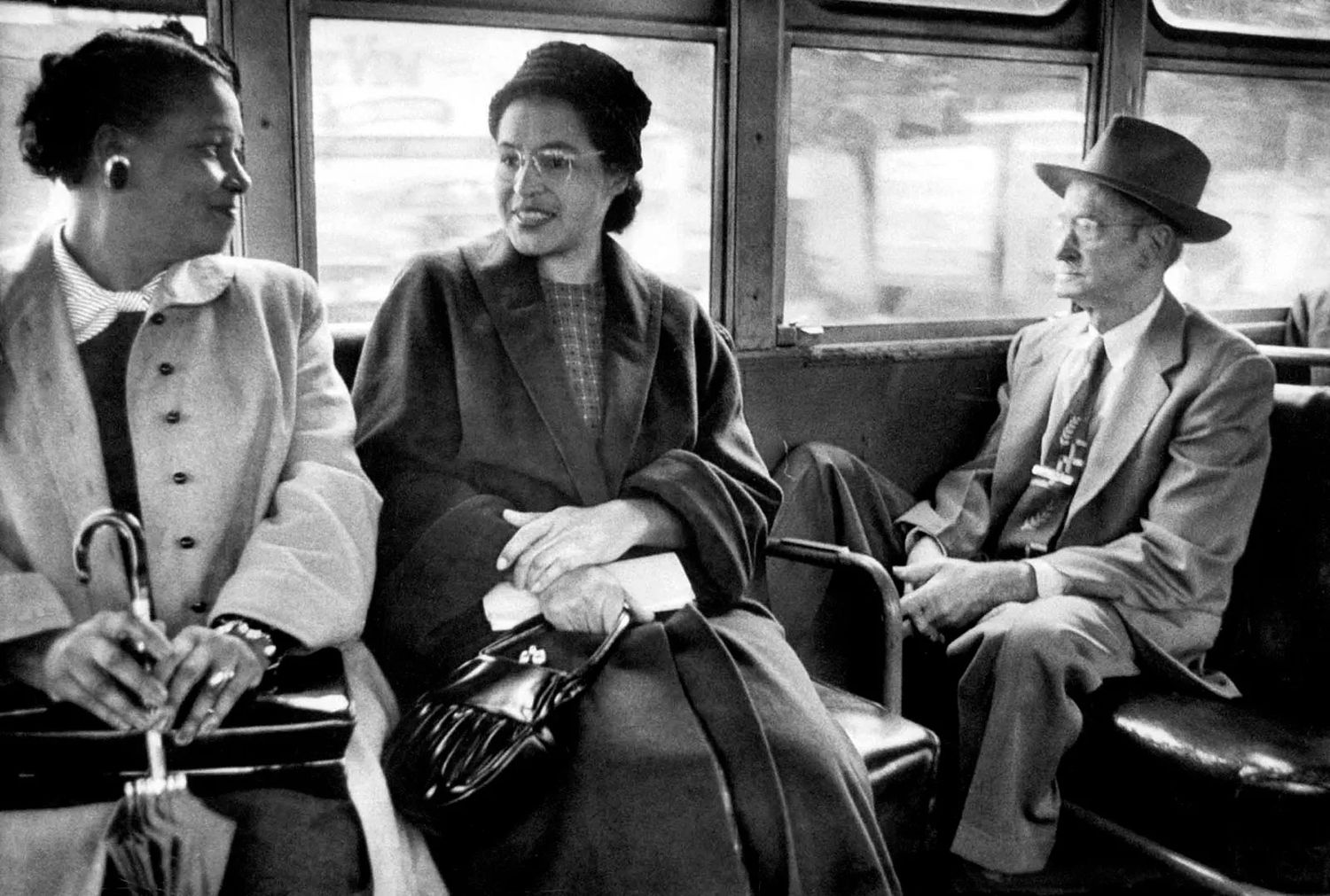
On December 1, 1955, after a long Thursday at work as a seamstress at a Montgomery department store, 42-year-old Rosa Parks boarded the Cleveland Avenue bus for her ride home. She paid her fare and took a seat in the "colored" section, as required by Montgomery's segregation laws. What happened next would make her an icon of the Civil Rights Movement and eventually inspire a day of remembrance across multiple states.
As the bus continued its route, more passengers boarded, and the vehicle began to fill. Montgomery city ordinance allowed bus drivers to assign seating, but technically did not permit them to demand that passengers give up their seats. Bus drivers did this anyway, forcing Black passengers to surrender their seats to white passengers when the bus became full. When the driver, James Blake, asked Parks to give up her seat for a white passenger, she refused.
Parks later explained in her 1992 autobiography Rosa Parks: My Story that her defiance was deliberate: "I was not tired physically, or no more tired than I usually was at the end of a working day. I was not old, although some people have an image of me as being old then. I was 42. No, the only tired I was, was tired of giving in."
Listen to Rosa Parks reflect on the moment she chose to resist in this 1995 interview.
Her anger had been building. Just four days before the incident, Parks attended a meeting where she learned that the men who murdered 14-year-old Emmett Till were acquitted. At the time, Parks served as secretary for the Montgomery branch of the NAACP and led its youth division. The Till lynching and the failure to bring his killers to justice had particularly affected her.
Police arrested Parks that evening. On December 5, 1955, the courts found her guilty of violating the city ordinance and fined her $10 plus court fees. The NAACP represented her as she appealed, but the case never made it through the Alabama court system.
Local community leaders saw Parks’ moment of resistance as the moment they’d been waiting for. Led by E.D. Nixon, a labor organizer with the Brotherhood of Sleeping Car Porters and president of the Montgomery NAACP, they quickly coordinated a campaign to amplify her bravery. Some of you might recognize him from his 28 Days of Black History feature last year! They created the Montgomery Bus Boycott as a day-long protest to coincide with Parks’ trial.
Earlier that year, 15-year-old Claudette Colvin had also been arrested for refusing to give up her bus seat. However, these leaders determined that Parks, a light-skinned, respected NAACP secretary with an unblemished record, would be a more compelling face of the movement. This was a glaring example of misogynoir, or the discrimination that women face because of both their gender and racial ethnicity. Colvin was darker-skinned than Parks and had more coily hair. She was also a pregnant teenager. Colvin herself even acknowledged this and said that her mother disocouraged her from speaking up. “She told me to let Rosa be the one: white people aren’t going to bother Rosa, they like her”.
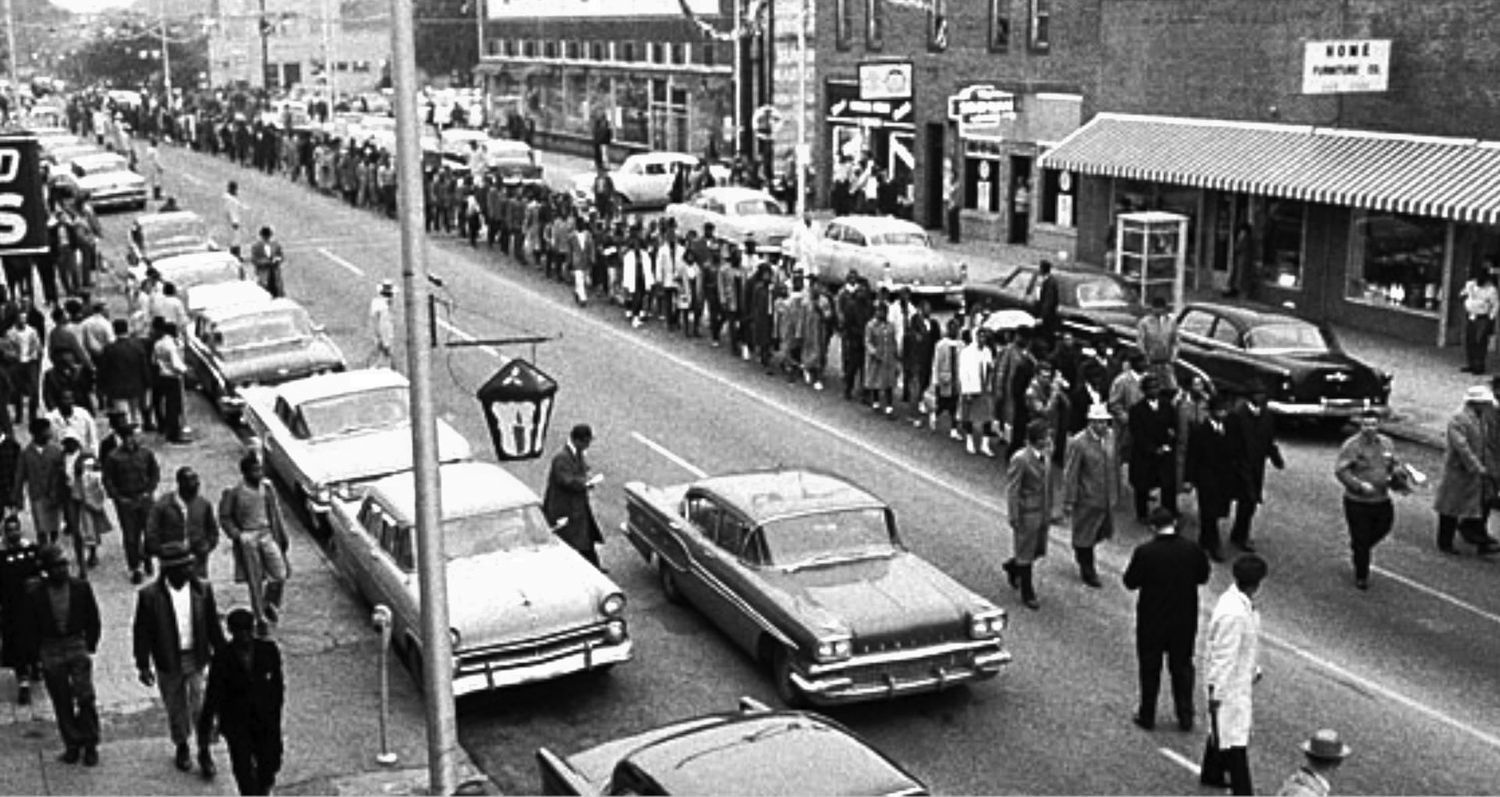
A black and white photograph from the first day of the boycott and march, which depicts dozens of Black people walking down the street. Noticeably, no buses are in sight. Photo Source: Don Cravens/Time Life Pictures/Getty Images
On December 5, 1955, an estimated 90% of Montgomery’s Black citizens refused to ride the city’s buses. Instead, they carpooled, rode in Black-owned cabs, or walked, some as far as 20 miles. Noticing how quickly the campaign resonated with the community, the leaders decided to make it a long-term boycott and founded the Montgomery Improvement Association (MIA) as an organized body to make demands. They wanted a president of the organization who was a relative newcomer to community activism and less likely to be dismissed as too outspoken. They asked a young Martin Luther King, Jr., who accepted the role, which acted as the catalyst for his legacy and influence.
The MIA issued a formal list of demands, including first-come, first-served seating for all guests, respectful treatment by bus operators, and Black bus operators on predominantly Black routes. But the city refused, and even tried to stop the boycott by penalizing cab drivers for picking up passengers. So, the boycott continued–not for a few days or weeks, but over a year.
Finally, in November 1956, the Supreme Court ruled in Browder v. Gayle that the segregated but privately owned bus system in Montgomery violated the Equal Protection Clause, effectively ending the boycott after 381 days. By then, the bus company had lost an estimated $3,000 to $4,000 in daily revenue, equal to roughly $36,000 – $48,000 in today’s dollars. The city was also draining its budget on increased police presence to quell unrest and scare boycott participants. The houses of E.D. Nixon, Dr. King, and other leaders were bombed, and the boycott had sparked a nationwide resistance against inequitable public services.
Watch the Howard Gospel Choir of Howard University sing “Lift Every Voice and Sing”.
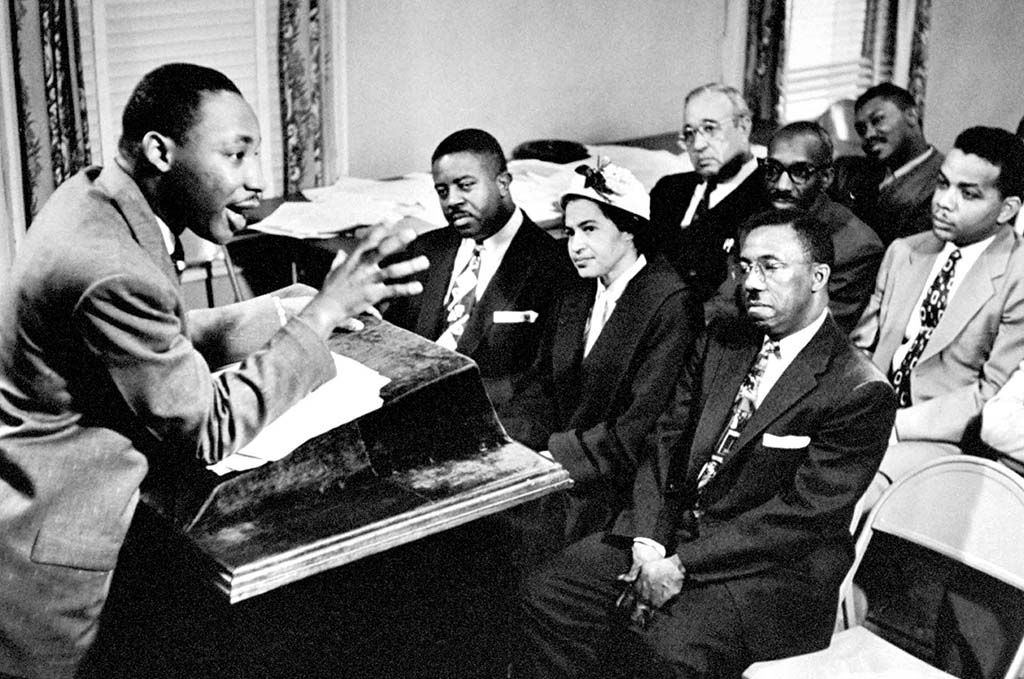
A black and white photograph of Rev. Martin Luther King Jr. outlining his strategy for the Montgomery Bus Boycott in 1955 to an audience that includes Rev. Ralph Abernathy (front row, left) and Rosa Parks (front row, center).
Photo Source: Don Cravens/Time Life Pictures/Getty Images
Rosa Parks also paid a heavy toll for being the face of the movement. She lost her job, and so did her husband, then a barber at a local air force base. In 1957, Parks and her husband left Montgomery, first traveling to Virginia before settling in Detroit, Michigan. But this didn’t stop her activism. She joined the movement for fair housing and supported John Conyers in his 1965 congressional bid. After he won, she worked as his secretary until her retirement in 1988. In this role, Parks worked with constituents on issues including job discrimination, education, and affordable housing. In the late 1960s, she helped investigate the killing of three Black teenagers during Detroit's 1967 race riot.
Today, Rosa Parks Day commemorates her courage and the broader movement her actions helped catalyze. California was the first state to designate February 4, Parks’ birthday, as Rosa Parks Day in 2000. Missouri did the same in 2006. Oregon and Ohio chose to commemorate Rosa Parks Day on December 1, the anniversary of her 1955 arrest, rather than her birthday. It’s not a federal holiday yet, but U.S. Representatives Terri A. Sewell, Joyce M. Beatty, and Shomari C. Figures introduced the Rosa Parks Day Act in February 2025 to make December 1 a national holiday. If established, Rosa Parks Day would become the first federal holiday to honor a woman.
But there's another way that cities honor Rosa Parks. Transit Equity Day, also held on February 4, is an annual event where cities provide public transportation free of charge. Local leaders use this date to rally for just and accessible transportation for their communities—because the fight for just and accessible public transportation isn't over yet. Regardless of which day, or what it's called, or whether or not it's federally recognized, we should spend a day (or more!) carrying Rosa Parks' vision into the future.
Reflection Questions
A boycott is a powerful form of protest. What other boycotts can you think of throughout history? Have you ever participated in a boycott before?The article mentions that the fight for just and accessible public transportation isn't over yet. What transportation equity issues exist in your community today?
Learn More
Read more about the life and legacy of Claudette Colvin, whose activism paved the way for the Montgomery Bus Boycott.Read interviews with other influential figures of the Montgomery Bus Boycott.Aurelia Brownder was the lead plaintiff in Browder v. Gayle, the Supreme Court case that effectively ended segregation on public transportation. Listen to her son, Butler Browder, discuss the case in this 2005 interview.The Montgomery Bus Boycott happened 70 years ago last December. Watch Democracy Now’s Amy Goodman interview historian and biographer Jeanne Theoharis, author of "The Rebellious Life of Mrs. Rosa Parks” on its impact.Rosa Parks’ moment of resistance has inspired people around the world to rally for transportation equity. Here’s how her work inspired activists in Chicago to rally for access for disabled riders.
Never miss a story
Get stories of overlooked and untold Black history in your inbox, free every week.