Brad Lomax
Day 5: Brad Lomax
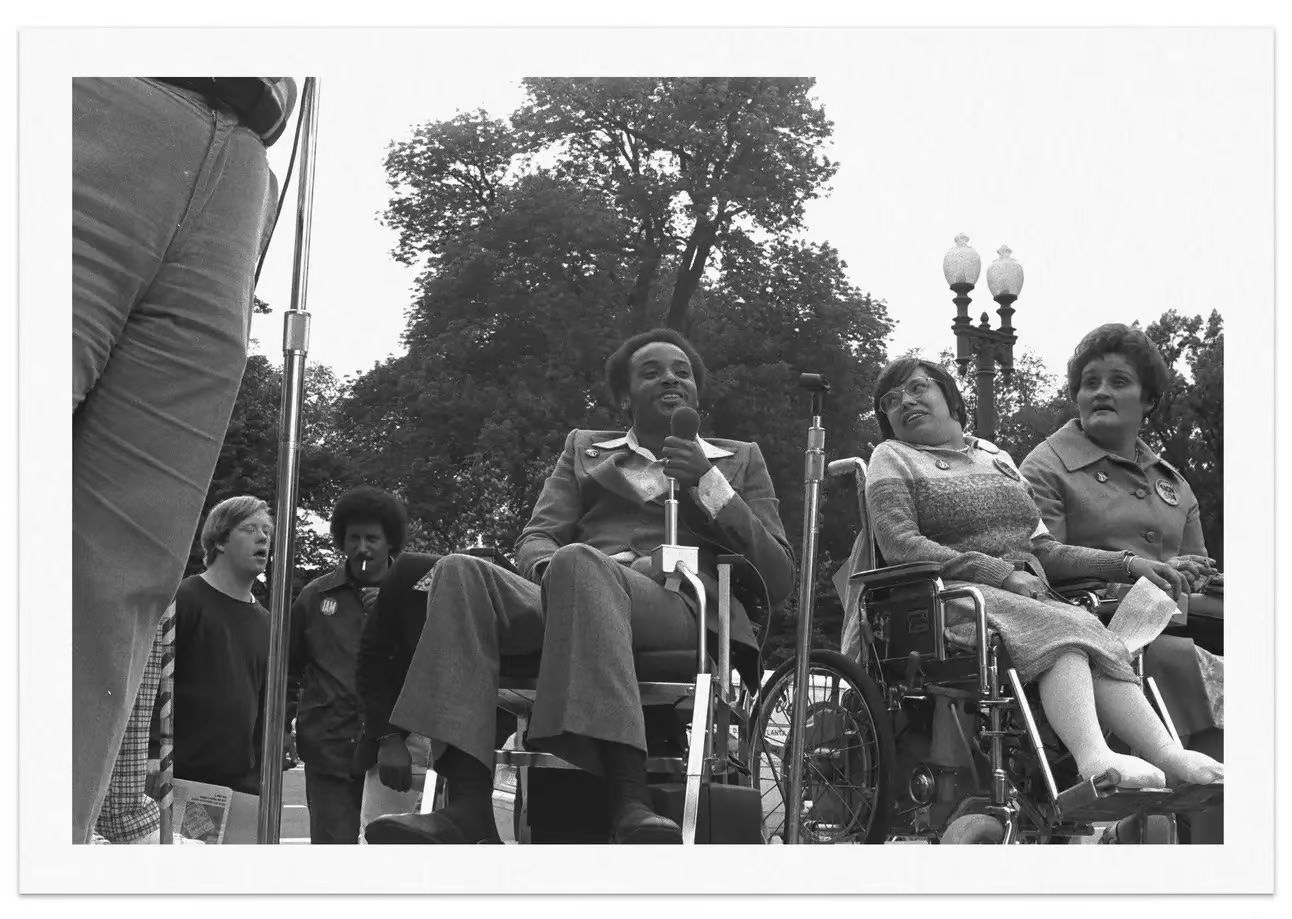
Brad Lomax, center, next to the activist Judy Heumann at a rally in 1977 at Lafayette Square in Washington. Photo Credit: HolLynn D'Lil, via New York Times.
Brad Lomax transformed both disability rights and civil rights through his participation in the historic 504 Sit-in and his work establishing the East Oakland Center for Independent Living. His involvement with the Black Panthers brought crucial support to the disability rights movement while expanding the Panthers' focus to include disability justice.
When Brad Lomax joined the Black Panther Party in the early 1970s, he was already living with multiple sclerosis. His experience as a Black disabled man gave him unique insight into how different forms of oppression intersected. He understood that the Panthers' message of self-determination and community empowerment needed to include disability rights.
Born in Philadelphia in 1950, Lomax came of age during the height of the civil rights movement. His diagnosis with MS in his early twenties could have sidelined his activism. Instead, it deepened his understanding of how systems of oppression worked together. In Oakland, Lomax worked to convince the Panthers that disability rights aligned perfectly with their Ten-Point Program, particularly its demands for employment, housing, and healthcare. He demonstrated how ableism, like racism, was a tool of economic oppression that kept people dependent and disempowered.
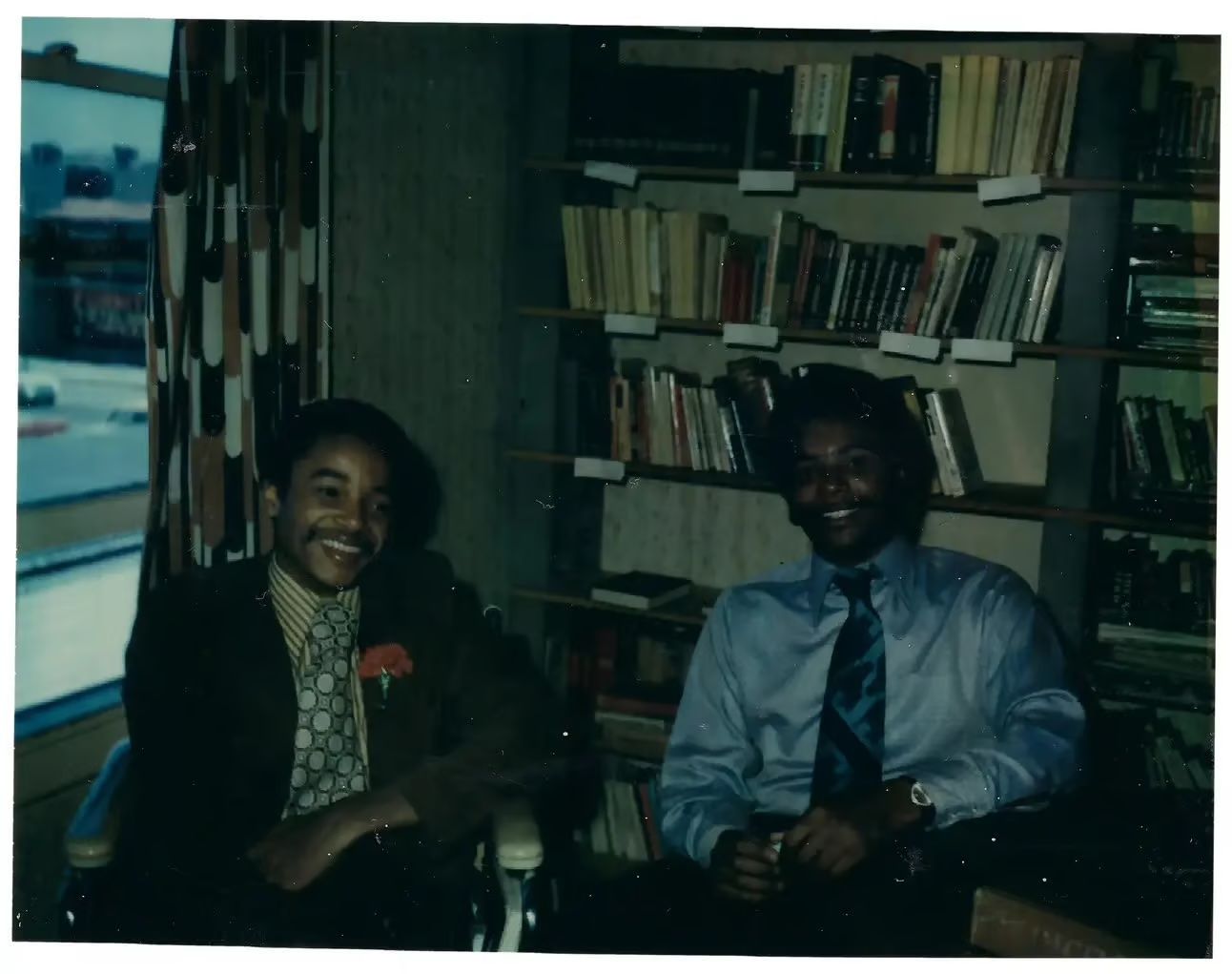
Brad and his brother, Glenn, smiling and sitting in front of a bookshelf in 1974 in the library of the Black Panther Party’s offices in Oakland, Calif. Photo Source: New York Times
In 1975, Lomax collaborated with the Panthers to establish the East Oakland Center for Independent Living (EOCIL). Unlike traditional disability services that focused on medical treatment or basic care, EOCIL emphasized economic independence. The center provided job training, employment placement, and advocacy for workplace accommodations. It became a model for how disability services could promote both independence and community power.
But it was during the historic 504 Sit-in of 1977 that Lomax's vision of intersectional activism made its greatest impact. Section 504 of the Rehabilitation Act of 1973 prohibited discrimination against disabled people in federally funded programs, but after four years, the government still hadn't issued regulations to implement it. In response, disability activists occupied federal buildings nationwide.The San Francisco sit-in at the Department of Health, Education, and Welfare building became the longest and most significant, lasting 26 days. Lomax, along with his personal care attendant Chuck Jackson, was among the first occupiers. His involvement brought crucial support from the Black Panthers, who demonstrated daily that disability rights were civil rights.
The Panthers' contribution went beyond symbolic support. They delivered hot meals to the protesters every day, mirroring their free breakfast programs for children. They helped with security and communication between protesters inside and supporters outside. Their involvement helped frame disability rights as part of the broader struggle for social justice.
Inside the building, Lomax helped create a model of inclusive organizing. The protesters made decisions collectively, ensuring that people with different disabilities could participate fully. Sign language interpreters worked alongside speakers. Documents were made available in multiple formats. The occupation itself demonstrated that disabled people could organize effectively for their own rights.
The sit-in succeeded in forcing the government to implement strong regulations for Section 504. These regulations, which mandated accessibility in buildings, transportation, and workplaces, became a model for the Americans with Disabilities Act of 1990. They established the principle that disability rights were civil rights, deserving of federal protection.
After the sit-in, despite his advancing MS, Lomax continued his work at the intersection of disability rights, civil rights, and labor rights. He advocated for accessible public transportation, arguing that disabled people couldn't work if they couldn't get to jobs. He pushed for job training programs that included disabled people and fought against discrimination in hiring and promotion.
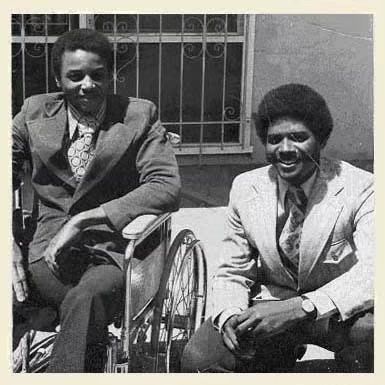
Lomax, left, while working at worked at the Panthers’ George Jackson Clinic, which provided free community medical care as part of the party's "Serve The People" programs. Photo Source: Movement for Black Lives.
Lomax's life and work, cut short by his death in 1984 at age 34, demonstrated the power of coalition-building between social justice movements. He showed how the fight for disability rights was inseparable from the struggles for racial justice, economic justice, and worker rights. His legacy lives on in the Americans with Disabilities Act and in contemporary movements that recognize the interconnected nature of different forms of oppression and the need for unified resistance.
Lomax understood that labor rights were central to disability rights. Many disabled people were unemployed or underemployed not because they couldn't work, but because workplaces weren't accessible and employers discriminated against them. He pushed for the 504 regulations to include strong workplace protections.
Reflection Questions
Lomax showed how different justice movements can support each other. How can labor, civil rights, and disability rights movements work together more effectively today?
Consider how the Panthers' support strengthened the disability rights movement. What resources and support can different movements share to become more powerful together?
Learn More
Watch "The Power of 504," a documentary about the sit-in that features Lomax's role.Read the obituary written by Eileen AJ Connelly as part of the New York Times’ Overlooked series.Visit the Ed Roberts Campus in Berkeley, which houses disability rights organizations continuing Lomax's work.Study the Disability Rights and Independent Living Movement collection at UC Berkeley's Bancroft Library.Research current organizations like the National Black Disability Coalition that continue fighting at the intersection of racial and disability justice.
Never miss a story
Get stories of overlooked and untold Black history in your inbox, free every week.