Maggie Lena Walker
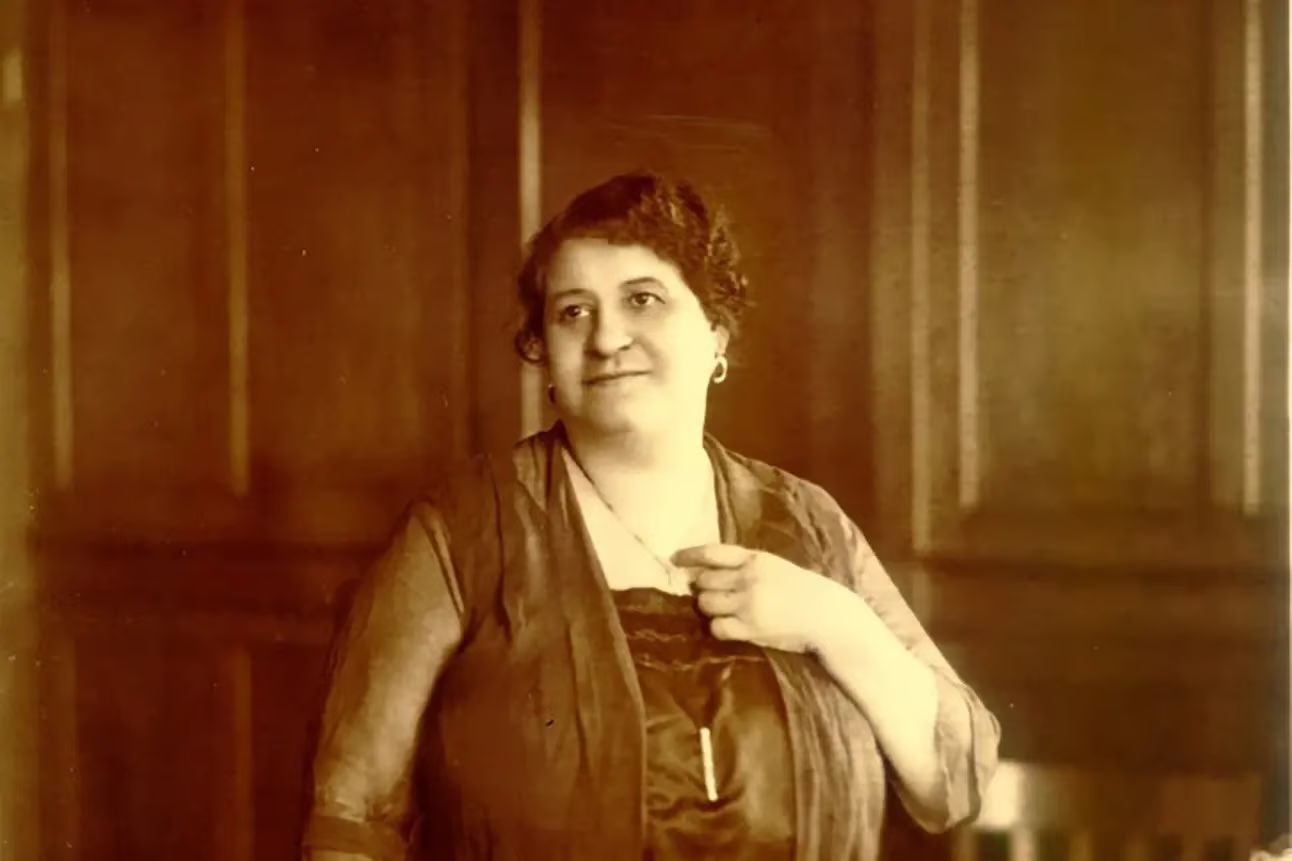
Day 4: Maggie Lena Walker
Maggie Lena Walker's leadership of the Independent Order of St. Luke and founding of the St. Luke Penny Savings Bank nurtured economic power in her community through cooperative economics and mutual aid. Her innovative approach to combining banking, insurance, and retail businesses created jobs while building Black economic independence.
When Maggie Lena Walker became the first Black woman to charter a bank in the United States in 1903, she did more than break a barrier – she created a model for Black economic empowerment. "Let us put our money together," she urged. "Let us use our money; Let us put our money out at usury among ourselves, and reap the benefit ourselves."
Born to formerly enslaved parents in Richmond, Virginia, in 1864, Walker's early life shaped her understanding of economic justice. Her mother worked as a laundress, and young Maggie helped deliver clean clothes to white families – giving her a firsthand view of the wealth gap created by slavery and segregation. Through her work with the Independent Order of St. Luke, a mutual aid society, she saw how Black communities could pool resources to create their own opportunities.
The founding of St. Luke Penny Savings Bank emerged from Walker's deep involvement with the Order of St. Luke, where she rose from a teenage member to become the Right Worthy Grand Secretary in 1899. Under her leadership, the organization grew from near bankruptcy to having over 100,000 members in 24 states. This success gave her the platform and experience to launch more ambitious economic projects.
The St. Luke Penny Savings Bank wasn't just a financial institution – it was the center of an economic ecosystem. Walker's bank provided capital for Black businesses, mortgages for Black homeowners, and jobs for Black workers, particularly women. At a time when most banks wouldn't even serve Black customers, let alone hire Black employees, Walker insisted on hiring Black women as tellers and clerks. She recognized that economic freedom required not just access to capital, but also access to dignified employment.
In 1905, Walker expanded her economic vision by launching the St. Luke Emporium, a department store in Richmond's Jackson Ward district. The store challenged the humiliating treatment Black shoppers faced at white-owned establishments. Black women could try on clothes before buying them – a simple dignity denied them elsewhere. The store's Black employees could work as sales clerks rather than just janitors or stock workers.
Through the St. Luke Herald newspaper, which she founded in 1902, Walker educated the community about financial literacy and economic cooperation. The paper published banking basics, business opportunities, and success stories from the Black community. It was part of Walker's broader mission to create informed, economically empowered citizens.
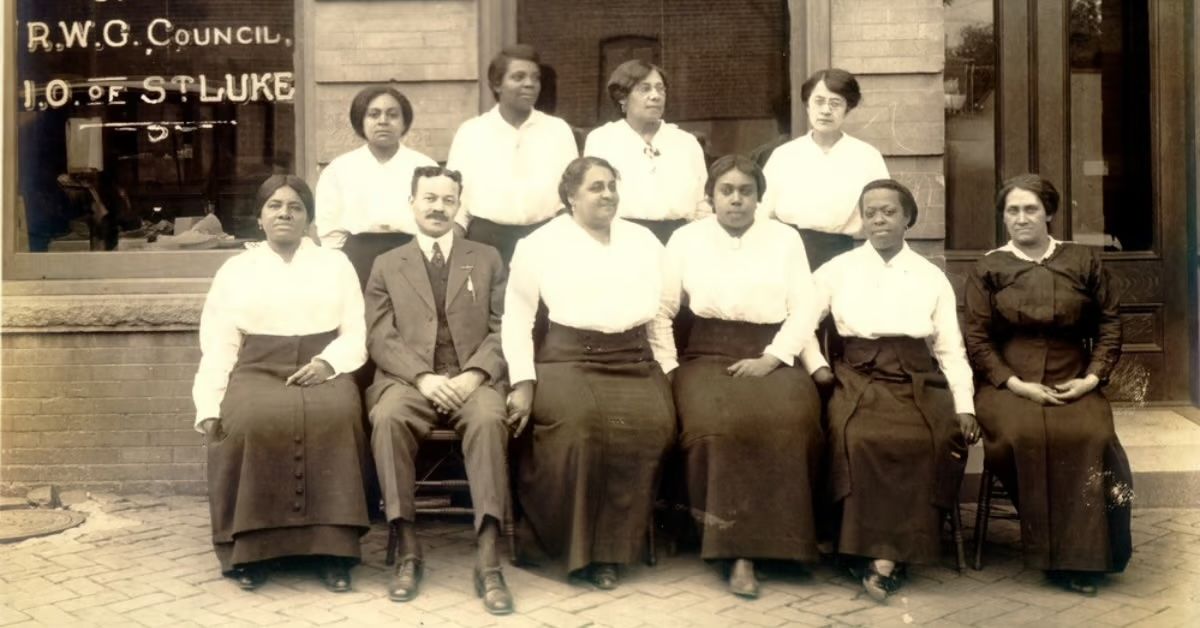
The IOSL staff in front of the St. Luke building in the 1920s. Photo Source: National Park Service, Maggie Lena Walker National Historic Site.
Her approach to worker empowerment was comprehensive. Bank employees received extensive training in banking and business operations, creating a new class of Black financial professionals. This was revolutionary at a time when most Black workers were locked out of white-collar jobs. The St. Luke insurance operations provided both services to the community and employment opportunities, particularly for Black women who could earn commissions as insurance agents.
Even during the Great Depression, when thousands of banks failed, Walker's institution survived by merging with other Black-owned banks to form the Consolidated Bank and Trust Company in 1930. The merged bank continued serving the Black community for decades, becoming the longest-operating Black-owned bank in the United States.
Walker achieved all this while facing significant personal challenges. As a Black woman in the male-dominated banking industry, she faced constant misogynoir. She also became disabled in the early 1900s and used a wheelchair, exposing her to heightened ableism. Some criticized her focus on women's employment, but she stood firm in her belief that economic power was crucial for both racial and gender equality.
Walker's economic philosophy was deeply practical. She understood that boycotts and protests alone couldn't create change without economic alternatives. By creating Black-owned institutions, she gave the community both services and leverage. White-owned businesses had to reconsider their discriminatory practices when faced with successful Black competition.
Today, as discussions of racial wealth gaps and economic justice continue, Walker's vision remains relevant. Her understanding that economic power must be built from within communities, her focus on both access to capital and job creation, and her belief in the importance of financial education all offer lessons for current efforts at economic empowerment.
Maggie Lena Walker died in 1934, but her impact continues through the institutions she built and the people she trained. She proved that economic cooperation could be a powerful tool for social change, and that banking could be both profitable and purposeful when rooted in community needs. Her life's work showed that economic justice wasn't just about access to existing institutions – sometimes it required building new ones.
Reflection Questions
Consider how Walker used financial institutions to create economic opportunities. How can similar strategies address current racial wealth disparities?
Walker believed in the power of cooperative economics. What role can mutual aid and cooperative businesses play in building economic justice today?
Learn More
Visit the Maggie Lena Walker National Historic Site in Richmond, Virginia, to explore her home and legacy.Watch "Carry On: The Life and Legacy of Maggie Lena Walker" on YouTube.Research the Independent Order of St. Luke records at the Virginia State Library.Study the history of Black banking through the National Bankers Association archives.Read “A Right Worthy Woman,” a historical fiction based on the life of Maggie Lena Walker.
Never miss a story
Get stories of overlooked and untold Black history in your inbox, free every week.