William Lucy
Day 3: William Lucy
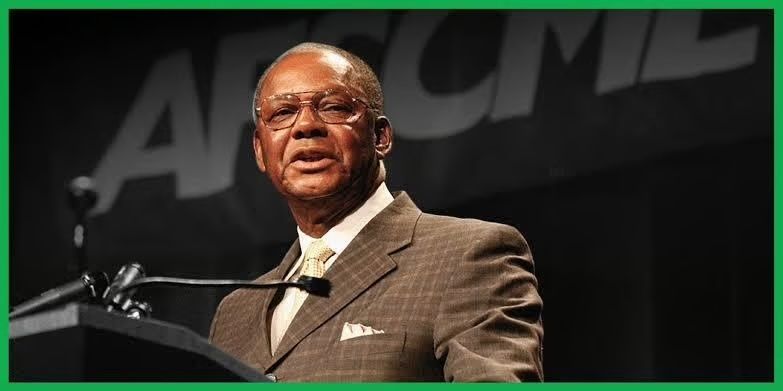
A lifelong organizer, William “Bill” Lucy’s leadership helped transform AFSCME into a powerful force for both labor and civil rights, particularly through his crucial role in the 1968 Memphis Sanitation Workers' Strike.
When William “Bill” Lucy arrived in Memphis in February 1968, he found 1,300 sanitation workers on strike, carrying signs declaring "I AM A MAN." The workers faced dangerous conditions, poverty wages, and routine humiliation. After two workers, Echol Cole and Robert Walker, were crushed to death in a malfunctioning truck, their deaths became the catalyst for action.
Lucy, then assistant to AFSCME president Jerry Wurf, recognized that this wasn't just a labor dispute – it was a civil rights struggle. "These were Black men doing the dirty work of society that nobody else wanted to do," Lucy later recalled. "And they were being treated as less than men."
The Memphis Sanitation Workers' Strike emerged from decades of mistreatment. Black workers were forced to use separate facilities, had no access to showers despite handling garbage all day, and received no overtime pay. When it rained, they were sent home without pay but were not allowed to take shelter in the white workers' break room. The city refused to replace faulty equipment, leading to Cole and Walker's tragic deaths.
As the strike's chief strategist, Lucy helped develop the "I AM A MAN" slogan that perfectly captured the strike's essence. The slogan connected labor rights to human dignity, speaking to both economic and racial justice. It drew national attention and brought Dr. Martin Luther King Jr. to Memphis to support the strikers. King saw the strike as a perfect example of how racial and economic justice intersected.
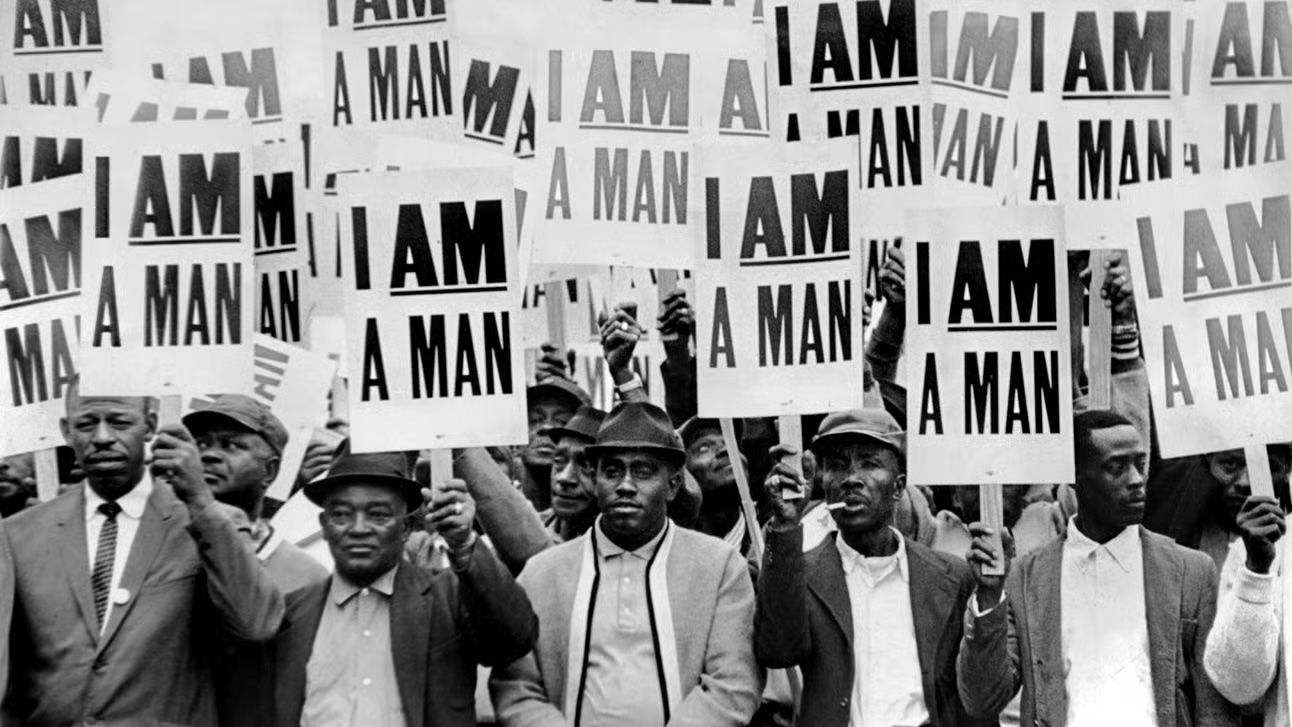
This iconic black and white photograph from the 1968 Memphis Sanitation Workers' Strike shows a group of African American men holding protest signs that read "I AM A MAN. Photo Source: Library of Congress
Lucy stayed in Memphis for the strike's entire 65 days, even after King's assassination on April 4, 1968. He helped maintain striker unity despite intense pressure from the city government and police violence. The strike's eventual victory on April 16 demonstrated that public sector workers, particularly Black workers, could organize effectively for their rights.
The experience transformed Lucy's approach to labor organizing. He saw how traditional union tactics needed to be combined with civil rights strategies to be effective. This understanding led him to co-found the Coalition of Black Trade Unionists (CBTU) in 1972, creating a voice for Black workers within the AFL-CIO who felt the federation wasn't doing enough to fight racism.
As AFSCME's Secretary-Treasurer from 1972 to 2010 – the first African American to hold this position – Lucy helped transform the union into a powerhouse of public sector organizing. Under his leadership, AFSCME grew from 200,000 to over 1.4 million members. He focused particularly on organizing workers in sectors with high concentrations of Black and female employees, like healthcare and education.
Lucy understood that workers' struggles crossed national boundaries. He became a key figure in U.S. labor's opposition to South African apartheid, helping launch the Free South Africa Movement in the 1980s. He saw parallels between the Memphis sanitation workers' fight for dignity and South African workers' struggle against apartheid. His leadership in international labor solidarity included supporting Polish Solidarity workers and serving as president of Public Services International.
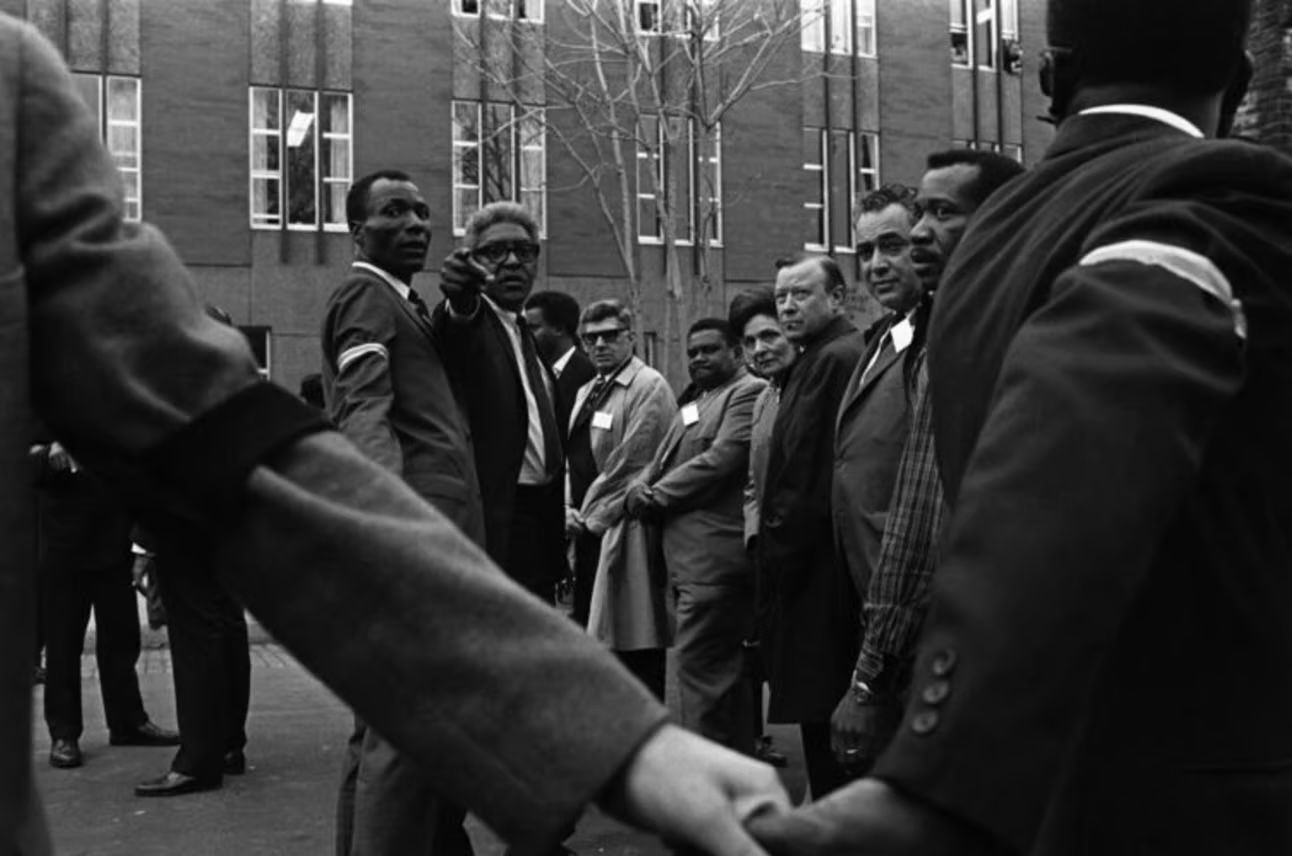
From left, William Lucy, Bayard Rustin and other union leaders organize a march in Memphis, Tenn., April 8, 1968, in honor of the Rev. Martin Luther King Jr., who was assassinated in Memphis four days earlier. Photo Source: AP Photo
Throughout his career, Lucy insisted that unions had to be about more than wages and benefits. He pushed AFSCME to fight for civil rights, women's rights, and international solidarity. Under his leadership, AFSCME became known as one of America's most progressive unions, often taking strong stands on social justice issues beyond traditional labor concerns.
Lucy continued to advocate for workers' rights until he passed away in September of last year. The lessons he learned in Memphis – about the connection between labor rights and civil rights, the power of public sector workers to drive social change, and the importance of unity across racial lines – remain relevant. As new generations of workers organize for dignity and justice, Lucy's experience and wisdom offer valuable guidance for the struggles ahead.
Reflection Questions
Lucy saw public sector unions as vehicles for both economic and social justice. How can today's public sector workers continue this legacy of fighting for broader social change?
Consider how the "I AM A MAN" slogan connected labor rights to human dignity. What similar connections need to be made in current labor struggles?
Learn More
Watch "At the River I Stand," a documentary about the Memphis Sanitation Workers' Strike featuring Lucy's role.Watch “I Am a Man: A Conversation with William Lucy,” an interview with Lacy about his 50-year fight for racial justice and workers’ rights.Visit the National Civil Rights Museum in Memphis, which includes exhibits about the sanitation workers' strike.Read "Going Down Jericho Road" by Michael Honey about the Memphis strike and its significance.Research the ongoing work of Public Services International, the global union federation Lucy once led.
Never miss a story
Get stories of overlooked and untold Black history in your inbox, free every week.