Bruce's Beach
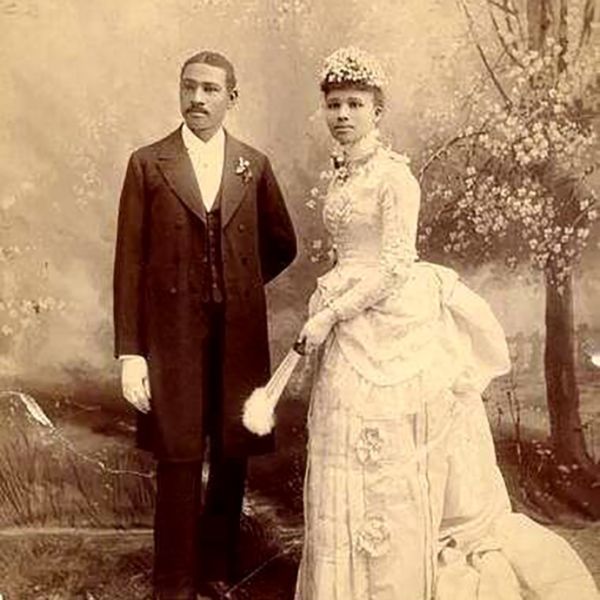
In February 1912, Willa and Charles Bruce paid $1,225 for a small stretch of beachfront property in Manhattan Beach, California. It wasn't much to look at, but Willa had a plan. She and her husband built a lodge, a café, and a dance hall right on the sand, creating one of the only beach resorts in Southern California where Black families could actually relax without being turned away.
The resort filled up fast. Black visitors came from across the region because options were scarce. During this time, Black Americans were legally barred from using public beaches and swimming pools designated for white people, forced instead to use separate facilities that, if available at all, were almost always overcrowded, underfunded, and in poor condition. When Black families attempted to access white-only beaches, they were frequently met with violent resistance from white mobs, harassment from police, or outright arrest. At Bruce's Beach, families could swim, eat, dance, and simply exist safely and without fear.
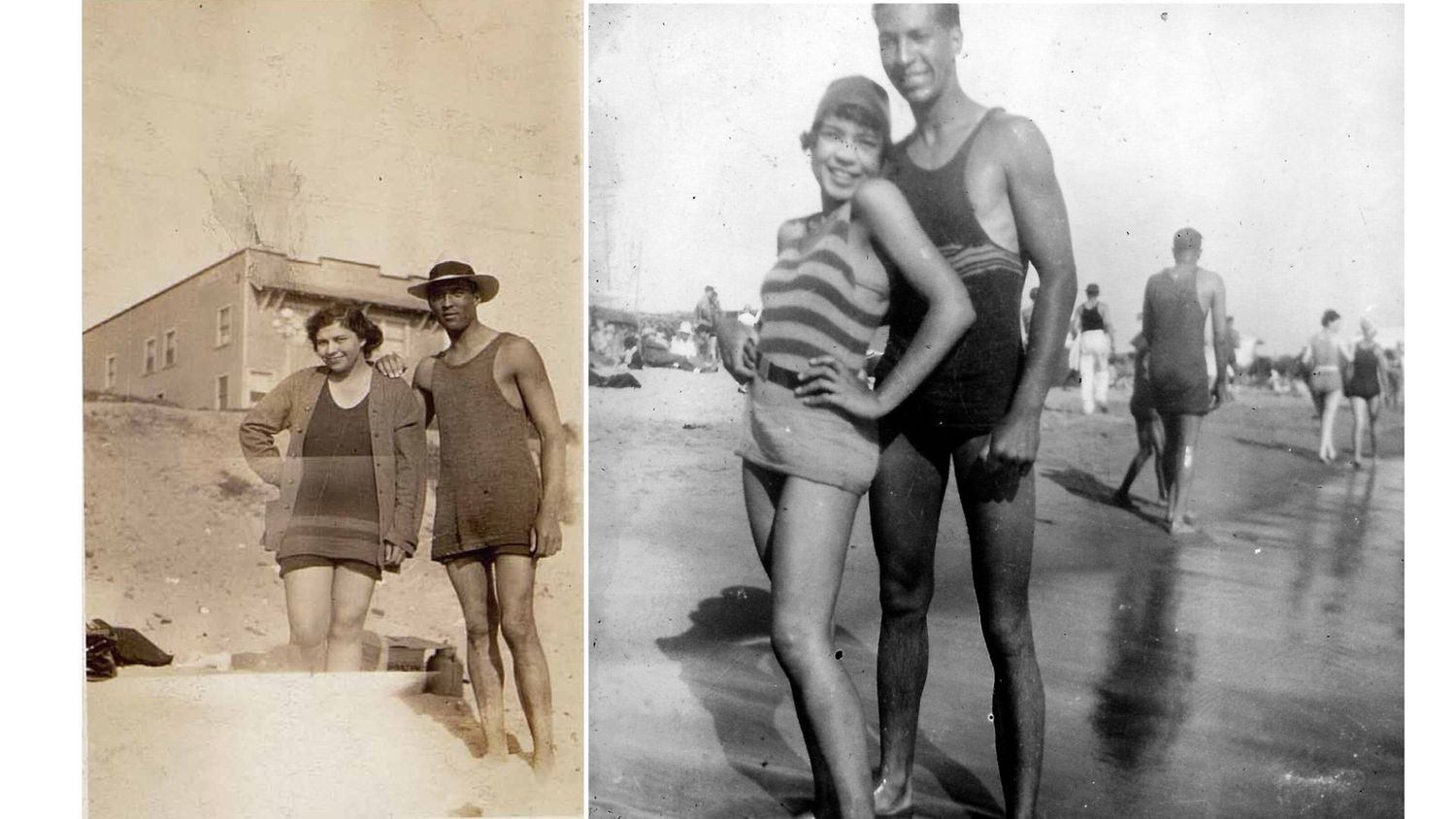
Two black and white photographs featuring visitors at Bruce’s Beach. Left: Beachgoers Louise & Byron Kenner in front of Bruce’s Beach, circa 1920. Photo Source: Miriam Matthews Photograph Collections, Library Special Collections, Charles E. Young Research Library, UCLA. Right: Margie Johnson and John Pettigrew posing at the beach on July 10, 1927. Photo Source: LaVera White Collection of Arthur and Elizabeth Lewis.
But the resort's success made white neighbors uncomfortable. They complained. They pressured city officials. They enlisted the Ku Klux Klan to scare away patrons. Even George Peck, the wealthy developer who founded Manhattan Beach and was sometimes credited with tolerating the Bruces' presence, built fences and hired security to force Black visitors to walk an extra half mile around his property just to reach the ocean.
The Bruce family and the patrons didn't budge, so the city found another way. In 1924, the Manhattan Beach City Council voted to use eminent domain to seize the Bruce property and surrounding land, claiming it was needed for a public park. The city council also voted to block any new beach resorts from opening to make sure the Bruces couldn't simply start over somewhere else. The resort was demolished by 1927. Bruce's Beach was over, just a few years after it debuted.
Side note: This was unfortunately a common practice during the time. In fact, one study found that, between 1949 and 1973, one million people were displaced in the United States from “public use” projects. Two-thirds of those people were Black.
Willa Bruce fought back. She and her husband filed a lawsuit seeking $120,000 in damages. In 1929, after years of legal back-and-forth, they settled for $14,500 — a fraction of what they asked for, and far less than what they'd lost. Despite the city’s initial claim, there was never a park built for decades after the land had been seized. park was built for decades. It wasn't until the 1960s that the city finally turned part of their property into a park, a lifeguard station, and a parking lot.
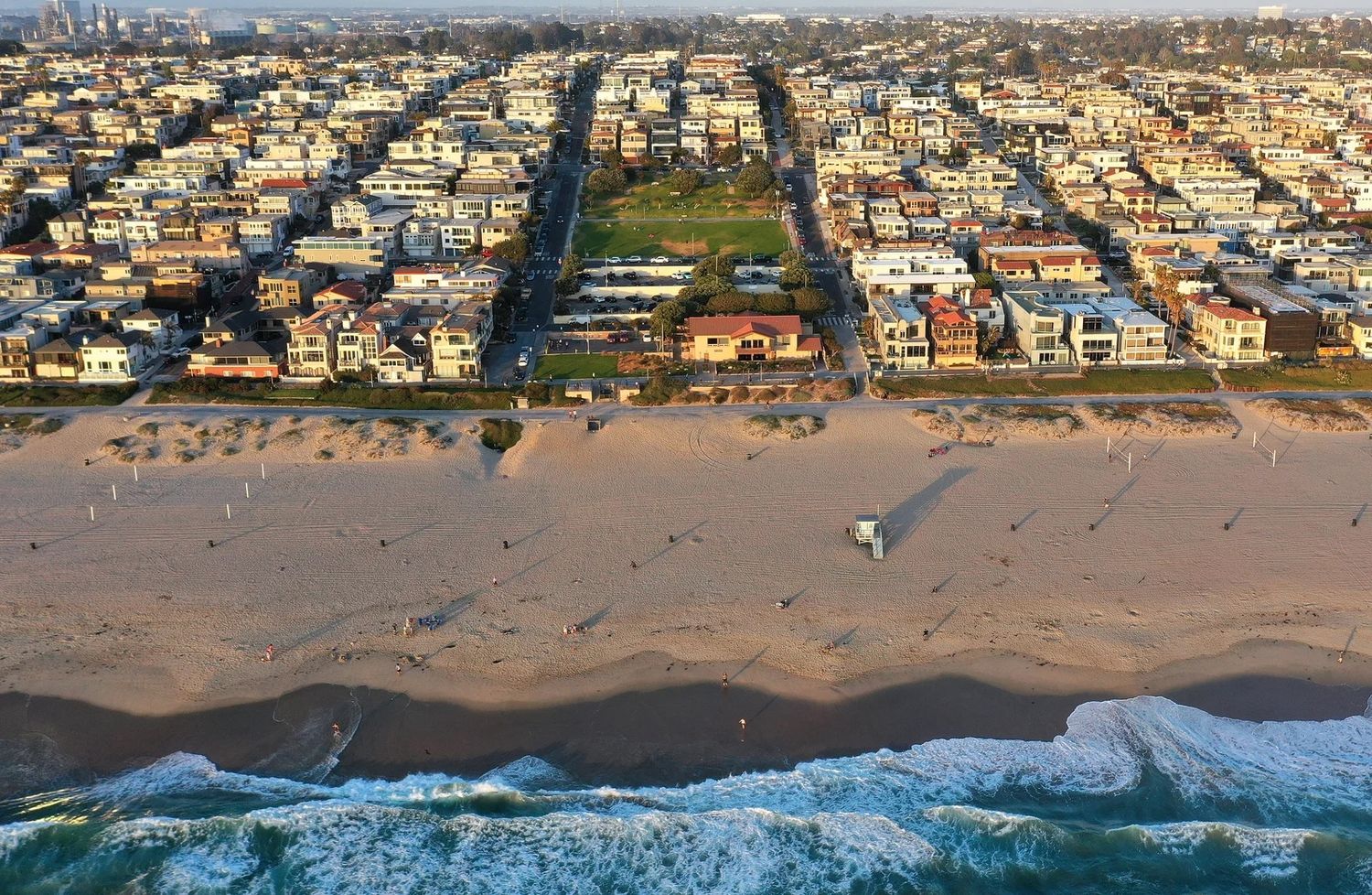
A photograph showing an aerial view of Bruce's Beach, which is wedged between expensive real estate on April 19, 2021 in Manhattan Beach, California. Photo Source: Mario Tama/Getty Images via NPR.
For most of the 20th century, the story of the Bruce family barely registered in public conversation. That started to change in 2006, when Manhattan Beach elected its first and only Black mayor, Mitch Ward. Under his leadership, the city council voted to rename the park "Bruce's Beach" and placed a plaque honoring Willa and Charles' legacy. It was a small gesture, but it acknowledged something the city had long avoided saying out loud.
The real push for justice came later. On Juneteenth 2020, Manhattan Beach resident, spoken word artist, and activist Kavon Ward organized a picnic at Bruce's Beach park to draw attention to the land seizure. She founded the advocacy coalition Justice for Bruce's Beach and began pressing for the land to be returned to the Bruce family's descendants. The effort gained traction, bolstered by the racial reckoning that had swept the nation. By October 2020, the Manhattan Beach City Council formed a Bruce's Beach Task Force to formally investigate the injustice.
Their report showcased what the Bruce descendants and Black community members already knew. The city used its legal power to discriminate against the resort's owners and clientele, intentionally destroying a Black-owned business and driving Black families out of the community. The task force recommended a formal apology and a path to return the land.
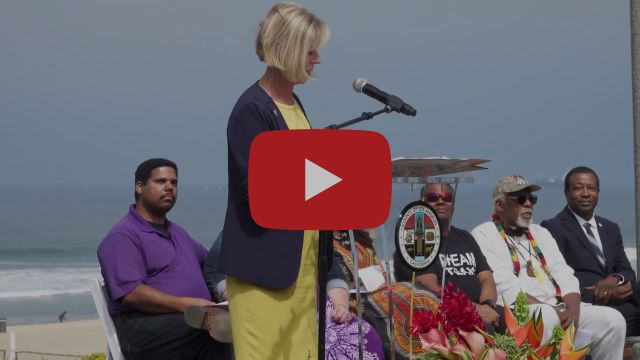
Watch this short video of LA County representatives returning the deed to the property to the descendants Charles and Willa Bruce and sharing the impact of this story on their own lives.
Meanwhile, Los Angeles County took action at the county level. In April 2021, Los Angeles County Supervisor Janice Hahn introduced a motion to return the county-owned parcels to the Bruce family's descendants. The full Board of Supervisors voted unanimously in favor. There was one obstacle left: the county wasn't legally allowed to transfer public land to private owners. Removing that restriction required action from the state.
They engaged the state legislature to pass Senate Bill 796 in September 2021, which cleared the legal path for the land to be returned to the Bruces. By June 2022, Marcus and Derrick Bruce — great-grandsons of Willa and Charles — were named the legal heirs of the property. It had taken nearly 100 years to return the land to its rightful owners.
Once in their possession, the Bruce family had the space to decide what they wanted to do with the land. They chose to sell it back to Los Angeles County for $20 million, this time as respected and recognized stakeholders in the transaction. This allowed them to benefit from the generational wealth long overdue that the land could have been generating for the family all this time. The site, located at 2600 Highland Ave in Manhattan Beach, is now a public park accessible to everyone.
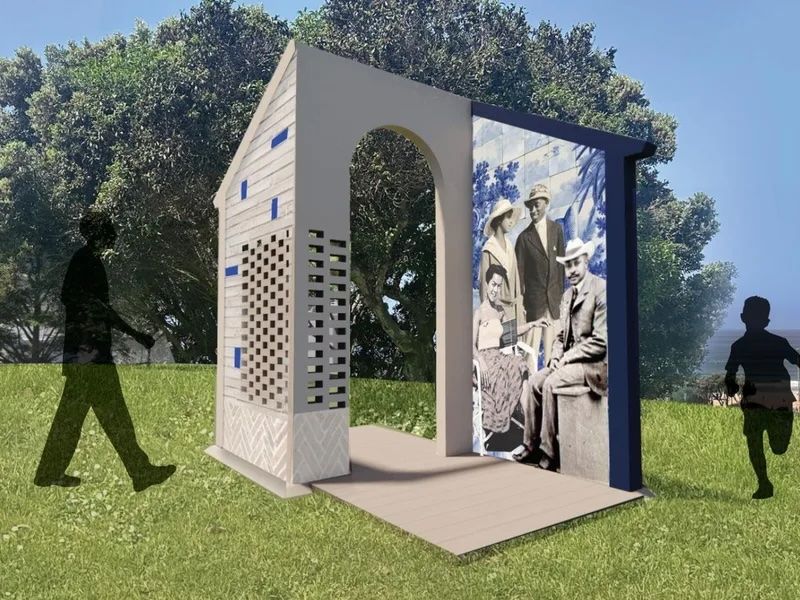
An artistic rendering of April Banks’ "Building Paradise," which shows an abstracted cabin of mosaic tiles in white and blue with a mural, presumably of the Bruce family, set on green grass with the ocean view in the background. Image Source: Manhattan Beach City Council
Last week, the Manhattan Beach City Council voted on a public artwork that will commemorate the story of Bruce's Beach. The selected piece, called "Building Paradise," by artist April Banks, is a ten-foot by five-foot abstraction of a beach cottage honoring the Bruce family and the Black homeowners and entrepreneurs who were building their lives and dreams along the coast in the early 1900s. It will stand to ensure that this racial injustice will never be forgotten, and act as a testament to safe, culturally responsive spaces that allow us to gather with ease and joy.
Reflection Questions
How is this story similar to the story about the Fred Hampton Pool from earlier this month?Willa Bruce was an entrepreneur, just like Maggie L. Walker from another issue. What challenges did they each experience? How are their stories similar? How are they different?National attention–and action–was sparked by one activist’s public protest. What does this tell you about the role of protest in society?
Learn More
Confused about eminent doman? This short video may help.Watch this video celebrating the return of Bruce’s Beach to its rightful owners.Want to understand the legal details? Watch this conversation between George C. Fatheree III, a real estate attorney with Sidley Austin, LLP, and Kavon Ward, a land-rights activist, co-founder of “Where is my Land,” and legal representative of the living descendants of Charles and Willa Bruce.Learn more about the importance of expanding access to safe waters in communities of color.Explore this deep dive on other historically Black beaches and amusement parks.
Never miss a story
Get stories of overlooked and untold Black history in your inbox, free every week.