Maggie Lena Walker
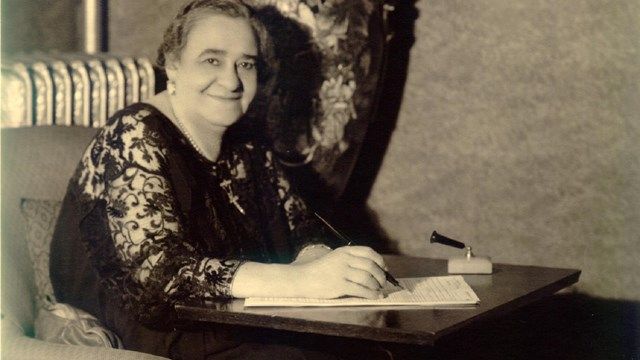
Maggie Lena Walker grew up in Richmond, Virginia. Her mother, Elizabeth Draper Mitchell, was a formerly enslaved woman who worked as a laundress after gaining her freedom. Young Walker grew up watching her mother and other Black laundresses gather to talk through problems facing their community. She learned that the relative independence their careers gave them, paired with the way they supported each other, and learned how Black women kept each other safe.
As a teenager, Walker joined the First African Baptist Church and became a member of Good Idea Council #16 of the Independent Order of the Sons and Daughters of St. Luke, a fraternal organization focused on mutual support, moral values, and helping members through hardship. In 1885, she helped launch a Juvenile Division within the Order to organize the youth. She kept rising through the organization's ranks, and by 1899, when St. Luke's was struggling financially, she was at the top. She launched membership drives that expanded their work across 24 states and traveled the country giving speeches about economic independence and the power of Black-owned businesses.
In 1902, she founded The St. Luke Herald, a weekly newspaper that served the Order. Within a few years, it had 4,000 subscribers and published popular editorials, many of which spotlighted stories of Black women in Richmond and beyond. Between 1904 and 1906, the paper became a platform for civil rights advocacy and helped garner support for a boycott of Richmond's segregated streetcar system.
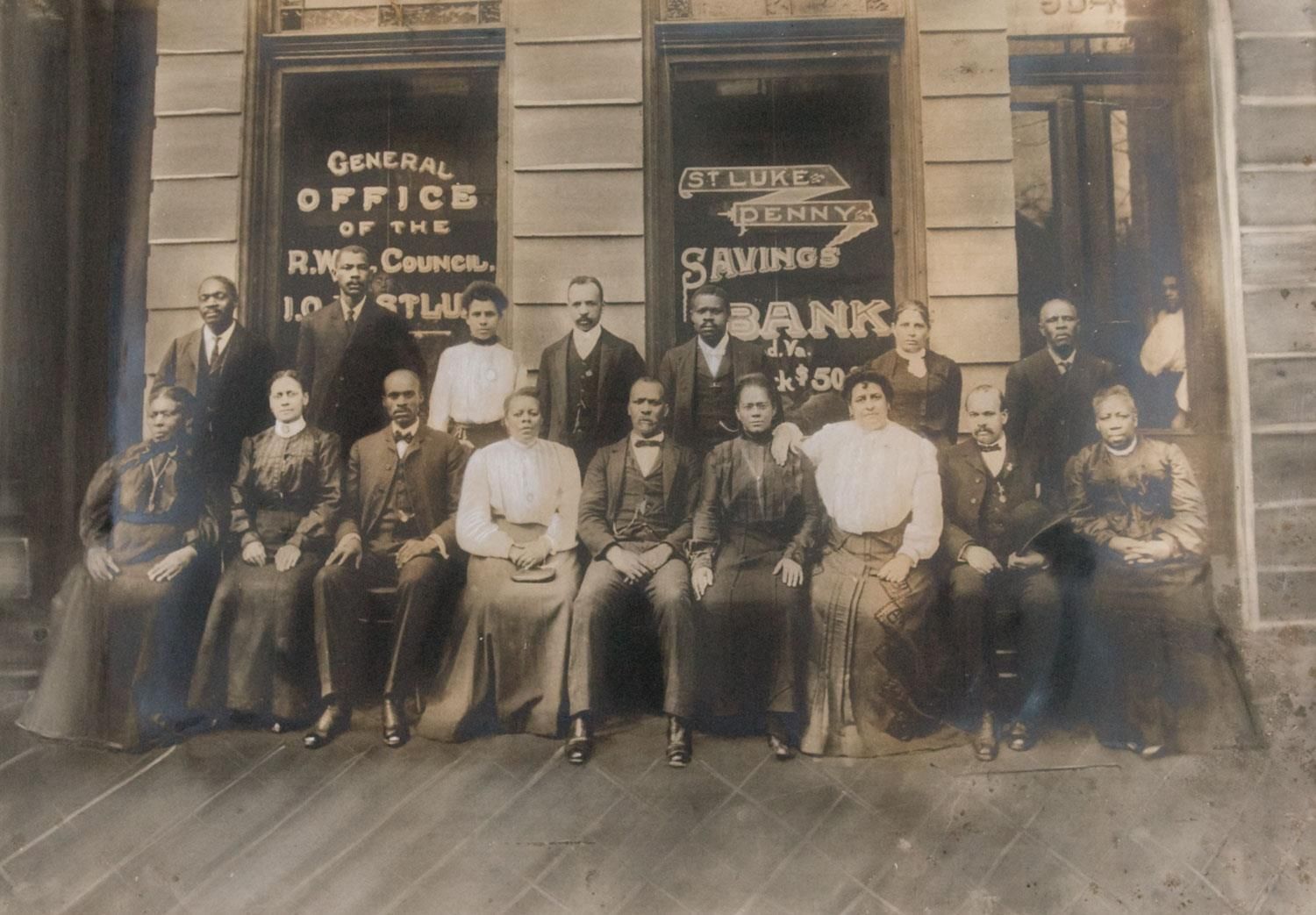
A black and white photograph Walker (front, left of center) with over a dozen of her employees, seated for a formal portrait in two rows outside the St. Luke Penny Savings Bank. Photo Source: virginia.org
During this time, Walker also apprenticed at the Merchants' National Bank of Richmond, where she learned banking and accounting from the ground up. In November 1903, she chartered the St. Luke Penny Savings Bank, becoming the first African American woman in the United States to found, charter, and serve as president of a bank. The bank opened with more than $9,000 in deposits. Within three years, that number had grown to $170,000, allowing the bank to extend loans to Black homeowners and businesses. By 1920, it had financed more than 600 home loans to residents in Jackson Ward, the historically Black neighborhood just north of downtown Richmond.
This gave her the foundation to purchase a building on behalf of the Order to house both the bank and a new department store, the St. Luke Emporium. The store was staffed by Black employees and served the Black community at a time when many businesses in Richmond refused to. She also bought her own home a few blocks away, where she resided with her family. The house became a gathering place, hosting guests like Langston Hughes, W.E.B. DuBois, and Mary McLeod Bethune.
When the stock market crashed in 1929, she guided St. Luke Penny Savings Bank through a merger with two other Black-owned Richmond banks, forming Consolidated Bank and Trust. She served as Chair of the Board until her death on December 15, 1934, at age 70. Because of the foundation she built, Consolidated Bank and Trust operated well into the 21st century before being absorbed through a series of mergers.
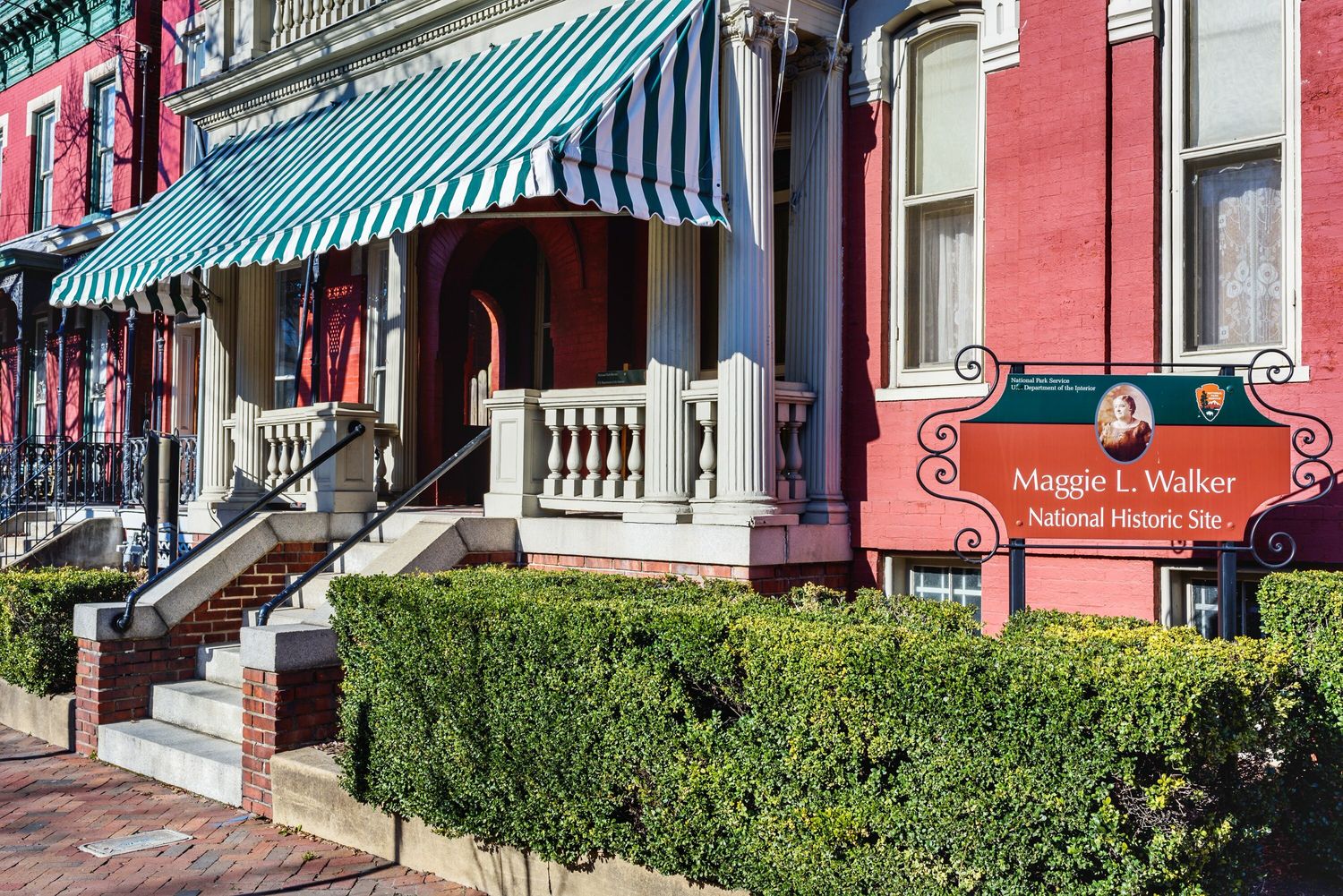
A photograph of the exterior of Walker’s home as part of the Maggie L. Walker National Historic Site, bathed in full sun with well manicured hedges and a clean sidewalk. Photo Source: National Park Service
Her funeral drew one of the largest crowds Richmond had ever seen for such an occasion. Flags flew at half-staff, streets were rerouted, and the city's mayor joined residents and school children to pay their respects. After Walker's death, her daughter-in-law, Hattie, remained in the Leigh Street house until 1971. In 1978, Walker's granddaughter deeded the property to the National Park Service with the hope it would become a historic site and accessible to the public. The property became the first national park in the country dedicated to an African American woman.
Today, the Maggie L. Walker National Historic Site sits on the north side of East Leigh Street between 1st and 2nd Streets in Jackson Ward. The site includes six buildings, many of which still have their early 20th-century exteriors. Inside, some rooms remain untouched while others have been converted to include a museum, visitor center, and curatorial spaces.
Walker's home is a two-story Victorian Gothic brick rowhouse with a Colonial Revival porch and sunroom across the front. Inside, visitors can see original belongings from the 1920s and 1930s, offering a close look at the private world of one of Richmond's most inspiring and successful Black woman entrepreneurs. Through preserving her legacy, so many more people can learn what’s possible when we listen to Black women, elevate their stories, and give them the resources they deserve.
Reflection Questions
Walker built institutions like a newspaper, a bank, and a department store to strengthen her community. What institutions or resources exist in your community today that were built by and for people who looked like you? How about for those that don’t share your same identity?Walker focused on financial sustainability for herself and her community. How is financial sustainability as a form of social justice?The Maggie L. Walker National Historic Site exists because her family and community fought to preserve her story. Whose story in your family or community deserves to be better known? What would it take to make sure it isn't forgotten?
Learn More
Read more about Jackson Ward and Richmond's pre-eminent Black historyWatch this film, geared toward 1st grade students, where Maggie L. Walker “grants an interview” to a young Junior Ranger who has traveled in a time machine toask questions for her student newspaperRead this article on how Black Americans in the South boldly defied Jim Crow to build business empires of their own.During Walker’s lifetime, the Jackson Ward district of Richmond became known as “the Harlem of the South.” Read about it and the other Black Wall Streets that have been overlooked in history.
Never miss a story
Get stories of overlooked and untold Black history in your inbox, free every week.