Spades
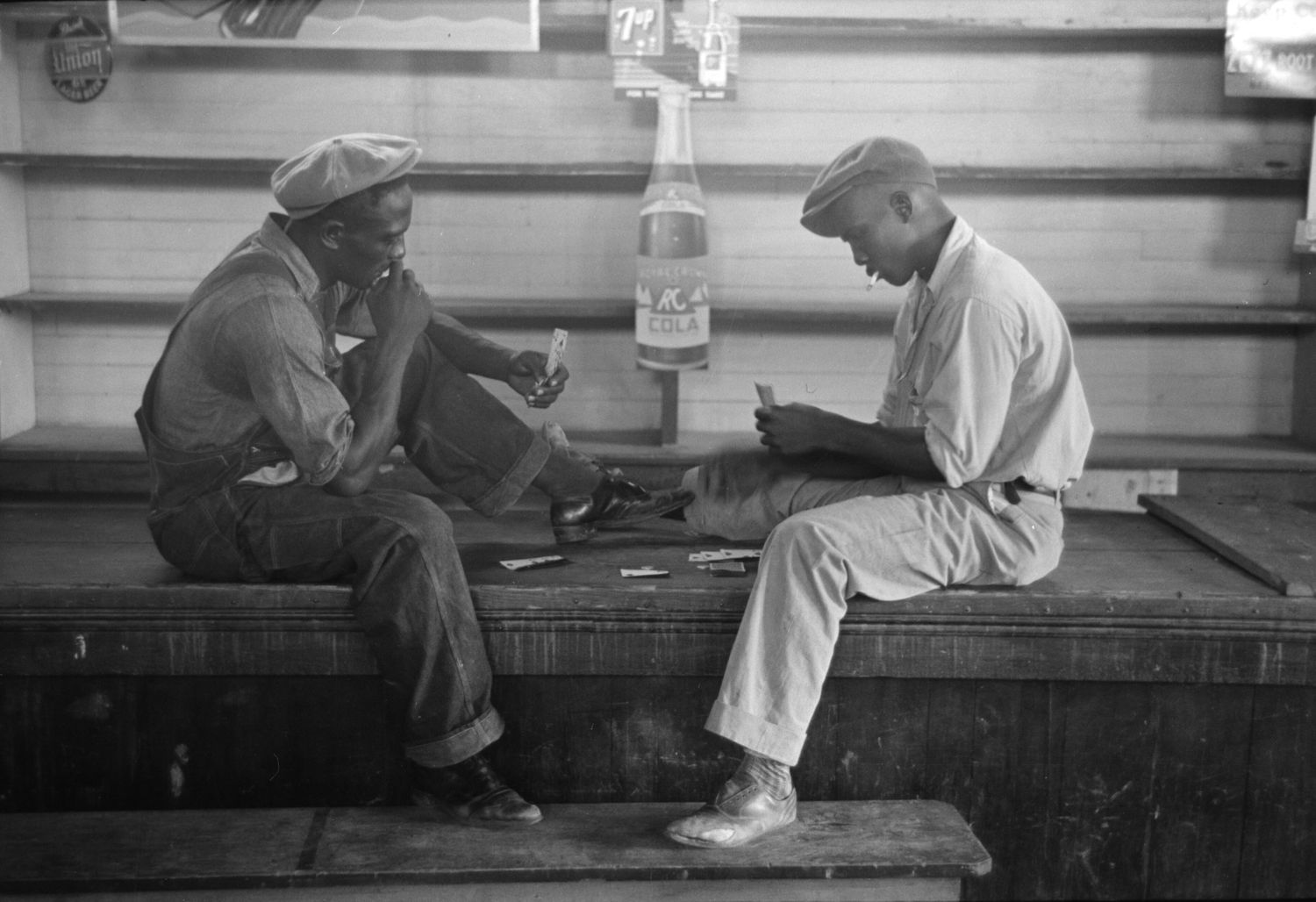
The game of Spades known today is an evolution of Bid Whist, a blend of Whist and Bridge created by enslaved Black people in the south. Enslaved Black people weren’t allowed to learn how to read or write English, but slaveowners believed that the game of whist would help them with the forced labor, so they were allowed to play cards. Bid Whist was also popular during the Civil War, influencing military culture. The game remained a popular game for African American people in the south. But, with the Great Migration – when millions of African American people moved north to escape Jim Crow regulation and pursue economic opportunities in cities – the game expanded with them.
It was also spread by Pullman Porters, African American men that worked on railroad sleeper cars for Pullman Palace Car Company. During this time, railroad travel was new and in hot demand; the Pullman Palace Car Company was, at its peak, essentially the largest hotel in the world. They were also the largest single employer of Black men in the country Although overworked and underpaid, Pullman Porters shaped the culture of railroad travel. They’d often play Bid Whist on long journeys (which is likely where travel-related slang used while playing, like “pulling a Boston,” originates from). Pullman Porters were also the first to create an all-Black labor union in the U.S.
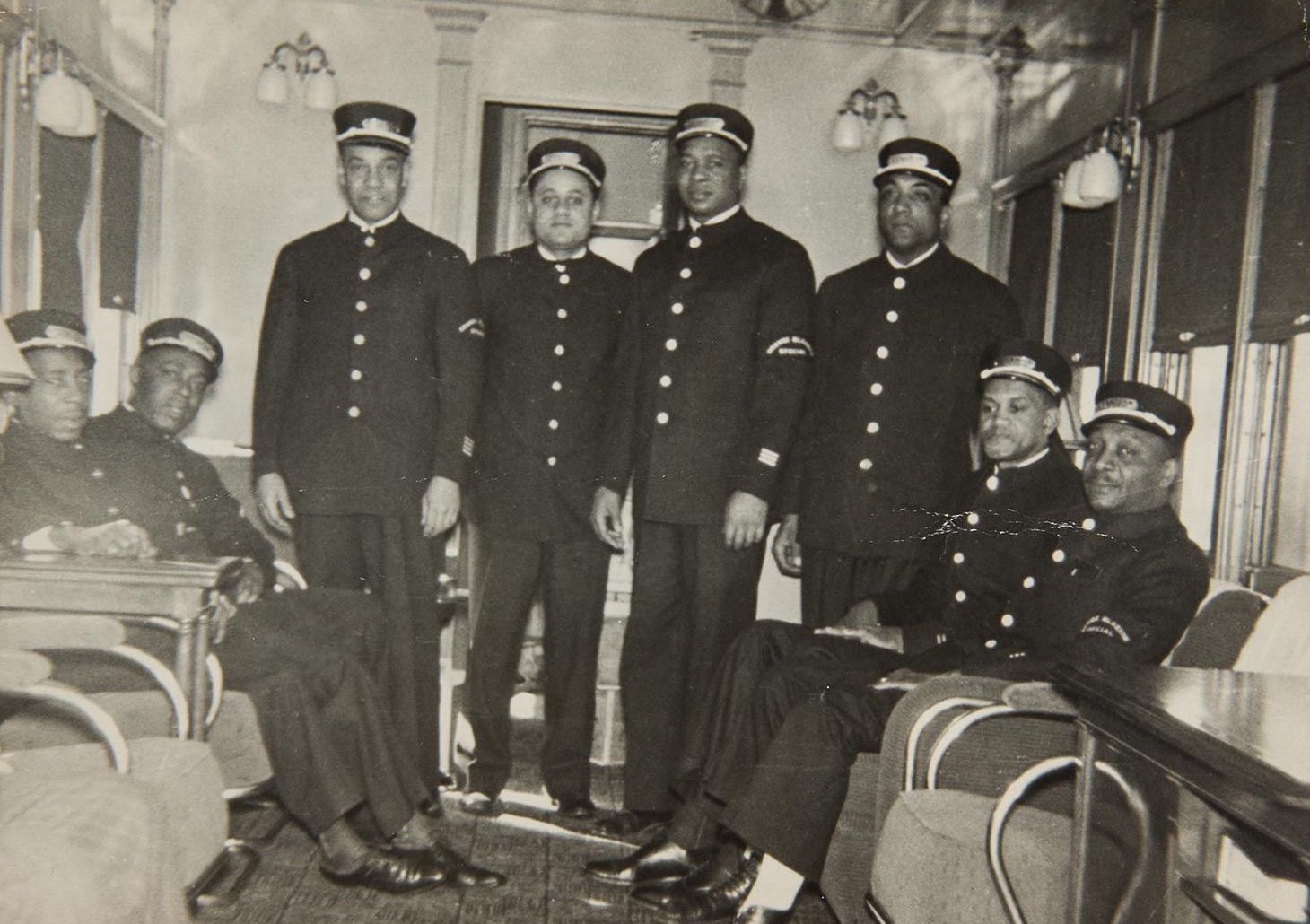
A black and white photograph of eight members of the Brotherhood of Sleeping Car Porters, all in uniform, sitting or standing in a train cabin. Photo Source: The National A. Philip Randolph Pullman Porter Museum.
There are a few stories about how Bid Whist evolved into the Spades we know today. One is attributed to the Kirkwood family from Mississippi, who played it regularly at home. When Frank and Mavis Kirkwood moved from Mississippi to New York in the 1940s as part of the Great Migration, they brought this variation of the game with them. Another theory is that the game spread rapidly through college campuses, particularly HBCUs, and made its way home with students.
Regardless, by mid-century, Spades had established itself as a fixture of Black social life — played at cookouts, family reunions, dormitory lounges, and military barracks. Its rise was never marked by a single inventor or a formal debut, but by the quiet, steady way it moved through communities, passed down through the practice of gathering for joy.
Gabrielle Ione Hickmon has created the most comprehensive overview of the impact of Spades on the Black community. In her long-form piece, “How You Play Spades is How You Play Life,” Hickmon surveyed over 500 Black people to honor stories on when people first learned the game, how it’s played with friends and families, and what significance it holds for themselves and their loved ones. She sees the game as an allegory for the African American experience:
“African Americans were dealt a hell of a hand when we were forcibly brought to the American colonies as enslaved laborers. We ultimately played the hand we were dealt to the best of our abilities, eventually creating a culture that influences the rest of the world. Spades is a game our ancestors created to sustain themselves, to entertain themselves, to gather, to connect, and to hold a safe space for being Black. Generations later, Spades continues to bring us together.” Gabrielle Ione Hickmon, “How You Play Spades is How You Play Life”
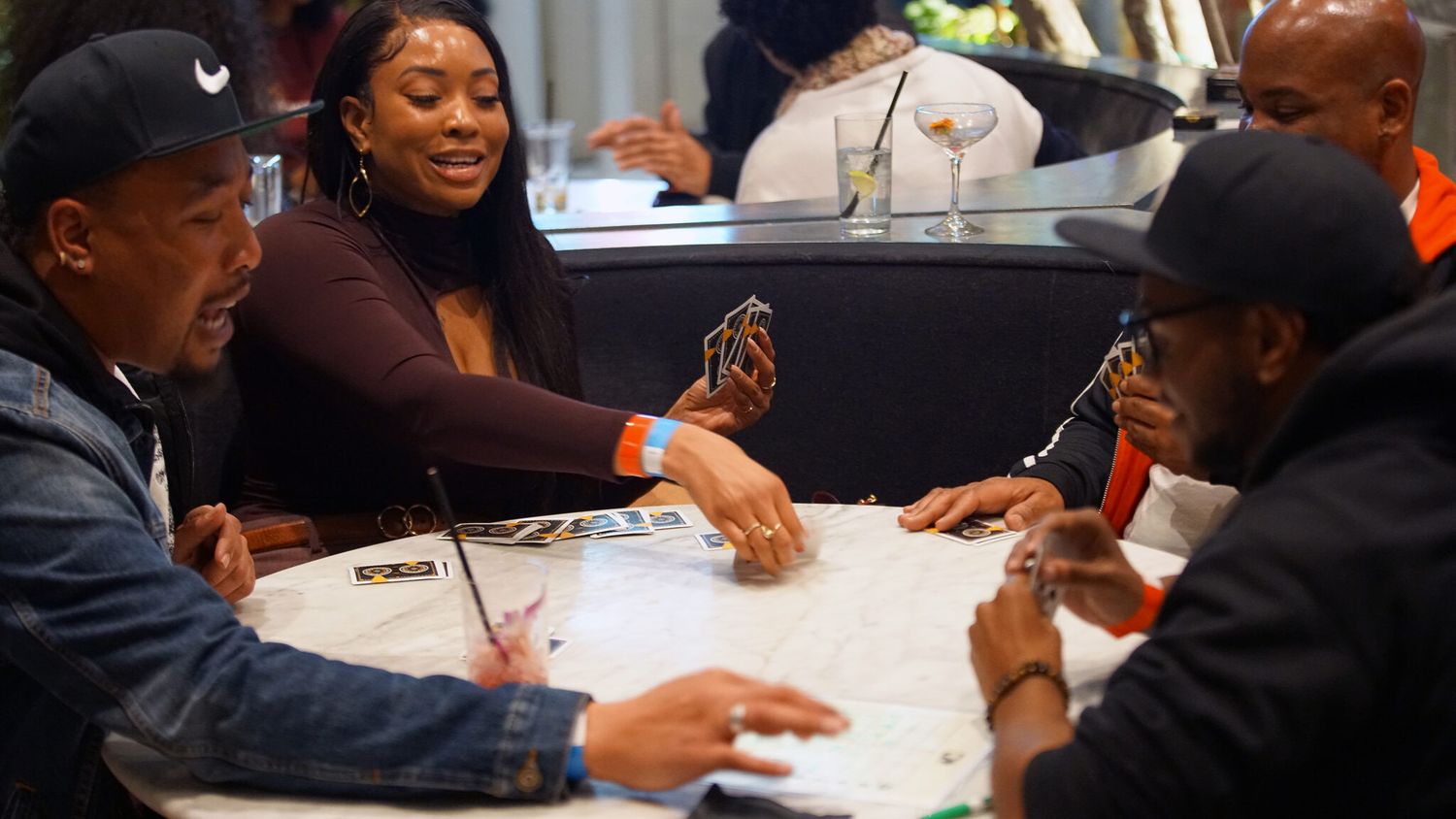
A photograph of a group of four people playing spades at a Love, Peace & Spades event on March 1, 2023. Photo Source: Ural Garrett/AfroLA
Spades isn’t just for casual nights! It gained championship status in 2019 when the Central Intercollegiate Athletic Association — the oldest historically Black sports conference — officially recognized it as a competitive sport. Comedian Clint Coley brought the game to a wider audience with his streaming competition series, The World Series of Spades.
Similar to Mahjong, Go, Teen Patti and other games from cultures around the world, Spades has become a family pastime; a way that families and friends regardless of age, background or interests can come together. And in this practice lies a ritual that keeps generations linked, and friends connected, no matter the time or the distance.
Reflection Questions
What games are an essential part of how you gather with your friends and family?What types of recreational activities reflect your cultural identity?Why is it important to have a space to gather with your friends and family? What comes from those moments of togetherness?
Learn More
Watch this video to learn how to play spadesRead “The Joy of Bragging Rights at the Bid Whist Table” Watch “Pullman Porters - Ordinary Men, Extraordinary History” has interviews with former Pullman portersExplore items from the Pullman porters collection at the African American Museum and Library at Oakland in this videoRead A World of Black Intimacy at the Card Table by Hanif Abdurraqib
Never miss a story
Get stories of overlooked and untold Black history in your inbox, free every week.