Memorial Day
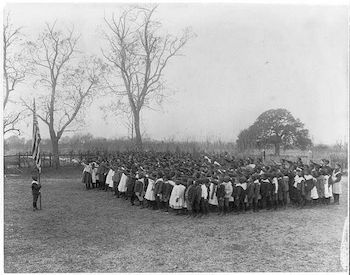
A black and white photograph of the first Memorial Day ceremony held in Charleston, South Carolina, which depicts hundreds gathered together in a tight crowd with another person, left, standing tall and holding an American flag. Image Source: Library of Congress
Memorial Day is one of America's most well-known holidays, but the story behind its start is one many Americans don't know. The holiday we observe today didn’t begin with a government proclamation, but a grassroots celebration led by formerly enslaved people just weeks after the end of the Civil War.
In May 1865, the city of Charleston, South Carolina lay in ruins. The Civil War had started here four years earlier. By its end, it was largely abandoned by white residents, leaving a population of predominantly freed Black people. The city's horse track had been converted to a makeshift prison camp where Union soldiers were tortured, killed, or neglected. There, at least 257 prisoners had died. Their bodies were thrown hastily into a mass unmarked grave behind the grandstand by the retreating Confederate army.
When a group of Black Charleston residents discovered this, they jumped into action. About two dozen Black workers went to the site and turned the mass burial site into an intentional resting place. They reburied the fallen into graves in neat rows, built a fence around the area, and added a sign: "Martyrs of the Race Course." Then, they organized a day of memorial for the community to pay their respects.
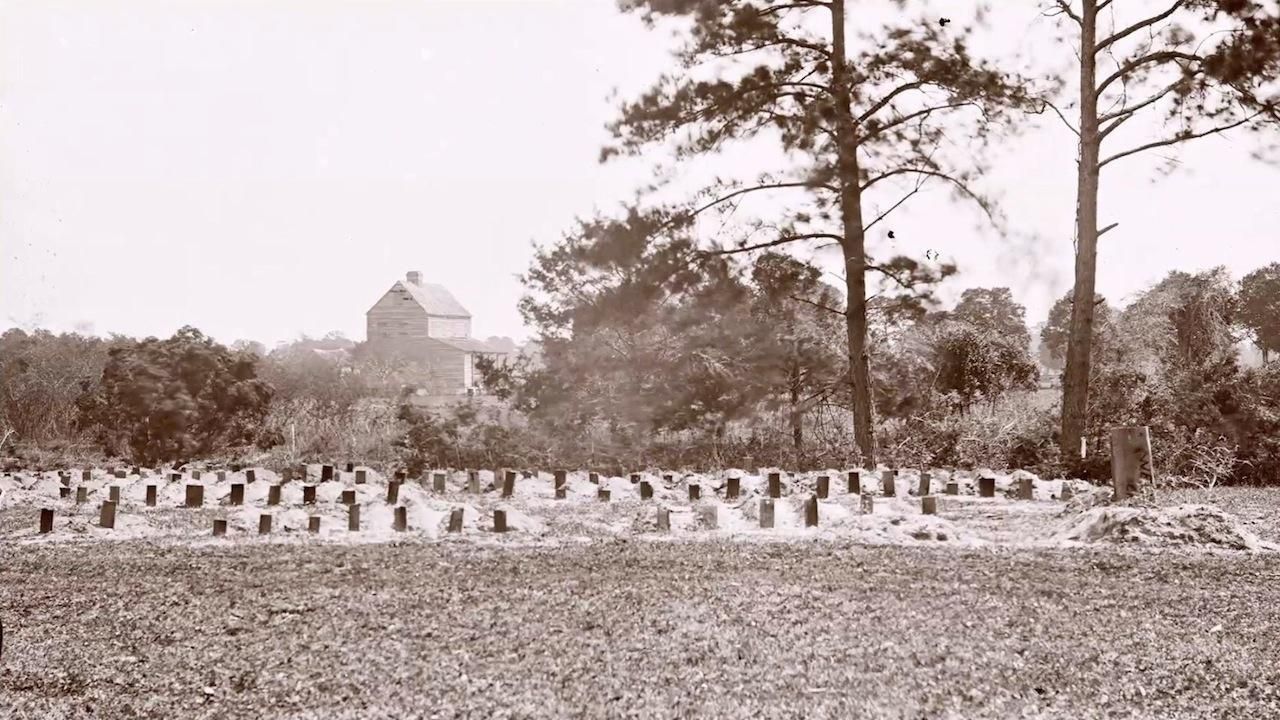
A black and white image of the new graves created by the Black community in the race track, taken sometime in 1865. Image Source: Library of Congress
On May 1, 1865, roughly 10,000 people, most of them Black, gathered at the race track. About 3,000 Black students marched around the race track, flowers in hand, singing the Union song "John Brown's Body." Behind them came hundreds of Black women with baskets of flowers, wreaths, and crosses for the graves. Leaders gave speeches. Pastors gave sermons. Union soldiers from across the North who had traveled for the occasion led a military procession. And the crowd sang patriotic songs. The event was sponsored by mutual aid societies.
This was the first official, large-scale Decoration Day (the former name of what is now Memorial Day) on historical record. The event was featured in newspapers across the North and was recorded in several personal archives. But history was intent on pretending it didn't exist. Even local Charleston leaders ignored or downplayed the celebration because it was organized by Black people. The official start of Memorial Day is attributed to a proclamation made three years later. Issued by General John A. Logan, commander of the Grand Army of the Republic (a Union veterans organization), May 30, 1868 was chosen as the official day to decorate the graves of fallen soldiers. The day was chosen because flowers would be in bloom across the country.
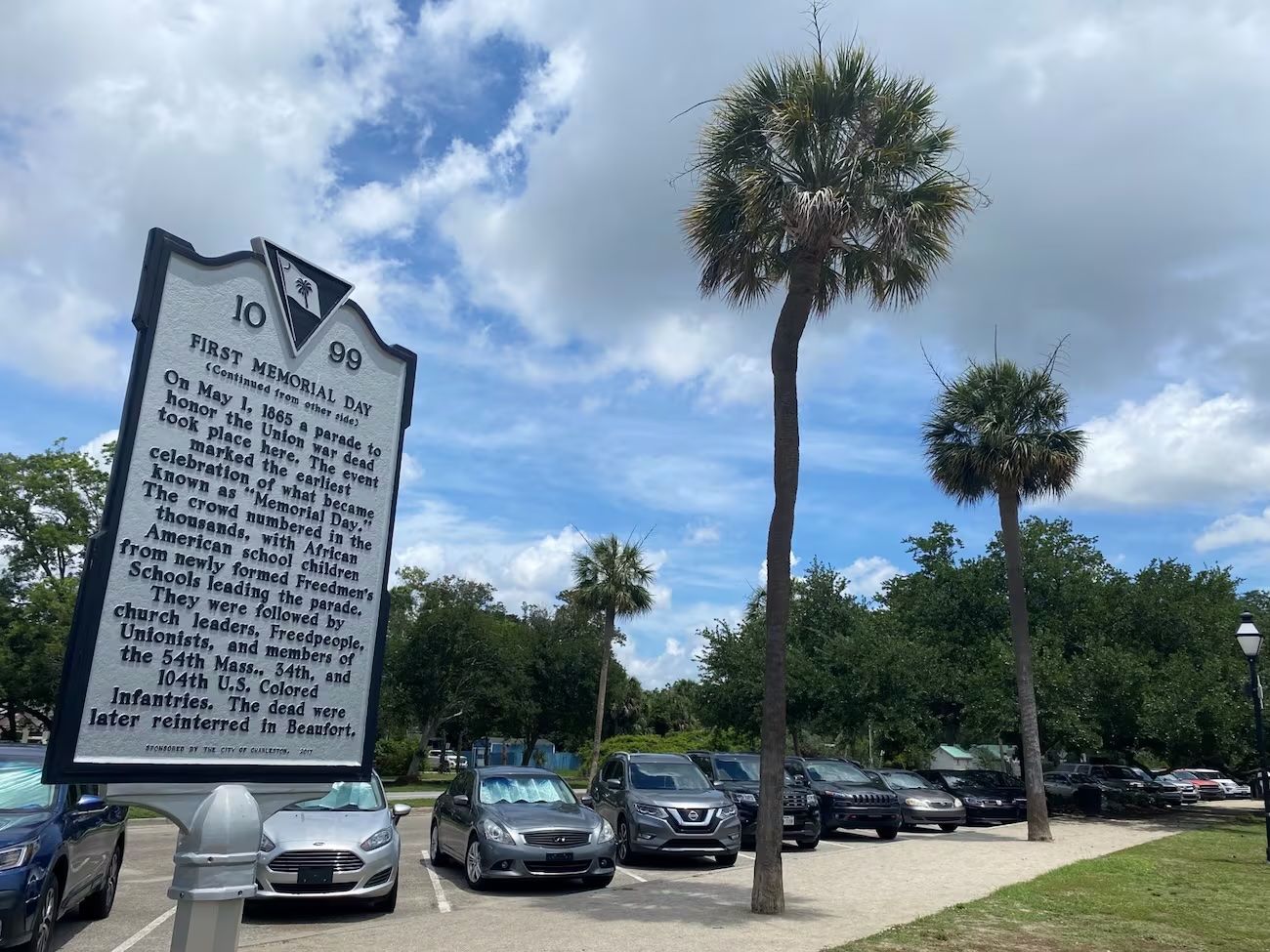
A photograph of a plaque outside the site of the race track, which has since been converted to a park, that tells the story of the first Memorial Day. The plaque reads: “On May 1, 1865, a parade to honor the Union war took place here. The event marked the earliest celebration of what became known as Memorial Day. The crowd numbered in the thousands with African-American school children from newly formed Freedmen Schools leading the parade. They were followed by church leaders, Freedpeople, Unionists, and members of the 54th Massachusetts, 34th, and 104th U.S. Colored Infantries. The dead were later reinterred in Beaufort. Image Source: Live 5 News
The tradition spread quickly. By 1869, some 336 cities and towns in thirty-one states held parades and memorial services. New York became the first state to make Memorial Day a legal holiday in 1873, and other states followed throughout the late 1800s. But Black veterans have always played a significant role, and used the occasion to remind people that the war was not just about North vs. South, but in pursuit of freedom and agency for all the country's residents. For example, in 1878, Frederick Douglass used the holiday to remind a crowd of Union veterans that while Americans should have "malice toward none and charity toward all," they must not "confound right with wrong, or loyalty with treason" as history has suggested.
After World War I ended in 1918, Memorial Day evolved to honor Americans who died in all wars, not just the Civil War. In 1971, Congress passed the Uniform Monday Holiday Act, moving Memorial Day to the last Monday in May, where it remains today. Today, many of us celebrate Memorial Day by listening to speeches by local leaders, visiting the graves of fallen soldiers, and enjoying picnics and other gatherings. And when we do, we're gathering with the same spirit and intention as the brave community of Charleston, South Carolina, over 160 years ago.
Listen to David W. Blight talk about this first Memorial Day in this short video.
Reflection Questions
How might knowing this history change the way you observe Memorial Day going forward?What are other examples of Black history being overlooked or forgotten can you think of?Does knowing that formerly enslaved Black people were the first to bring ritual to fallen soldiers change your understanding of Memorial Day? If so, why?
Learn More
The story of the first Decoration Day was made known by David W. Blight, a prominent historian and professor, in his book Race and Reunion: The Civil War in American Memory. Read it if you want to learn more!Watch this conversation between David W. Blight & Ta-Nehisi Coates discuss his book on Frederick Douglass and the abolitionist movement.Read an Ode to Memorial Day, written by Brigadier General Charles Young, the Army's highest ranking Black officer until his death in 1922.Read about DC's Black Militias, the members of which played a major role in Memorial Day observations.
Never miss a story
Get stories of overlooked and untold Black history in your inbox, free every week.