Charles S. Hayes
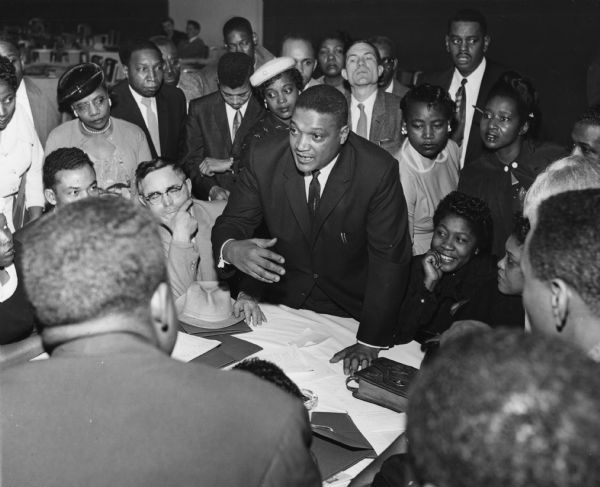
Day 12: Charles A. Hayes
Charles A. Hayes
Charles Hayes's leadership in the United Packinghouse Workers of America demonstrated how unions could serve as powerful vehicles for both worker rights and racial justice. Through his organizing work in Chicago's stockyards and his role as the first Black vice president of a major CIO union, he showed how labor solidarity could break down racial barriers and advance civil rights.
When Charles Hayes began working in Chicago's meatpacking plants in the 1930s, he encountered a deeply segregated industry. Black workers were relegated to the most dangerous and undesirable jobs, paid less than their white counterparts, and often excluded from union representation. The conditions in the stockyards were notoriously harsh – cramped spaces, dangerous machinery, extreme temperatures, and constant pressure to maintain rapid production speeds.
Hayes recognized that improving these conditions required organizing across racial lines. He began his union work as a shop steward, quickly demonstrating his ability to unite workers despite management's attempts to use racial divisions to prevent organizing. His effectiveness as an organizer led to his election as president of UPWA Local 311 in Chicago, one of the largest and most influential locals in the union.
Under Hayes's leadership, the UPWA took an unprecedented stance on racial equality. The union didn't just oppose discrimination – it actively worked to integrate workplaces and union leadership. Hayes pushed for contract provisions that prohibited discrimination in hiring and promotion, demanded equal pay for equal work, and insisted on integrated facilities in an era when separate bathrooms and lunch rooms were still common.
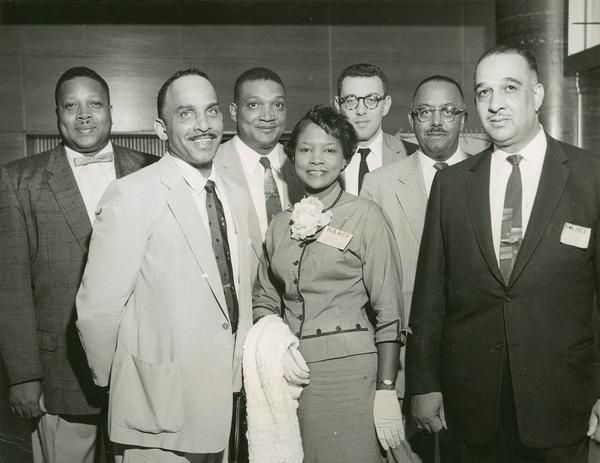
UPWA (United Packinghouse Workers of America) delegates at 1957 convention with Herbert Hill. From left to right are Ollie Webb, Richard Miller, Charles Hayes, Addie Wyatt, Herbert Hill, Phil Weightman, and Russell Lasley. Photo Source: Wisconsin History
In 1954, Hayes was elected International Vice President of the UPWA, becoming one of the first Black leaders of a major CIO union. In this role, he worked to extend the UPWA's anti-discrimination policies throughout the meatpacking industry. He understood that union contracts could be powerful tools for civil rights, using collective bargaining to secure protections against discrimination and create advancement opportunities for Black workers.
Hayes's vision extended beyond the workplace. He saw the labor movement as a vehicle for broader social change, arguing that unions needed to fight discrimination in all aspects of society. Under his leadership, the UPWA supported civil rights legislation, participated in voter registration drives, and contributed resources to civil rights organizations.
The UPWA's anti-discrimination program, which Hayes helped develop, became a model for other unions. It included regular anti-discrimination conferences, education programs for members, and an active civil rights department that investigated complaints and pushed for workplace integration. The union's commitment to racial equality was revolutionary for its time – while many unions were still maintaining segregated locals or excluding Black workers entirely, the UPWA was actively promoting integration and Black leadership.
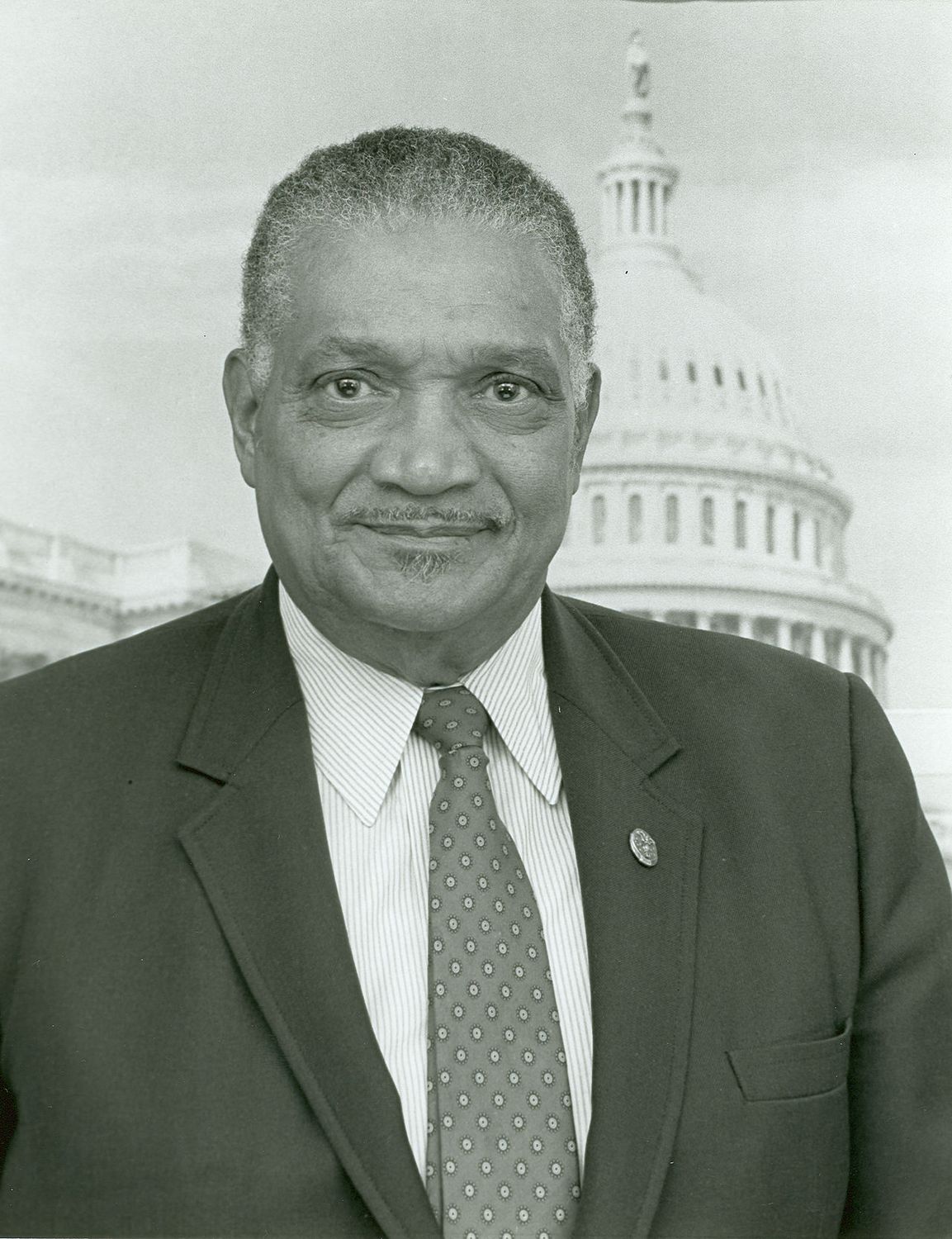
A black and white photograph of Hayes, taken for his position as a member of the House of Representatives, posing in a suit in front of the Capitol building. Photo Source: Wikipedia Commons
After organizing with Dr. King and SCLC in Chicago's civil rights movement, Hayes went on to co-found the Coalition of Black Trade Unionists and worked with Operation PUSH in the 70s and 80s. He threw his support behind two successful Black congressional candidates from Illinois during this period. When Harold Washington became Chicago's mayor in 1983, Hayes won the special election for Washington's vacant congressional seat that August. He ended up serving a decade in Congress.
Reflection Questions
Hayes believed that worker rights and civil rights were inseparable struggles. How do you see this connection playing out in today's labor movement?
Consider how unions can serve as vehicles for social change. What role should labor organizations play in broader movements for social justice?
Learn More
Learn about The Charles A. Hayes Family Investment Center, a nonprofit technology center for disadvantaged Chicago residents, opened in the former UPWA headquarters building in 1999.Read more about how meatpacking workers banded together in solidarity.
Never miss a story
Get stories of overlooked and untold Black history in your inbox, free every week.