Chris Smalls
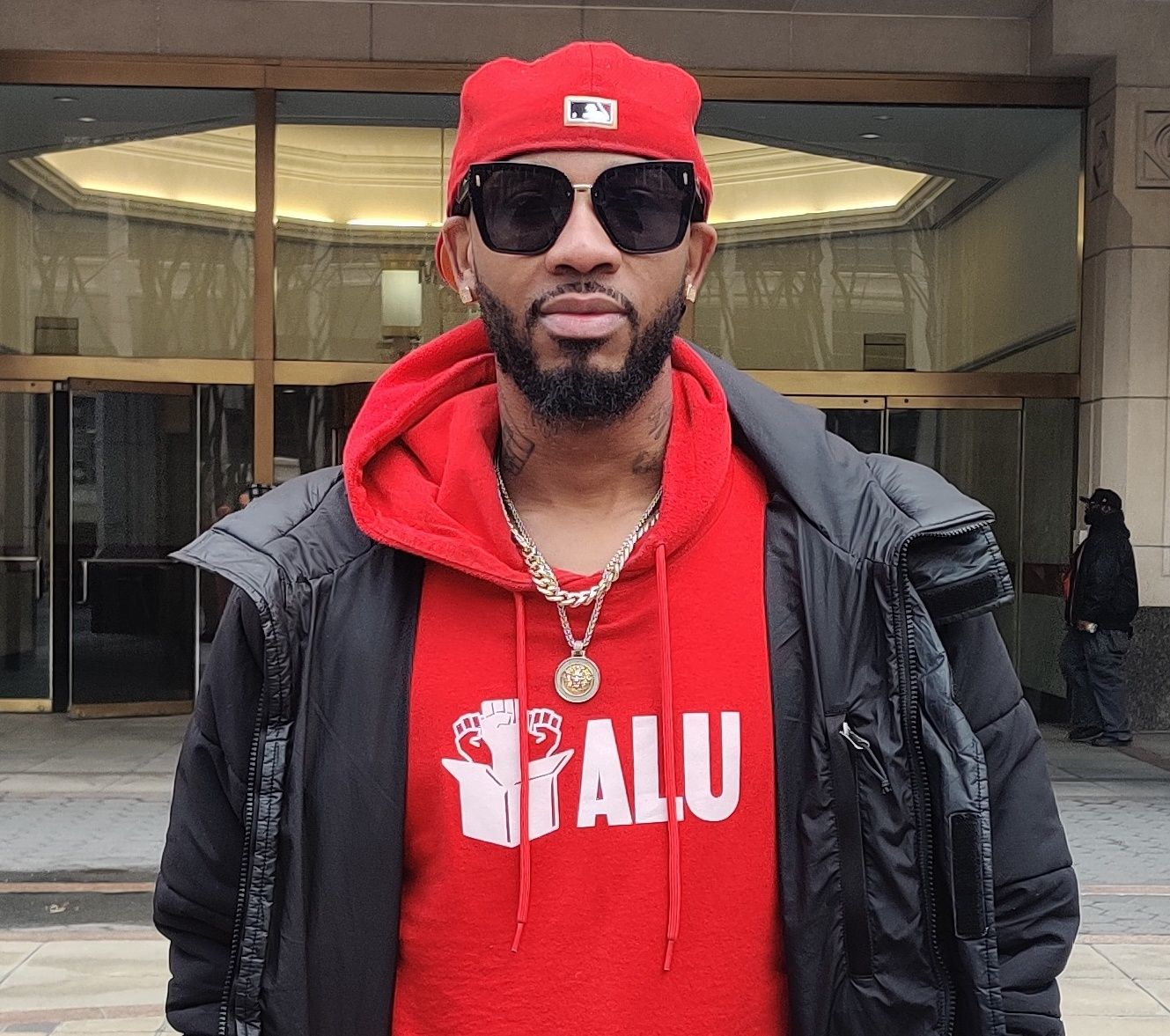
Day 25: Chris Smalls
Christian Smalls is a labor organizer known for his role in leading the Amazon worker organization in Staten Island, a borough in New York City. He is a co-founder and the former president of the Amazon Labor Union (ALU) (2021–24).
Christian “Chris” Smalls grew up in Hackensack, New Jersey, raised by a single mother who worked as a hospital administrator. He briefly pursued a career in music as a rapper, even working with artist Meek Mill, before taking various jobs to support his family.
Smalls joined Amazon in 2015 as a picker in New Jersey before transferring to the Staten Island JFK8 warehouse when it opened in 2018, where he worked as an assistant manager. Despite applying for management positions 49 times during his tenure, he was never promoted, which he attributed to systemic racial discrimination. You can read more about the challenges he faced in this statement he made to colleagues at JFK8 in advance of the vote to unionize.
The COVID-19 pandemic became a pivotal moment in Smalls' career. This was a lucrative time for Amazon, who owns 38% of the e-commerce market, as everyone shopped from home. By May 2020, e-commerce sales had jumped by 92.7%, and Amazon net sales increased 26% to $75.5 billion in Q1 of that year. But the brunt of this wild growth fell on the warehouse workers, particularly the “pickers” who locate and package orders. Already experiencing poor working conditions (allegations that workers were forced to skip bathroom breaks and pee in bottles is from 2018), workers were now facing longer, more demanding shifts while risking exposure to COVID-19.
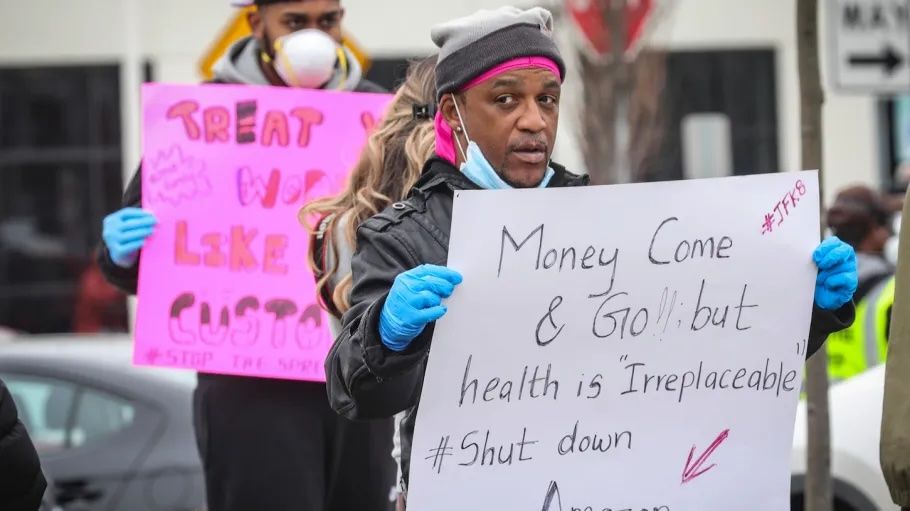
Photograph of Gerald Bryson, center, another leader of the March 2020 walkout, holding a sign that says “Money come and go, but health is irreplacable #shutdownamazon”. Photo Source: Sourcing Journal
At JFK8, after a colleague was allowed to continue working, even after sharing that they were worried they had COVID and was awaiting test results, Smalls contacted local politicians, health officials, and Amazon's human resources department. When no action was taken, Smalls and colleague Derrick Palmer organized a walkout on March 30, 2020, protesting inadequate safety protocols and calling for the temporary closure of JFK8.
On the same day as the walkout, Amazon fired Smalls. They insisted it wasn’t retaliation, and claimed he violated social distancing policies while on a paid 14-day quarantine after COVID-19 exposure. However, documentation showed that if his quarantine had started during the appropriate incubation period, it would have ended on March 25, five days before the walkout.
The firing garnered attention from the media, and exposed Amazon to criticism from consumers and politicians alike. New York Attorney General Letitia James accused Amazon of unlawfully discharging Smalls and ordered an investigation. New York City Mayor Bill de Blasio, Senator Bernie Sanders, and Representative Alexandria Ocasio-Cortez all condemned the termination. Nine senators, including Elizabeth Warren, demanded information about Smalls' dismissal.
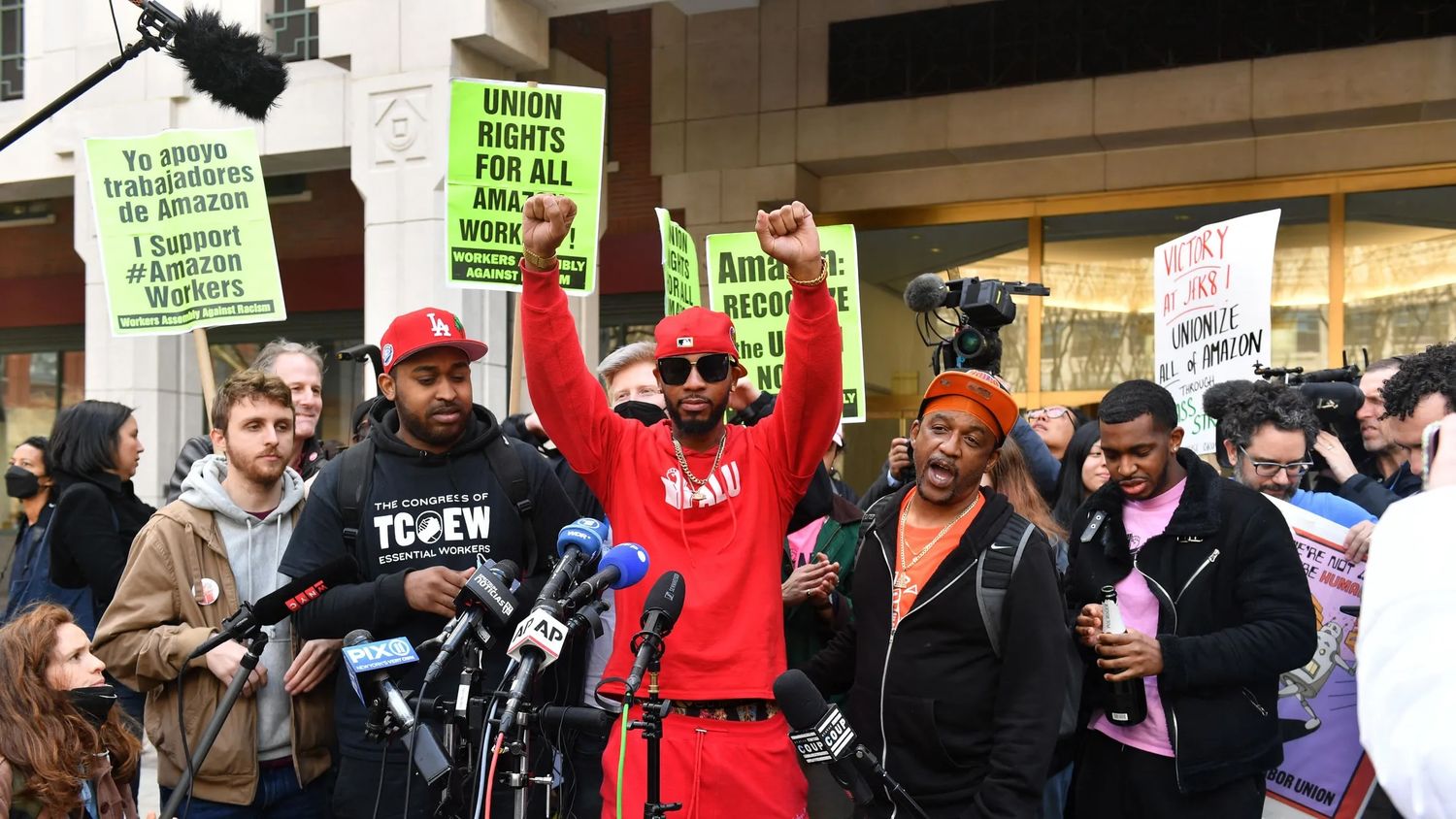
A photograph of Smalls, center, wearing a red hoodie, sweatpants, sunglasses and a baseball cap, standing on a podium with his fists raised high surrounded by his colleagues at the TCOEW and protestors with signs saying “Union Rights For All Amazon Workers!” standing behind them. Photo Source: Getty Images via Teen Vogue
A leaked memo from an executive meeting with Jeff Bezos revealed Amazon's General Counsel, David Zapolsky, referring to Smalls as "not smart or articulate" and suggesting making him "the face of the entire union/organizing movement" as a public relations strategy, hoping that the public wouldn’t sympathize with someone like him – which is wild, considering how charismatic and engaging Smalls is. Can you think of another person in our series so far that was treated similarly? Smalls called these remarks "definitely racist," while Zapolsky later denied knowing Smalls was Black when making these statements.
By April 2021, Smalls and Palmer, established the Amazon Labor Union (ALU), backed by The Congress of Essential Workers (TCOEW), a labor-activist group Smalls started a year prior. To gather signatures for a union authorization vote, Smalls set up a tent near a public transit stop outside JFK8, and used social media to highlight the need for a union and Amazon’s union-busting tactics, including posting anti-union signs in bathrooms, sending anti-union text messages, conducting surveillance of organizing workers, and holding mandatory meetings spreading what he called anti-union "falsehoods." You can read more in depth about the tactics companies like Amazon try to thwart unions.
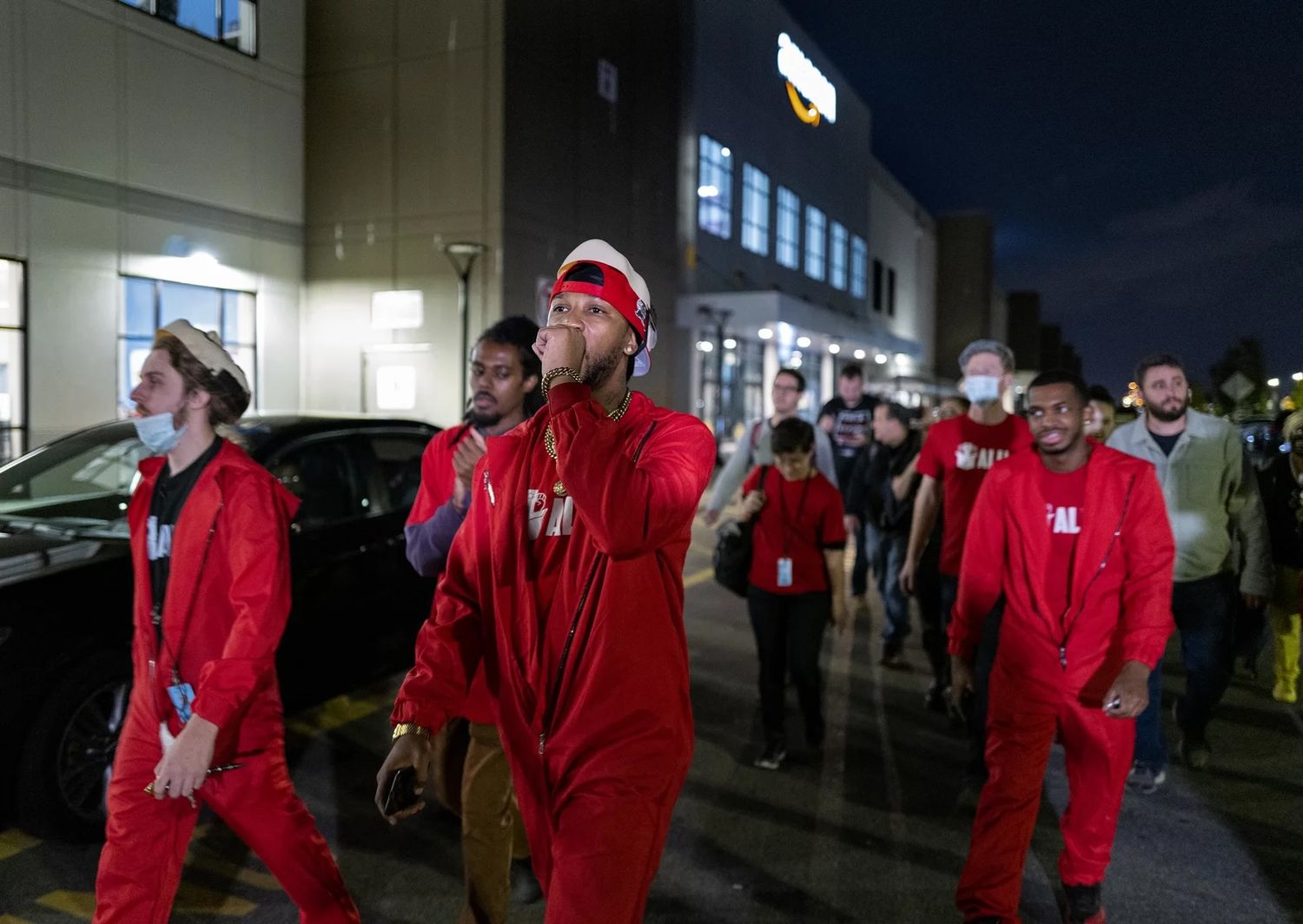
A photograph of Smalls, wearing a red jumpsuit with the ALU t-shirt underneath, marching with colleagues and chanting at the JFK8 Amazon distribution center in Staten Island on Oct. 25, 2021. Photo Source: NPR
After reaching enough signatures, the ALU petitioned for a vote with the National Labor Relations Board in January 2022. On April 1, 2022, JFK8 workers voted 2,654–2,131 in favor of unionization, making history as the first Amazon facility in the United States to unionize.
Since its founding, the ALU has struggled to gain momentum. And after two subsequent failed unionization votes at other facilities, Smalls did not seek re-election as ALU president. But just last fall, the union voted to become an affiliate with Teamsters, which will help the new union find its footing and scale its impact. Meanwhile, local leaders at Amazon warehouses across the country have been trying to start their own unions, and are facing even more hostile anti-union tactics. Just last week, a North Carolina warehouse failed to garner the votes to unionize after years of campaigning.
But this story has only just begun, and the impact of the ALU stretches far beyond Amazon facilities. The ALU demonstrated what was possible as other workers, from employees at Starbucks and Walmart, to writers in Hollywood and Boeing factory workers. It also served as a reminder of how Black labor leaders are often underestimated in ther capacity to create change.
Reflection Questions
Smalls succeeded where traditional unions had failed by using grassroots organizing tactics like community-building and social media engagement. How might his approach to labor organizing represent a new model for worker advocacy in the digital age? What lessons can both established unions and emerging labor movements learn from his methods?
Smalls' organizing efforts at Amazon occurred during a period of heightened awareness about racial and economic inequality in America. In what ways did his experience as a Black worker confronting a corporate giant reflect broader societal tensions? How did the intersection of labor rights and racial justice contribute to the resonance of his message?
Learn More
Watch this interview with Chris Smalls on the Desus & Mero podcast (note: some of this conversation is NSFW) Read Amazon Union’s Chris Smalls Is Part of the Legacy of Black Labor Organizing in Teen VogueRead “Making Good Trouble on Staten Island: Chris Small’s Battle to Unionize Amazon” by Amir KhafagyKeep an eye out for the Union documentary that highlights the story of the launch of the Amazon Labor UnionFollow the Amazon Labor Union (@amazonlabor) on social media to stay updated on their ongoing organizing.Read Chris Smalls' upcoming book about organizing Amazon (announced for 2024).
Never miss a story
Get stories of overlooked and untold Black history in your inbox, free every week.