Moranda Smith
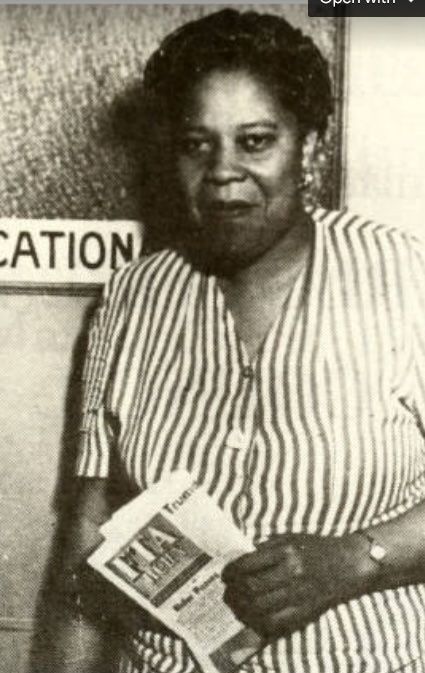
Day 24: Moranda Smith
Moranda Smith, the first Black woman to serve on an international union's executive board, led groundbreaking labor organizing efforts at R.J. Reynolds Tobacco Company in Winston-Salem during the 1940s. Through her leadership of Local 22 of the Food, Tobacco, Agricultural, and Allied Workers union (FTA), she pioneered "civil rights unionism" that connected workplace grievances to broader social justice issues.
Moranda Smith transformed worker organizing in the American South during the 1940s as a groundbreaking labor leader. She was born to a sharecropping family in Dunbar, South Carolina, and moved to Winston-Salem, North Carolina at age five. After completing high school in 1933, she began working at R.J. Reynolds, the prominent tobacco corporation and maker of Camel cigarettes.
At the Winston-Salem R.J. Reynolds facility where Smith worked, the workforce represented the region's largest concentration of industrial workers – and one that was 40% Black and predominantly female. Workers faced challenging conditions including minimal wages, arbitrary disciplinary actions, and strict racial segregation within the plant. In response to these conditions, workers established the Tobacco Workers Organizing Committee (TWOC) in 1942.
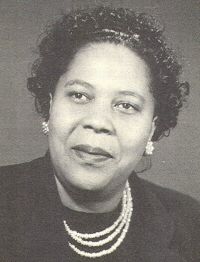
A black and white photograph of Smith, who is wearing a suit and pearl or shell necklaces and earrings looking up and away from the camera with a soft smile. Photo Source: FTA
Though initially skeptical about the potential for success against R.J. Reynolds, she gradually embraced the labor movement, particularly influenced by organizers' commitment to developing women leaders. By 1943, TWOC had evolved into the Food, Tobacco, Agricultural, and Allied Workers union (FTA), affiliated with the Congress of Industrial Organizations (CIO). Under this new structure, Local 22, Smith's Winston-Salem chapter, distinguished itself as the union's most active and militant local.
Smith's exceptional leadership abilities came to the forefront in November 1945 when her coworkers elected her to chair Local 22's educational committee. Known for her powerful negotiation skills and compelling public speaking, Smith ascended to lead the local. In 1947, she became the first African-American woman to serve on an international union's executive committee. The FTA subsequently appointed her as regional director.
“Not words, but action.” This is an excerpt of the speech Smith gave during the 1947 CIO Convention. You can read it in full here.
I want to emphasize a few of the things that you have in this resolution. Too long have the Negro people of the South and other workers in America heard a lot of words read to them. It is time for action, and I am now wondering if the CIO is going to stop and do some of the things by action. You talk about political action and you talk about politics. How can there be any action when the Negroes in the South are not allowed to vote? Too long have the workers in the South stopped and looked to Congress for protection. We no longer look to the government in Washington for protection. It has failed. Today we are looking for an organization that says they are organized to fight for the freedom of all men regardless of race, creed or color, and that is the CIO.
[…]
They can lynch us. They can beat us. They can do anything they want to, but the Negroes of America who have always been true to the American flag, will always march forward. We are just asking your help. We are not asking for charity. We do not want charity. We belong to America.
Our forefathers fought and bled and died for this country and we are proud to be a part of it just as you are. When the civil liberties of Negroes in the South are interfered with [and] you do nothing about it, I say to you, you are untrue to the traditions of America. You have got to get up and do something in action, as I have said before and not by mere words. So we are looking forward to your help and we call on you, because we have called on you before and you have given us aid. We will call on you again, and we ask you not to fail us.
Smith revolutionized labor organizing by extending it beyond traditional workplace issues. She helped pioneer "civil rights unionism," which linked workplace concerns to broader social welfare and civil rights issues. Under her leadership, Local 22 and the FTA engaged in voter registration initiatives, opposed Jim Crow segregation, advocated for civil rights legislation, and helped strengthen the Winston-Salem NAACP chapter.
As Smith and the FTA worked to unionize 10,000 additional tobacco workers, her influence grew, especially after her support of Operation Dixie, the CIO's ambitious campaign to organize the anti-union, segregated South. Smith's work consistently challenged both racial discrimination and economic exploitation, establishing a model for integrated, rights-focused unionism.
Moranda Smith suffered a stroke on April 12, 1950 and passed away at just 34 years of age. Historians believe the strain of her work and activism led to her early death. Her impact on the labor movement was evident in one of Winston-Salem's largest funeral gatherings. Her legacy lives on in her groundbreaking achievements as a union leader and her innovative approach to combining labor rights with broader social justice initiatives.
Reflection Questions
How did Moranda Smith's fusion of labor rights with civil rights activism in the 1940s create a blueprint for future social justice movements, particularly in terms of connecting workplace organizing to broader community empowerment?In her speech, Smith said that “when you speak about this protection of democracy, it is more than just words.” What does that mean to you? How would you apply that to the U.S. democracy today?
Learn More
Read how Operation Dixie failed but pushed racial equality forward on JacobinRead the full article on Moranda Smith’s life written by Gerry Scoppettuolo on Fighting Words
Never miss a story
Get stories of overlooked and untold Black history in your inbox, free every week.