The Black Civilian Conservation Corps
Day 26: The Black Civilian Conservation Corps
Black workers in the Civilian Conservation Corps helped build iconic trails and facilities across America's public lands despite facing systemic discrimination.
During the Great Depression, the Civilian Conservation Corps (CCC) was established in 1933 under President Franklin D. Roosevelt's New Deal. This federal work relief program employed approximately 3 million young men between 1933 and 1942 to build and restore America's natural resources.
Workers in the CCC hauled boulders, cut trails through wilderness, constructed dams, and erected bridges and cabins to make public outdoor spaces accessible – creating access and opportunity that we still use today. Of the millions who served, about 80,000 were Native Americans and 200,000 were Black.
Representative Oscar DePriest of Illinois, the only Black member of Congress at the time, successfully pushed for anti-discrimination language in the founding legislation: "That in employing citizens for the purpose of this Act, no discrimination shall be made on account of race, color, and creed." Despite this, the reality for Black CCC enrollees proved vastly different.
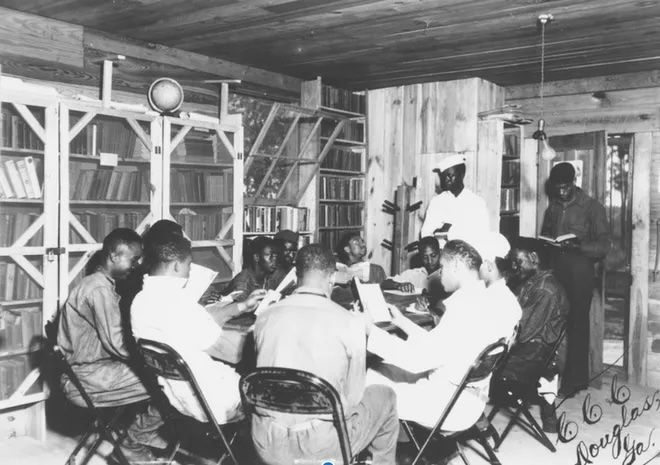
One of the few known photos of Company 1433, an all-Black unit of the Civilian Conservation Corps (CCC) that helped open much of the Okefenokee Swamp region for tourism and commerce in the 1930s and 1940s. Photo Source: The Florida Times-Union
Only 10% of the CCC workforce was allocated for Black laborers. This metric was established to reflect the percentage of the total population of Black people in the U.S., but it failed to account for the disproportionate economic hardship faced by Black communities. During this time, Black people faced unemployment rates two to three times higher than white Americans. Note: This is the difference between equality and equity, and why we have to think beyond baseline percentages to create equitable opportunities for all.
But even with this requirement, many qualified Black applicants were turned away because of racism. In Southern states, for example, officials initially refused to enroll African Americans under the pretext that they were “needed” for agricultural work.
While a few early CCC camps were integrated, particularly in areas with smaller Black populations, segregation quickly became institutional policy. In 1935, CCC Director Robert Fechner issued an order for "complete segregation of colored and white enrollees," meaning that African American and white participants in the Civilian Conservation Corps were required to be separated into entirely different camps and units. He defended this practice by claiming that "segregation is not discrimination" and asserted that Black enrollees preferred to be in companies composed exclusively of their own race (which didn’t account for the fact that Black people’s experiences were far inferior to their white counterparts).
At the Grand Canyon, Company 818 stood out as a notable exception. From 1933-1936, this somewhat integrated company built the Colorado River Trail—considered the most difficult trail in the park. John B. Scott, a Black enrollee who joined in 1935, documented camp life through photography, creating historical records that survive today.
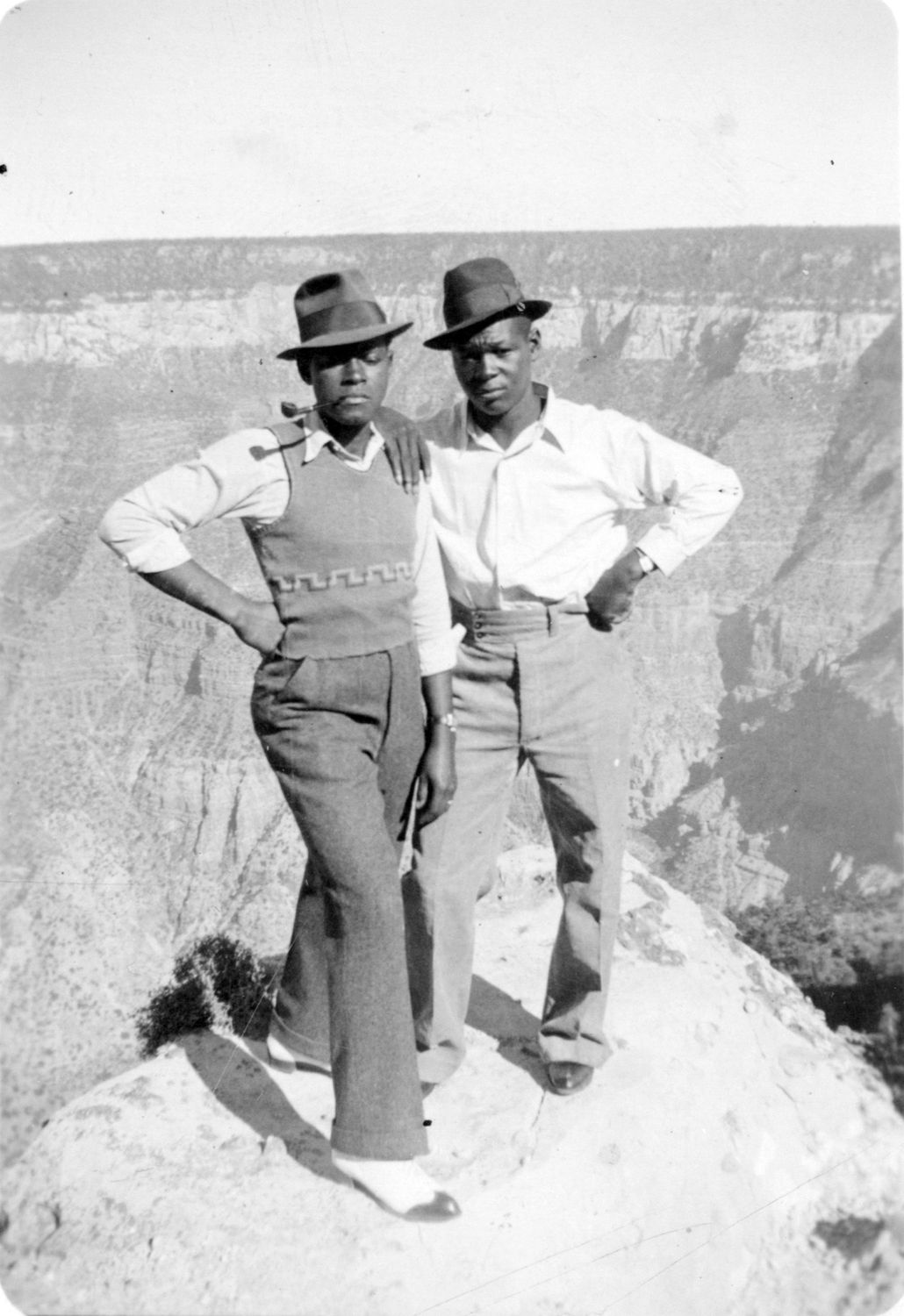
A black and white photograph of two Black men, dressed sharply, standing on the edge of Grand Canyon in nice pants and fedoras, taken by John B. Scott. Photo Source: Grand Canyon NP Museum Collection
Black CCC workers made major contributions, both there and in parks across the U.S. At Zion National Park, CCC laborers shielded the now-famous Angels Landing Trail against erosion and installed water management infrastructure along the Virgin River. In 1935, the National Park Service estimated that CCC work had "advanced forestry and park development by as much as two decades."
Despite these contributions, many Black CCC laborers were excluded from enjoying the parks they helped create. Virginia's first six state parks, built in part by Black CCC laborers, were designated as whites-only. In Lake Murray in Oklahoma, the CCC was tasked to build two identical recreation areas —one for white residents and one for Black residents. White locals were outraged by this, and complained that the park was "far too elaborate for Negroes."
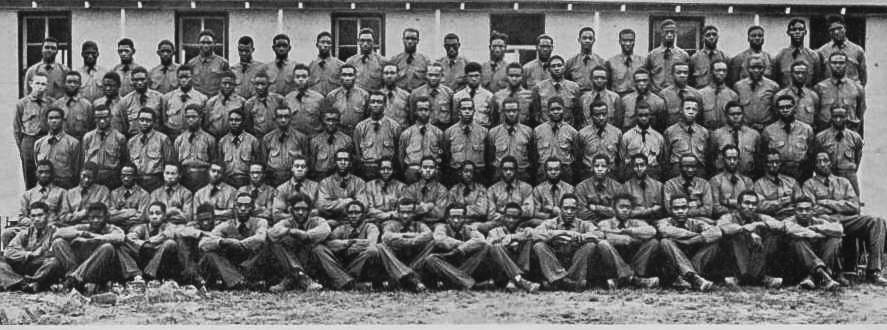
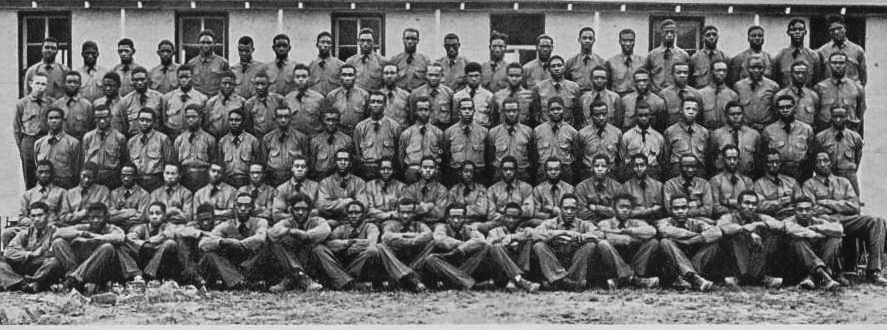
A black and white photograph of about 100 members of an all-Black CCC Company C-3790, Camp P-71, located in Arkansas, all in uniform and posing like a class photo. Photo Source: Living New Deal
The CCC disbanded in 1942 as America entered World War II, but its impact is still visibly seen in public parks and nature preserves across the U.S. If you find yourself marveling at the elegant stonework of a trail or the rustic beauty of a park lodge, you might be enjoying the handiwork of these corps laborers! As you do, let’s not forget the importance of stewarding these lands, and honoring their people, with dignity and grace.
Reflection Questions
What parallels can we draw between the employment discrimination faced by Black CCC laborers in the 1930s and current workforce equity challenges in conservation and outdoor recreation?What other examples of equality vs equity can you think of?
Learn More
Read this op-ed about Okefenokee Company 1433, an overlooked Black chapter of the CCCWatch this 5-minute video about the Civilian Conservation Corps by the National Parks ServiceWatch a 5-minute video about the history of the Black Civilian Conservation Corps at the C&O Canal in Baltimore, MD.Read Luther C. Wandall’s first-hand account of being a Black man in the Civilian Conservation CorpsRead this review of the experience of Black CCC laborers in the Pacific NorthwestLearn about the impact of Black CCC laborers in Los Angeles, CA
Never miss a story
Get stories of overlooked and untold Black history in your inbox, free every week.