Crispus Attucks Day
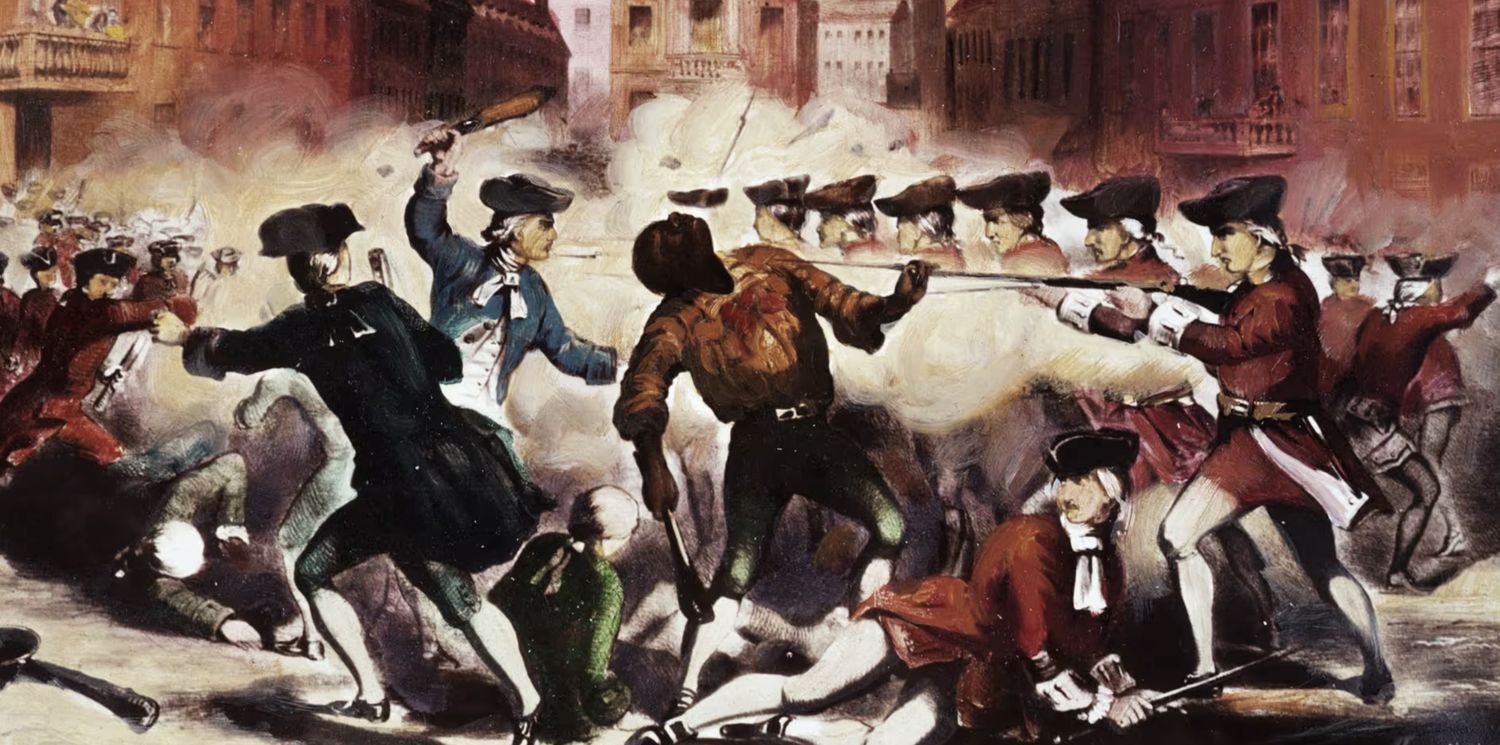
A painting inspired by the night of the Boston Massacre showing a skirmish between British soldiers and a group of people, with a dark-skinned man, presumably Attucks, being shot by a British soldier in the center of the image. Image Source: Bettmann Archive/Getty Images
Crispus Attucks was born around 1723 in Framingham, Massachusetts to parents of Wampanoag and African descent. His surname derives from the Natick word for "deer." In 1750, William Brown of Framingham had placed an advertisement in the Boston Gazette seeking the return of a 27-year-old enslaved man named "Crispas," described as six feet two inches tall. That man was almost certainly Attucks, who escaped and spent the next two decades working on whaling vessels and trading ships, sometimes using the alias Michael Johnson to avoid recapture. The maritime industry was one of the few places Black men could earn fair wages while staying beyond the reach of slave catchers.
By early 1770, Boston was hotly politicized. The British Parliament had implemented the Townshend Acts, which imposed high tariffs on essential imported goods. There were British soldiers stationed in the city to enforce laws, which only further incensed the colonists. On March 5, 1770, that tension exploded.
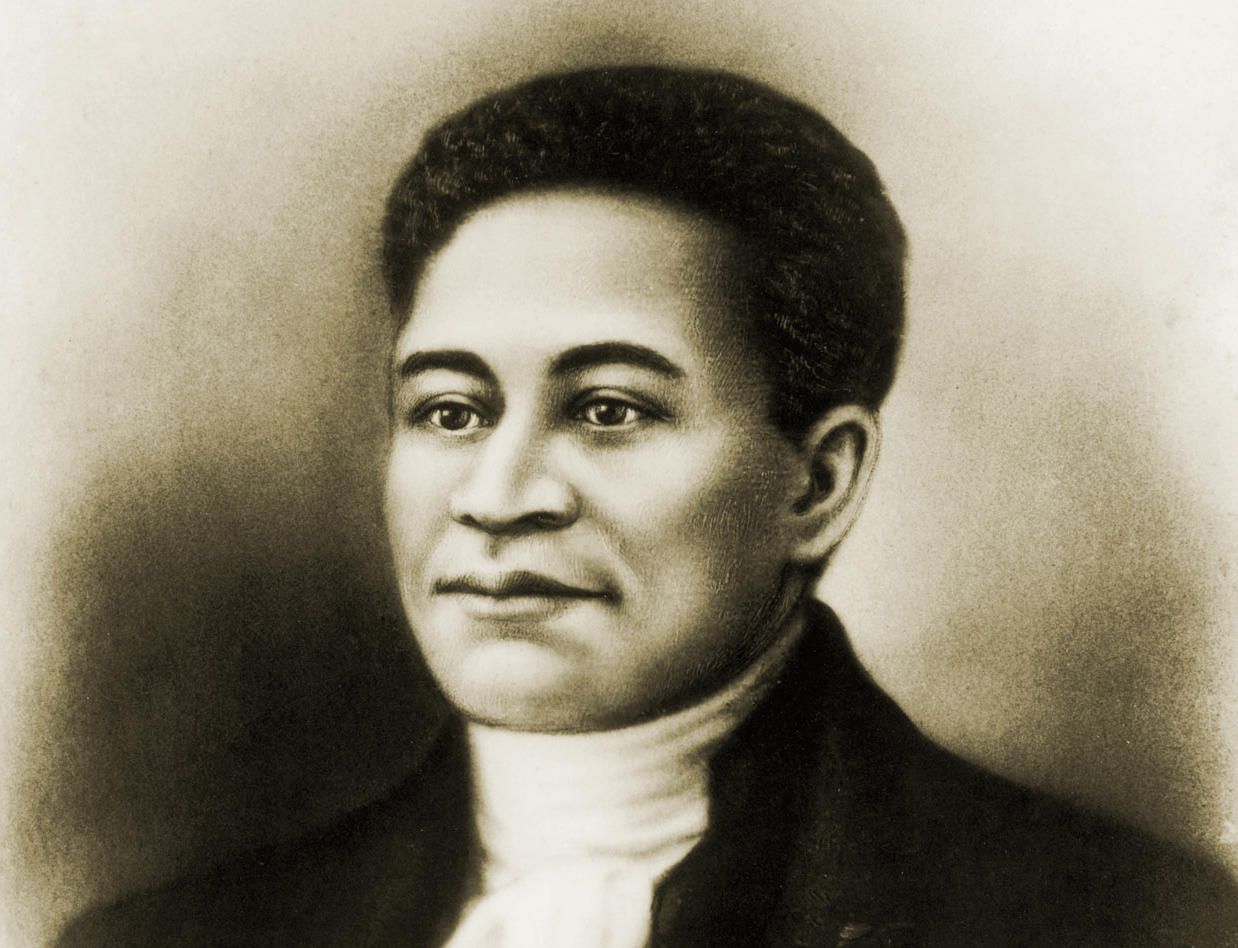
An illustrated portrait of Crispus Attucks wearing a dark jacket and white high necked shirt with a solemn expression. Image Source: Crispus Attucks Museum
That evening, some type of confrontation was sparked between a group of British soldiers and local bystanders. The source of the conflict differs in the archives. Some believe it was started by a soldier trying to get a part-time job at a pub, which angered locals who were already struggling to stay employed. Another story states the conflict started after a colonist accused a soldier of not paying their bill. Whatever happened, it placed the colonists and soldiers in opposition, and Attucks, who had just returned from a voyage to the Bahamas and was preparing to leave for North Carolina, was in the midst. One of the colonists, who were unarmed, in the crowd threw ice or rocks and knocked down a soldier. In retaliation, the troops opened fire.
Two musket balls struck Attucks in the chest, and he died that evening from his injuries. Four other colonists–Samuel Gray, James Caldwell, Samuel Maverick, and Patrick Carr–also died that night in what became known as the Boston Massacre. This confrontation is considered to be the spark of the Revolutionary War, and Attucks was its first casualty.
The soldiers were put on trial for murder. Future president John Adams was their defense lawyer, and aimed to discredit the uprising by calling those who rebelled "a motley rabble of saucy boys, Negroes, and mulattos, Irish teagues and outlandish jack tars." He stated that Attucks had "undertaken to be the hero of the night" and precipitated the conflict with his "mad behavior." The soldiers were acquitted.
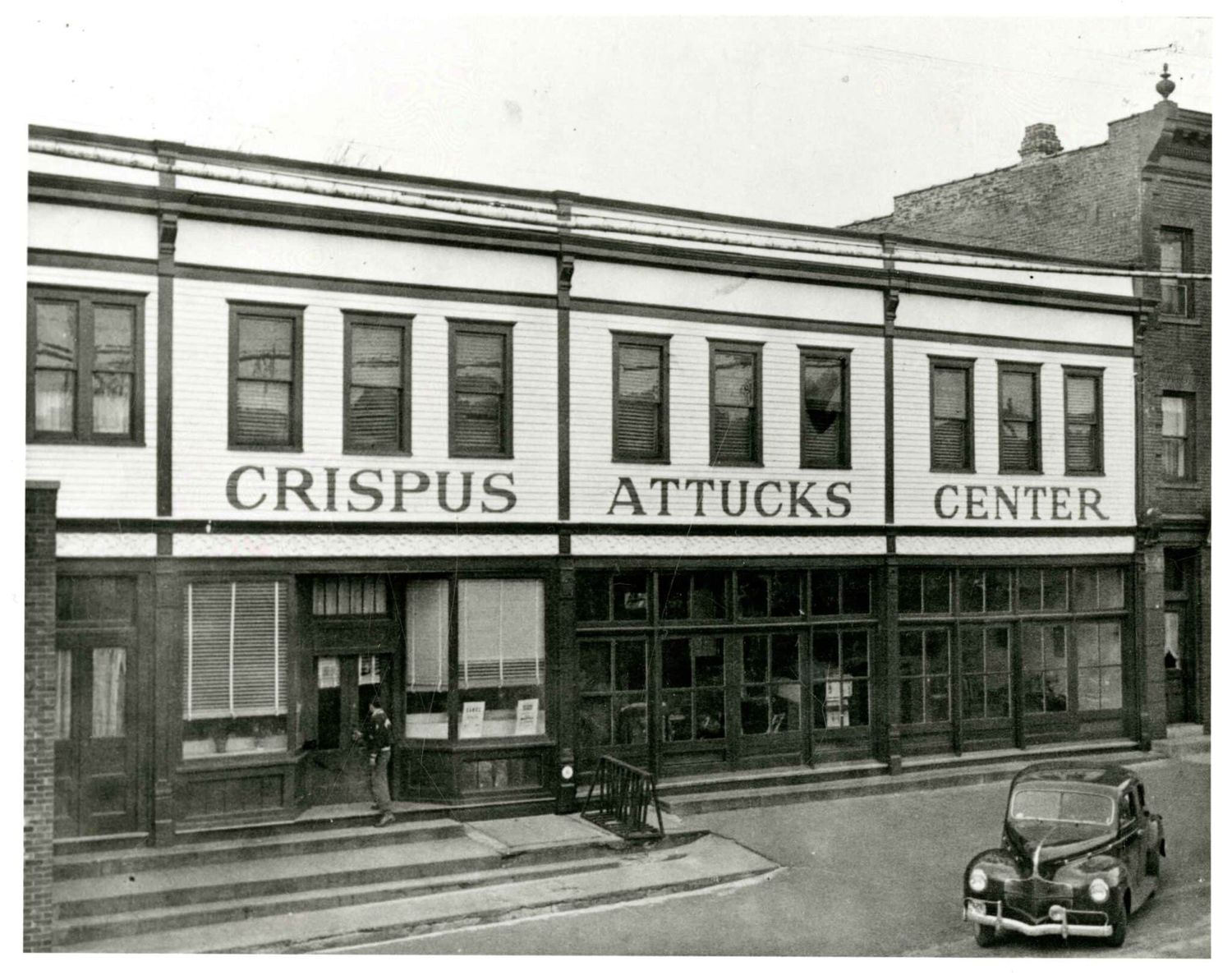
Crispus Attucks’ name graces several monuments, buildings and other dedications inspired by his life. Here is a black and white photograph of the Crispus Attucks Center in Greenwich, Connecticut, which was a community organization formally started in 1941 with the mission to provide programming for the Black population of Greenwich. Photo Source: Greenwich Historical Society
Adams meant to insult Attucks and the other brave colonists who resisted that night. But his words only further enthused colonists, who were starting to see themselves–regardless of race or ethnicity–as a united people against British rule. Attucks’ role was respected enough that his body was buried alongside the others who had fallen, despite the laws requiring segregated cemeteries and burials. For years after his death, Bostonians held annual commemorations every March 5, portraying Attucks and the other victims as patriotic martyrs. But as the war intensified, the tradition faded.
In 1857, the Supreme Court delivered its Dred Scott v. Sandford decision, which declared that Black people were not citizens and "had no rights which the white man was bound to respect." William Cooper Nell, a Boston-based Black abolitionist and historian, realized the decision was delivered just one day after the anniversary of Attucks' death. Nell was already committed to keeping Attucks’ memory alive; in 1851, he and other Black leaders petitioned the Massachusetts legislature for a monument honoring Attucks, but were rejected. His 1855 book "The Colored Patriots of the American Revolution" documented Black Americans' contributions to the Revolutionary War.
After Dred Scott, Nell revived "Crispus Attucks Day", organizing annual March 5 celebrations to prove that Black Americans had fought and died for the nation from its beginning. He figured that, if a Black man's blood was the first shed for American independence, the nation couldn’t deny citizenship to his descendants. The commemorations continued annually, featuring lectures, performances, and reenactments.
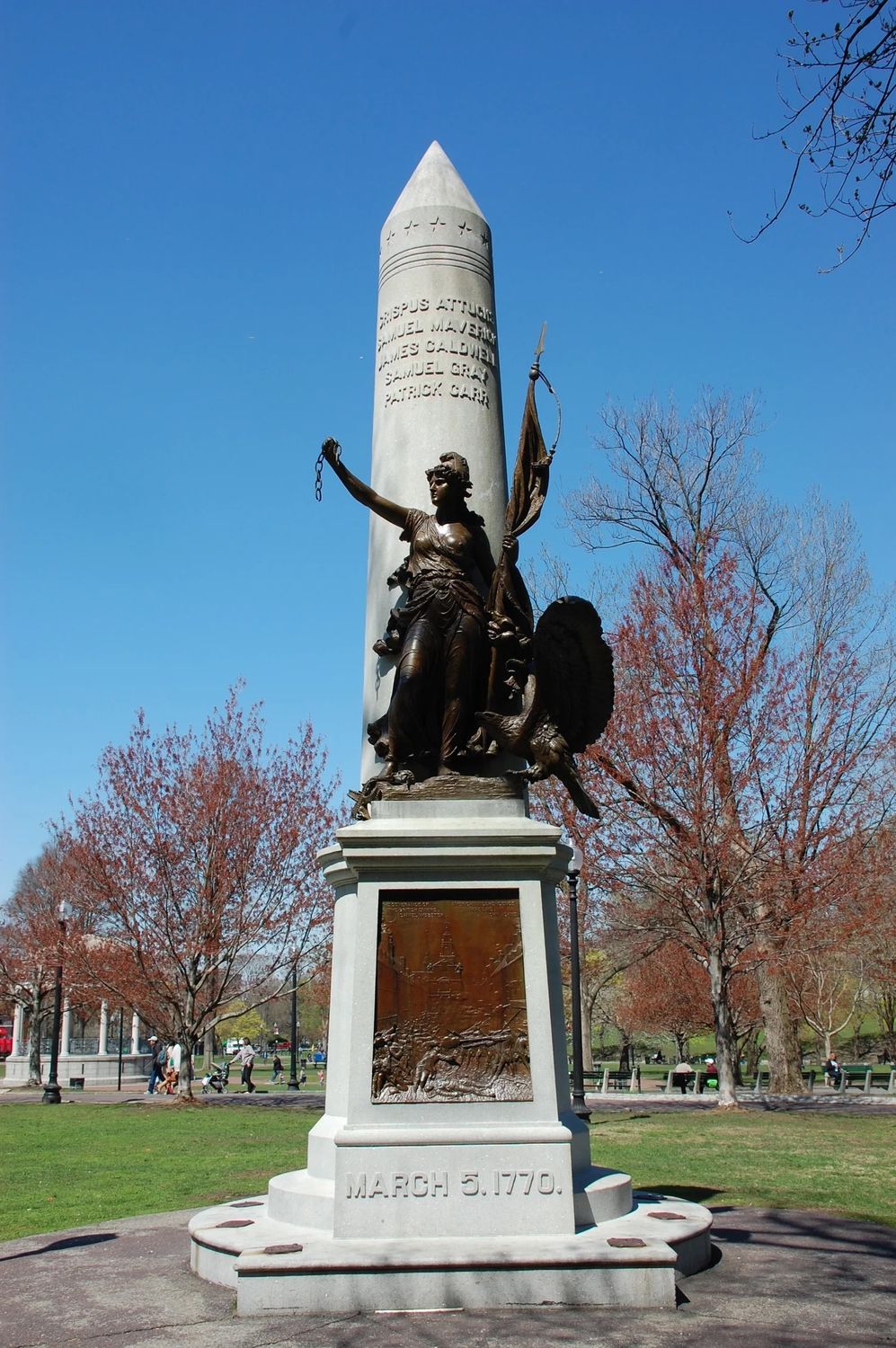
“The Boston Massacre / Crispus Attucks monument honors the victims of the Boston Massacre. It stands at 25 feet high and 10 feet wide. On top stands a figure representing the Spirit of the Revolution inspired by Eugene Delacroix’s painting of Liberty Leading the People, a symbol of the French Revolution. She holds a broken chain in her right hand to symbolize freedom from the oppressors and in her left hand she holds the American flag. With her right foot she crushes the crown of the British monarchy and next to her other foot an eagle prepares to fly.
At the top of the column and behind the Spirit of the Revolution in raised letters are the names of the five martyrs: Crispus Attucks, James Caldwell, Patrick Carr, Samuel Gray and Samuel Maverick. The base of the monument portrays a relief of Boston Massacre and below it is the date March 5, 1770.”
–Crispus Attucks Musuem
The campaign continued for decades, and, in 1888, the Boston Massacre monument was finally dedicated on Boston Common. The 25-foot granite column features a bronze figure representing the Spirit of the Revolution breaking chains and crushing the British crown. A bas-relief shows the five victims, with Attucks lying in the foreground.
Attucks’ legacy lives on in the efforts of other civil rights leaders committed to his bravery. In his 1964 book "Why We Can't Wait,” Dr. Martin Luther King Jr. wrote that Attucks is “one of the most important figures in African-American history, not for what he did for his own race but for what he did for all oppressed people everywhere. He is a reminder that the African-American heritage is not only African but American and it is a heritage that begins with the beginning of America." And in 2023, when Boston City Council voted to consider renaming Faneuil Hall (currently named after slave trader Peter Faneuil), Crispus Attucks Hall emerged as a leading suggestion.
Attucks' story challenges our understanding of resistance. When Black people resist injustice, they're often dismissed as violent troublemakers. John Adams used exactly that argument in 1770. But the Boston Massacre is now remembered as a necessary spark for change. What Adams called a riot, history calls the beginning of a revolution. It is people like Attucks who often stand on the front lines; ordinary people unwilling to be passive bystanders in the face of injustice.
Reflection Questions
Attucks' resistance was initially dismissed as troublemaking but later celebrated as patriotic. How do we see similar patterns today in how acts of resistance are characterized depending on who's doing the resisting?
William Cooper Nell used Attucks' story to argue for Black citizenship rights. How can historical examples of Black Americans' contributions continue to inform current struggles for equality?
Learn More
Watch this short video of Crispus Attucks (suitable for kids)Listen to advocates calling for the renaming of Boston's Faneuil HallWatch how the city of Boston formally celebrated Crispus Attucks Day last year
Never miss a story
Get stories of overlooked and untold Black history in your inbox, free every week.