Douglass Fourth
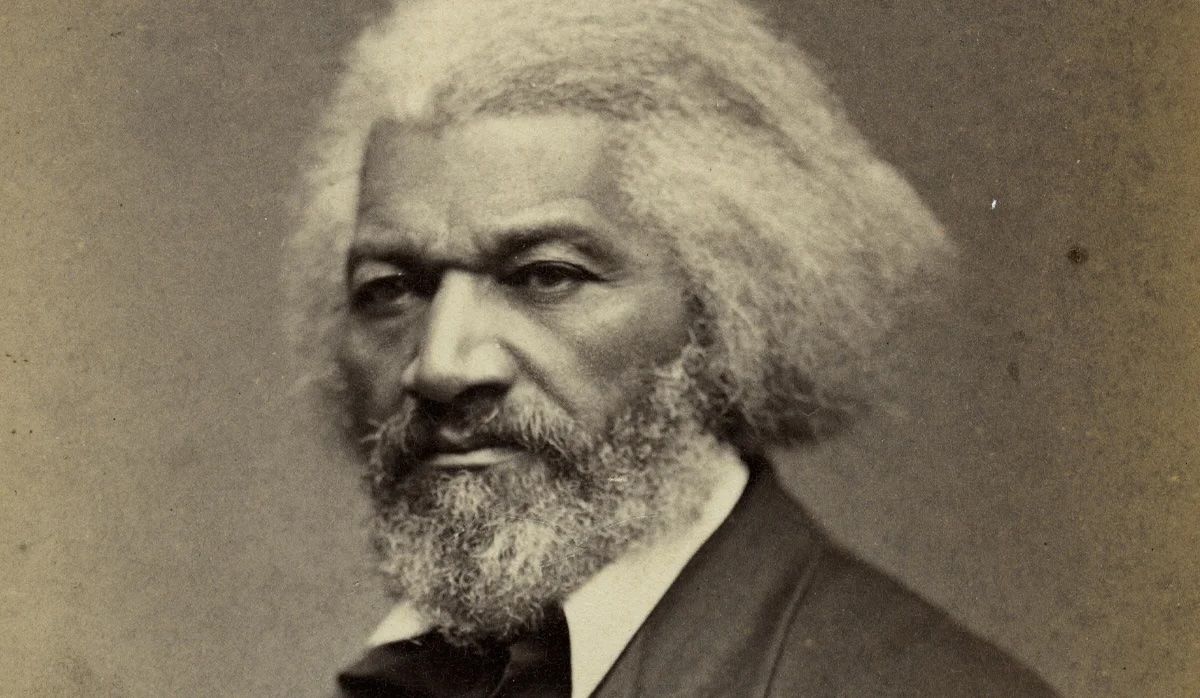
Frederick Douglass on the Fourth of July
Frederick Douglass, born into slavery around 1818 as Frederick Augustus Washington Bailey, escaped bondage and became one of America's most influential abolitionists and social reformers. After escaping in September 1838 by disguising himself as a sailor and using borrowed seaman's protection papers (History). Douglass used his experiences to challenge prevailing assumptions about the status of Black people in society.
His 1845 autobiography, "Narrative of the Life of Frederick Douglass, an American Slave," provided firsthand accounts of slavery's brutality while demonstrating the importance of literacy and education. Douglass was the only African American to attend the 1848 Seneca Falls Women's Rights Convention (NPS), where he was one of 32 men to sign the Declaration of Sentiments. He also criticized Northern labor organizations that excluded Black workers, noting that his son could more easily become an apprentice in a Boston law firm than in any workingman's organization (Social Welfare History Project). His 1857 declaration that "if there is no struggle, there is no progress" articulated his belief that meaningful change required sustained effort and resistance.
One July, Douglass was invited to speak at an event commemorating the signing of the Declaration of Independence, held at Corinthian Hall in Rochester, New York. The Ladies Anti-Slavery Society of Rochester, New York, invited him to speak on July 4. Instead, he spoke on the fifth in protest of the national holiday and to commemorate July 5, 1827 — the end of slavery in New York (Travel + Leisure).
“Fellow-citizens, pardon me, allow me to ask, why am I called upon to speak here to-day? What have I, or those I represent, to do with your national independence? Are the great principles of political freedom and of natural justice, embodied in that Declaration of Independence, extended to us? and am I, therefore, called upon to bring our humble offering to the national altar, and to confess the benefits and express devout gratitude for the blessings resulting from your independence to us?”
[…]
“The rich inheritance of justice, liberty, prosperity and independence, bequeathed by your fathers, is shared by you, not by me. The sunlight that brought light and healing to you, has brought stripes and death to me. This Fourth July is yours, not mine. You may rejoice, I must mourn.”
Frederick Douglass, from “What to the Slave is the Fourth of July?”
The speech, which is included in full through the links below, was delivered at a pivotal part of American history. The Fugitive Slave Act of 1850 had just been passed, which gave the federal government authority to capture allegedly enslaved people and return them to their captors, even if they were in a free state (History). The book Uncle Tom’s Cabin had just been published, and the upcoming presidential election was about to happen (Time). Together, these events would all provide the soil for the Civil War and the civil rights movement that’s still unfolding today.
Spoken over 170 years ago, the words known as “What to the Slave is the Fourth of July?” are a scathing critique of the failed promises of the Declaration of Independence to Black people enslaved. It acknowledges the contributions of the Founding Fathers while noting the hypocrisy of these ideals with the institution of slavery (NMAAHC). Many of Frederick Douglass’ words still ring true today. America, unfortunately, has still not lived up to its promises to all people.
Read the full speechWatch James Earl Jones read this speech Watch five young descendants of Frederick Douglass read the entire speech in this video, and reflect on its relevance in July 2020
Reflection Questions
What communities are currently disenfranchised from the rights listed in the Declaration of Independence? What recent news and events remind you of this speech?In his speech, Douglass challenged America to live up to its founding ideals while acknowledging the contributions of the Founding Fathers. How can we apply his approach of holding institutions accountable while working within existing systems to create change?Douglass believed that "if there is no struggle, there is no progress" and used his personal story to challenge assumptions about Black people's capabilities. What role do personal narratives and lived experiences play in advancing social justice today? How can you use your own platforms to create change?
Never miss a story
Get stories of overlooked and untold Black history in your inbox, free every week.