E.D. Nixon
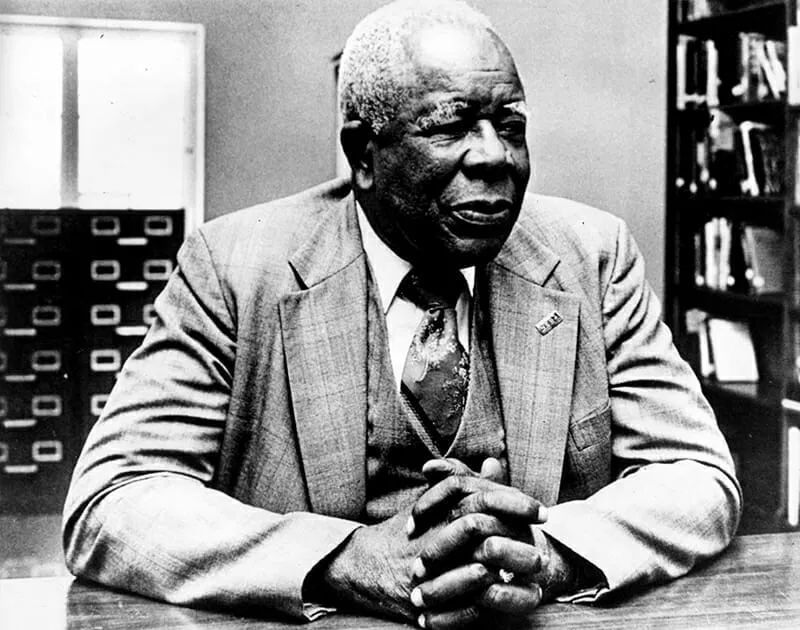
Day 17: E.D. Nixon
E.D. Nixon, a Pullman porter turned civil rights leader in Montgomery, Alabama, helped ignite the Montgomery Bus Boycott by bailing out Rosa Parks and launching the Montgomery Improvement Association in 1955. His background in union organizing and the NAACP shaped his fight for voting rights and economic justice, though his critical role was often overshadowed by middle-class movement leaders.
When E.D. Nixon arrived at the Montgomery jail on December 1, 1955, to bail out Rosa Parks, police officers greeted his telephone inquiry with racial epithets and refused to speak with him. Undeterred, the towering 6'4" former Pullman porter put up his own house as collateral and, alongside white attorneys Clifford and Virginia Durr, secured Parks's release. Nixon knew immediately this was the case he'd been waiting for to challenge Montgomery's segregated bus system.
Born in 1899 in Lowndes County, AL, Edgar Daniel Nixon's path to becoming a civil rights pioneer began in the harsh reality of the Jim Crow South. After his mother's death, he and his seven siblings were scattered among relatives, receiving little formal education. But Nixon's deep baritone voice and natural charisma would later prove invaluable in rallying people to the cause of justice.
In the 1920s, Nixon began working as a Pullman sleeping car porter. The job, while demanding, offered African Americans rare access to middle-class wages and life beyond Alabama's borders. As he carried luggage and assisted passengers in sleeping compartments, Nixon observed less restrictive social practices in other parts of the country. Through his work on the railways, he connected with A. Philip Randolph's Brotherhood of Sleeping Car Porters (BSCP), a union fighting for better wages and working conditions for Black railway workers.
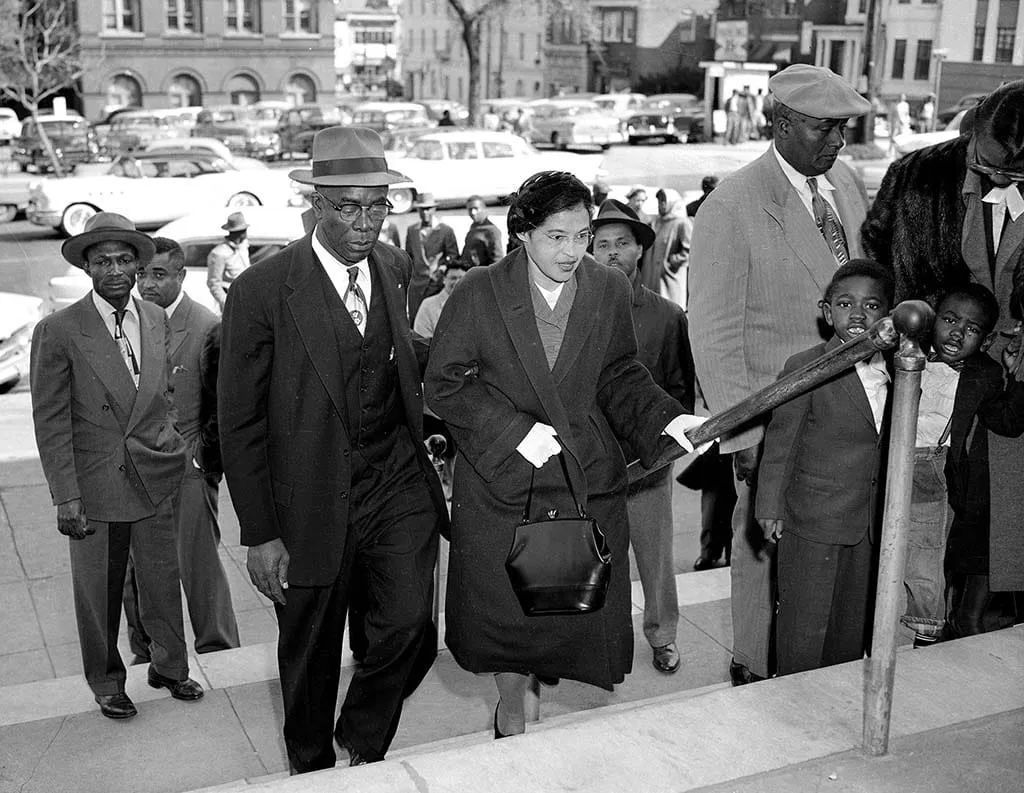
A black and white photograph of E. D. Nixon, left, escorting Rosa Parks, center, into the Montgomery County Courthouse for her trial for violating segregated-seating laws on a Montgomery bus in the photo from December 5, 1956. Parks was found guilty and fined $14. Photo Source: The Library of Congress
By the 1940s, Nixon had emerged as a fearless community organizer in Montgomery. In 1944, he orchestrated a march of 750 people to the Montgomery County Municipal Courthouse through the Alabama Voters League, directly challenging barriers to Black voting. He rose swiftly through the ranks of his local NAACP, becoming Montgomery chapter president in 1945 and state president by 1947. And he knew how to influence politics; once, he successfully negotiated with the Montgomery Police Department to hire its first Black officers by strategically supporting sympathetic white candidates.
In 1955, when 15-year-old Claudette Colvin was arrested for refusing to give up her bus seat. Nixon consulted with attorney Fred Gray to evaluate whether Colvin could withstand the intense scrutiny and pressure of being a lead plaintiff. While outraged by her treatment, he concluded that Parks, a respected NAACP secretary, and her story would be a more strategic choice to amplify and challenge segregation with. Note the tension here: by attempting to find a story that would be more effective, this decision further minimizes stories from people from more marginalized backgrounds.
This led to his work in organizing the Montgomery Bus Boycott, one of the most influential protests of the Civil Rights Movement. He helped establish the Montgomery Improvement Association (MIA), the organization to back the movement, and recruited a young Martin Luther King Jr. to act as President. The boycott stretched for 382 grueling days and forced the Supreme Court to rule that Alabama's racial segregation laws for buses were unconstitutional. Yet few people recognize Nixon’s contribution to the movement, or the risks that he was exposed to in the process. When King's home was bombed on January 30, 1956, Nixon's house was targeted just two days later – though this attack received far less attention in the press.
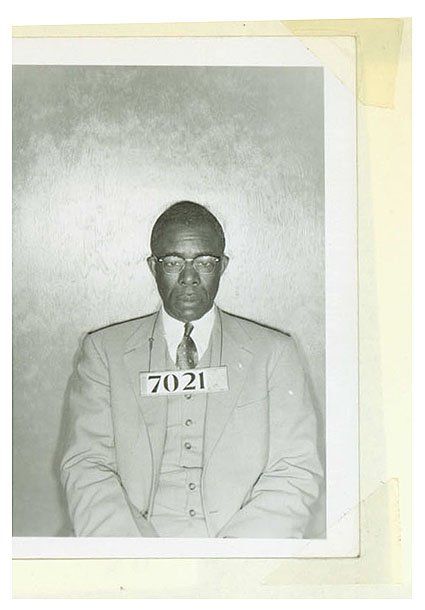
A photo of a printed photograph of E. D. Nixon taken after his arrest on February 21, 1956 for his role in the Montgomery Bus Boycott. Nixon is wearing a suit and glasses, sitting in a chair, looking at the camera with a sign with arrest numbers 7021 hanging around his neck. Photo Source: Digital Library of Georgia
This, alongside class tensions within the movement, eventually led to Nixon's departure from the MIA. He resigned in June 1957, and spent his later years in relative obscurity, working as a recreation director at a public housing project. He passed away on February 25, 1987, at Baptist Hospital in Montgomery, and his funeral drew people from all walks of life.
In 2001, the Montgomery County Public School System honored Nixon's legacy by naming an elementary school after him. This recognition acknowledged what Martin Luther King Jr. had once noted: Nixon was truly "a symbol of the hopes and aspirations of the long oppressed people of the State of Alabama." His journey from Pullman porter to civil rights strategist demonstrated how labor activism and civil rights work could combine to dismantle systemic racism, one calculated step at a time.
Reflection Questions
Consider how Nixon transferred organizing skills from labor to civil rights movements. How can today's movements learn from and support each other?Nixon believed economic and civil rights were inseparable. How do we see this connection in current struggles for racial justice?
Learn More
Watch this three minute interview with E.D. Nixon on the Montgomery Bus Boycott (July 24, 1981)Listen to this podcast of Delta Airlines workers reflecting on E. D. Nixon’s legacy and its parallels to their own labor organizing efforts.Watch Miles of Smiles, Years of Struggle, an award-winning documentary about the Brotherhood of Sleeping Car Porters (BSCP)
Never miss a story
Get stories of overlooked and untold Black history in your inbox, free every week.