Philip Anthony Payton Jr
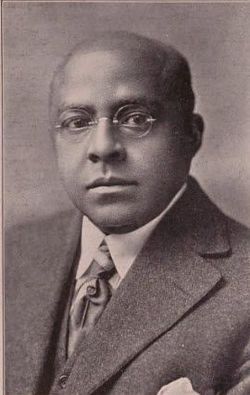
Day 18: Philip Anthony Payton Jr.
Philip A. Payton Jr. (1876-1917) transformed Harlem from a white neighborhood into the center of Black culture by acquiring properties and renting to Black tenants. Through his innovative real estate strategies and keen insights, he helped move three-quarters of New York City's Black population to Harlem despite significant opposition, earning him the title of the "father of Harlem."
In 1899, Black New Yorkers lived in Manhattan's most crowded slums, with nearly 5,000 people squished into squalid housing per block. That same year, Philip A. Payton Jr. arrived in New York City from Westfield, Massachusetts, and would soon revolutionize the city's real estate landscape.
Born in 1876, Payton dropped out of college to work in his father's barbershop until 1899, when he was in search of adventure. He moved to New York City and worked odd jobs. When he was a porter, he realized his interest in real estate.
By fall 1900, Payton had opened his own real estate office with a partner. When this venture failed months later, he continued independently, supported by his wife Maggie's work as a seamstress. He began specializing in managing properties for Black tenants, advertising with the slogan "COLORED TENEMENTS WANTED/Colored man makes a specialty of managing colored tenements."
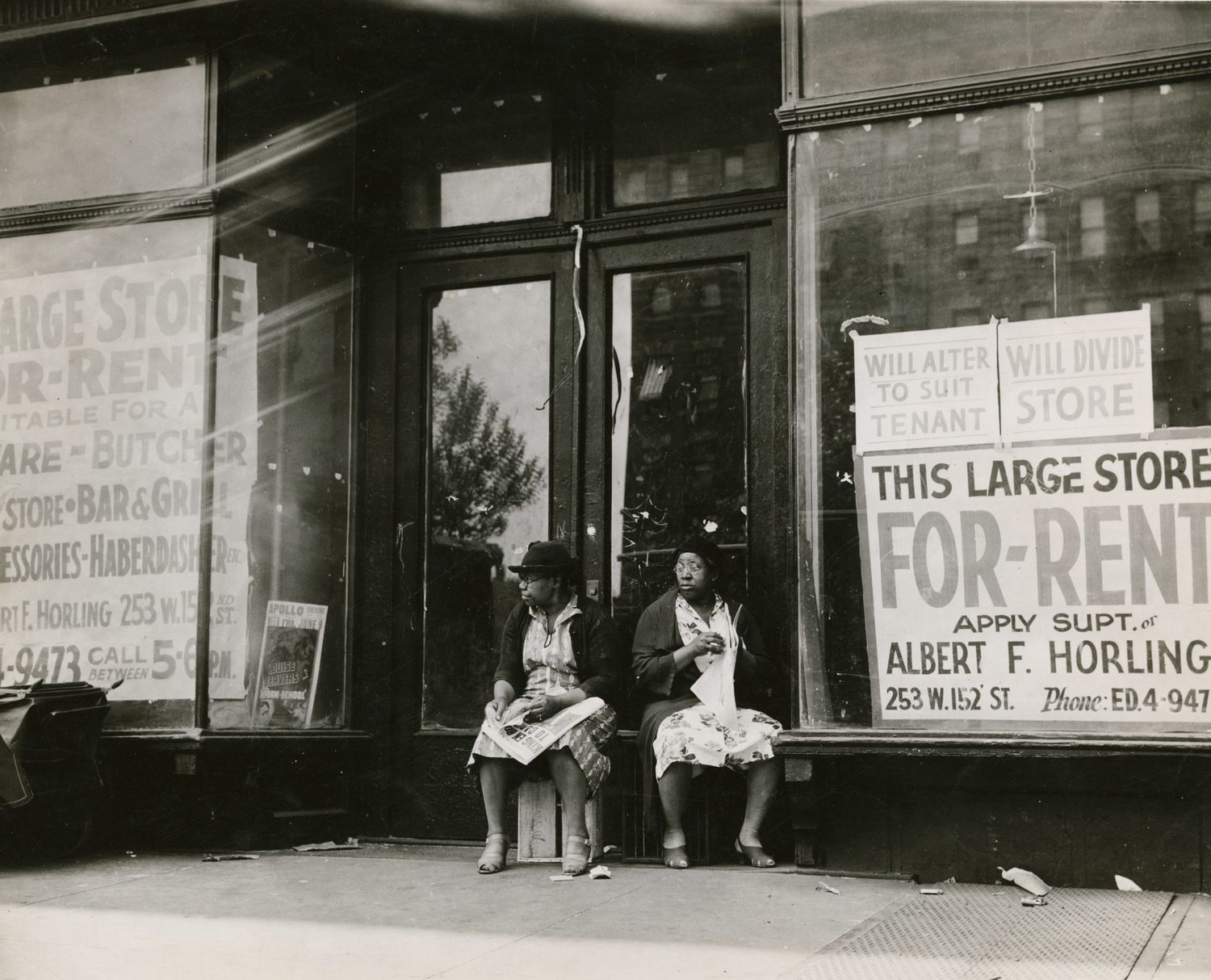
Two women sit in the doorway of an empty storefront that is being offered for rent, Harlem, New York City, Schomburg Center for Research in Black Culture, Photographs and Prints Division, The New York Public Library.
In 1904, timing worked in Payton's favor. A new subway line reached Harlem, then a white neighborhood with many vacant properties. He founded the Afro-American Realty Company to capitalize on this opportunity. The company's strategy was straightforward: acquire vacant properties in white neighborhoods and rent them to Black tenants who were willing to pay fair rates for decent housing.
Payton recognized that white flight from neighborhoods could be leveraged to create housing opportunities for Black residents – and more money. The more apartments he could rent to the Black community, the more likely neighboring apartments would leave, too, creating new supply. In response, a white-owned real estate company in the neighborhood would often try to obtain swathes of buildings to keep neighborhoods white.
The Afro-American Realty Company grew quickly. At its height, it managed or held mortgages on about two dozen buildings. The company attracted Black families from across New York City, the rural South, and the Caribbean to Harlem. However, its promise of 10% returns to investors proved unrealistic. Despite paying its first dividend in 1907, the company was forced to close in 1908.
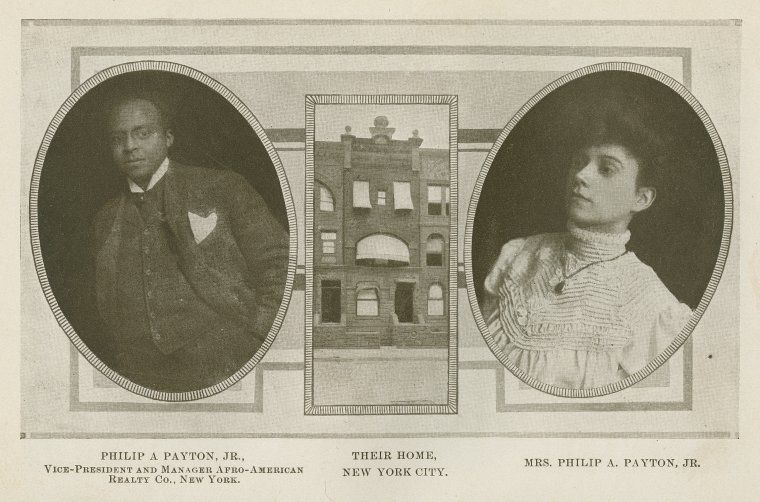
A graphic depicting images of Payton, left, and his wife, Maggie, right, on either side of a drawing of their home in Harlem in the center. Photo Source: Take Walks
Payton rebounded and created the Philip A. Payton Jr. Company. His largest deal came in July 1917, when he purchased six apartment houses worth over $1 million. Yet just one month later, Payton died of liver cancer just at his summer home in Allenhurst, New Jersey.
By the time of his death, three-quarters of New York City's Black population lived in Harlem. The neighborhood transformed from one where most Black residents worked as servants in white households to a thriving community that would become the center of the Harlem Renaissance.
In addition, The Afro-American Realty Company created jobs for Black real estate agents, property managers, and maintenance workers, and made Black real estate companies seen as formidable players.
When friends told him there was "no show for a colored man" in New York real estate, Payton proved them wrong by turning housing discrimination into a business opportunity. His work earned him recognition as the "father of Harlem," and a pivotal figure in real estate and housing rights.
Reflection Questions
How did Payton turn racial discrimination in housing into a business opportunity? Consider his strategy of using "white flight" and property values to create housing for Black residents.While Payton is remembered as the "father of Harlem," his Afro-American Realty Company “failed” in 1908. How should we evaluate business leaders whose companies fail but whose larger vision succeeds?
Never miss a story
Get stories of overlooked and untold Black history in your inbox, free every week.