Fannie Lou Hamer
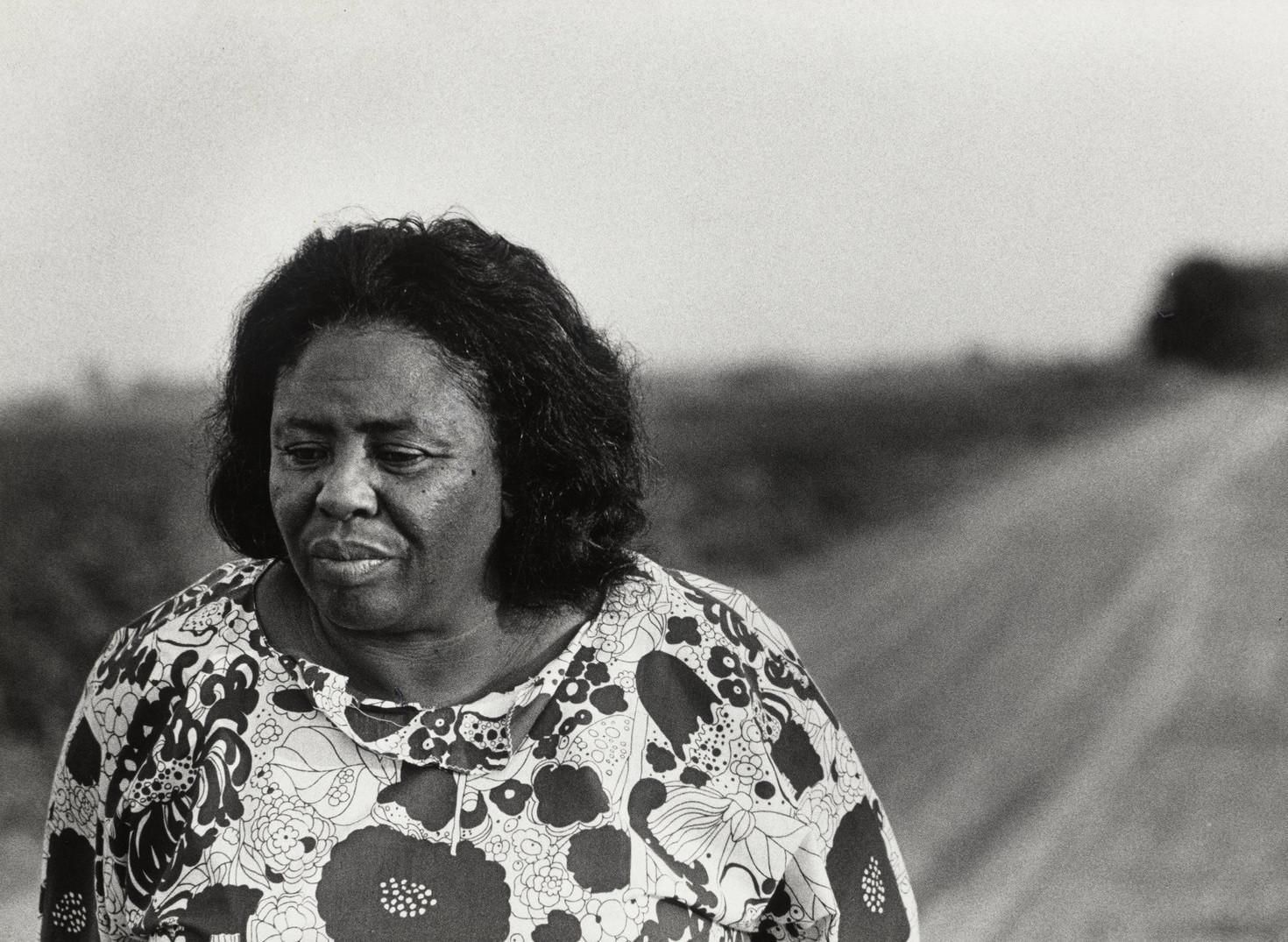
Day 15: Fannie Lou Hamer
While Fannie Lou Hamer is usually remembered for her powerful civil rights advocacy, her vision of freedom always included economic justice. Through the Freedom Farm Cooperative and her advocacy for agricultural workers, she demonstrated that voting rights and economic rights were inseparable, especially for Black Americans in the rural South.
When Fannie Lou Hamer founded the Freedom Farm Cooperative (FFC) in 1967, she drew upon a lifetime of experience that taught her the inextricable link between economic and political freedom. Born into a sharecropping family in Mississippi, Hamer intimately understood how the plantation system perpetuated racial and economic oppression. Her vision of liberation went beyond the ballot box – she recognized that true freedom required both political rights and economic independence.
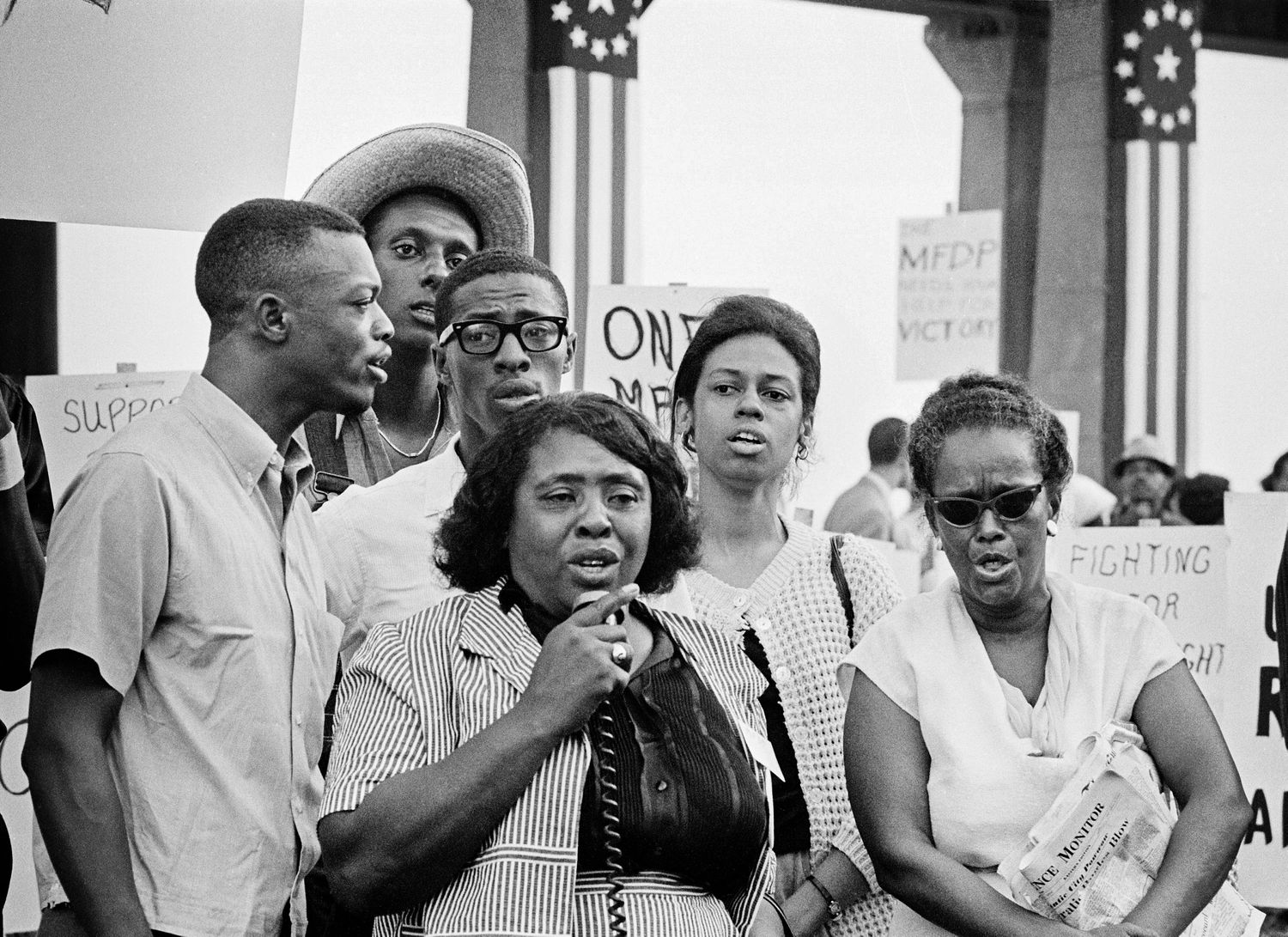
A black and white photograph of Hamer, center, singing during a MFDP rally on the boardwalk, along with, from left, Emory Harris, Stokely Carmichael (straw hat), Sam Block, Eleanor Holmes Norton and Ella Baker. Atlantic City, New Jersey: August 10, 1964. Photo Source: WITF
"If you have a pig in your backyard, if you have some vegetables in your garden, you can feed yourself and your family, and nobody can push you around," Hamer declared, articulating a philosophy that would guide her most ambitious project. The Freedom Farm Cooperative began modestly with 40 acres but embodied revolutionary principles of collective ownership and mutual aid. At its heart was an innovative "pig bank" program – families would care for a pregnant pig, keep the piglets, and return the mother to the cooperative for another family to benefit from, creating a sustainable cycle of food security and wealth building.
Under Hamer's leadership, the cooperative expanded dramatically to 680 acres, becoming one of Sunflower County's largest employers. The FFC provided far more than just land for farming – it created infrastructure for housing and economic development while enabling Black farmers to market their crops collectively.
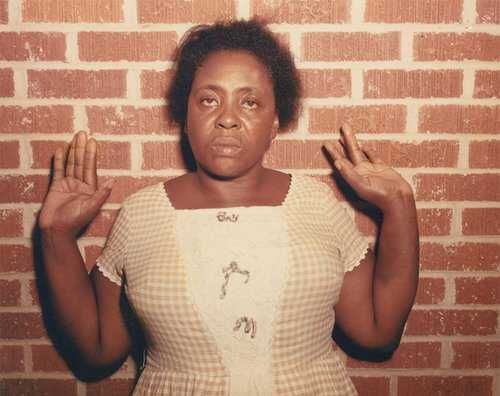
A color photograph of Hamer against a brick wall, hands up, with a defiant look on her face, after being beaten in jail in 1964. Photo Credit: FBI.
Hamer's work with the FFC emerged from her broader civil rights activism. In 1964, she played a pivotal role in organizing Freedom Summer, a massive voter registration campaign that challenged Mississippi's systematic disenfranchisement of Black citizens. That same year, she co-founded the Mississippi Freedom Democratic Party (MFDP), which confronted the segregated state Democratic Party at the national convention. Hamer’s testimony, describing the brutal reality of racial oppression in the South, was so powerful that President Johnson called an impromptu televised press conference so she wouldn’t get any airtime. His plan backfired; Hamer’s speech was broadcasted later anyway, and it galvanized national support for the movement.
The Freedom Farm Cooperative operated until the mid-1970s, facing challenges as Hamer's extensive travel and fundraising commitments, along with her declining health, took her away from day-to-day operations. While the cooperative eventually folded, its impact on Sunflower County and its model of economic democracy left an enduring legacy.
Hamer passed away from breast cancer in 1977 at age 59. In 2025, nearly five decades after her death, President Biden awarded Hamer the Presidential Medal of Freedom, recognizing her transformative contributions to civil rights and economic justice. Her life's work demonstrated that political rights and economic independence are inseparable – a lesson that remains vitally relevant today. She also demonstrated how collective ownership and mutual aid can create community wealth and political power, offering a model for contemporary movements working at the intersection of racial and economic justice.
Reflection Questions
Hamer believed that economic independence was crucial for political freedom. How does economic inequality today affect political participation and civil rights?Consider the Freedom Farm Cooperative's model of community self-sufficiency. What role can cooperative economics play in addressing current racial and economic inequities?
Learn More
Visit the Fannie Lou Hamer Memorial Garden in Ruleville, Mississippi, which preserves part of the original Freedom Farm Cooperative land.Research current Black farming cooperatives through the Federation of Southern Cooperatives.Watch "America's First: Fannie Lou Hamer" documentary about her life and work.Read "The Senator and the Sharecropper" by Chris Myers Asch for deeper context about Hamer's economic justice work.
Never miss a story
Get stories of overlooked and untold Black history in your inbox, free every week.