Mary McLeod Bethune
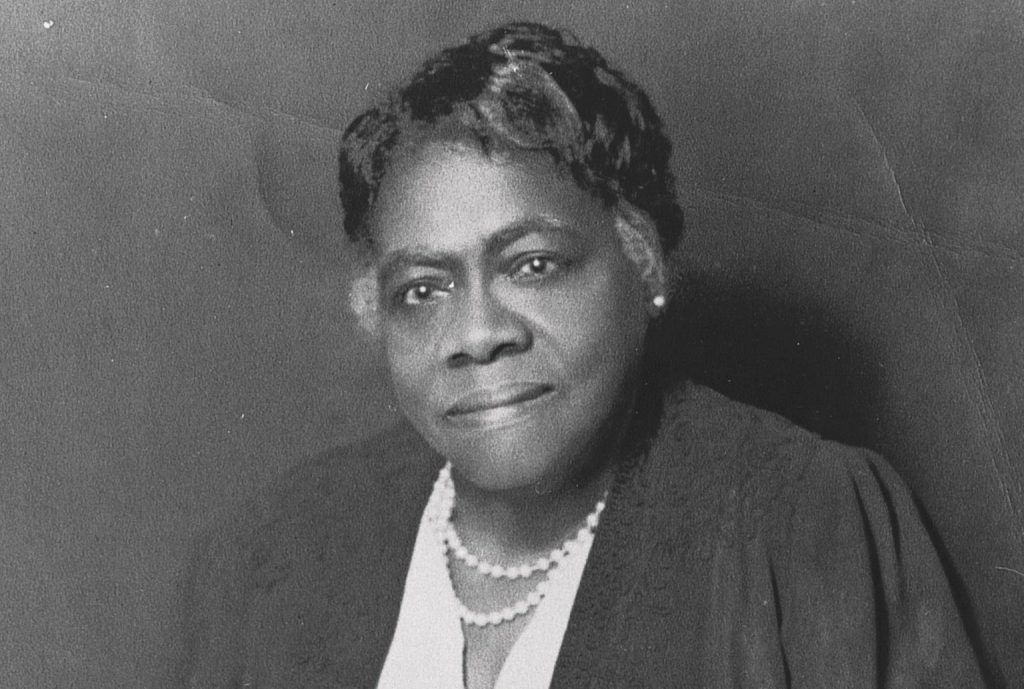
Day 14: Mary McLeod Bethune
Mary McLeod Bethune transformed American education and labor through founding Bethune-Cookman College, serving as president of multiple civil rights organizations, and becoming the highest-ranking Black woman in government during the Roosevelt administration. Her work connecting education, labor rights, and civil rights created lasting chang.
Born in 1875 near Mayesville, South Carolina, Mary McLeod Bethune was the fifteenth of seventeen children born to formerly enslaved parents. She walked five miles each way to attend a one-room schoolhouse, and carried her book home each night to teach her family what she had learned. "The whole world opened to me when I learned to read," she later wrote.
This early understanding of how education can change everything shaped her life's mission. After studying at Scotia Seminary and Moody Bible Institute, she moved to Daytona Beach, Florida, in 1904 with $1.50 in her pocket. There, she founded the Daytona Literary and Industrial Training School for Negro Girls with just five students, using discarded crates for desks and charcoal for pencils.
Believing that education must be practical as well as academic, Bethune’s school taught both liberal arts and job skills, preparing students to be self-sufficient. "Not only do we need knowledge, but we've got to have jobs," she insisted. This philosophy – that education and economic opportunity were inseparable – guided her expanding work in labor rights. By 1923, her school had merged with Cookman Institute to become Bethune-Cookman College, one of the few places in the South offering higher education to Black students.
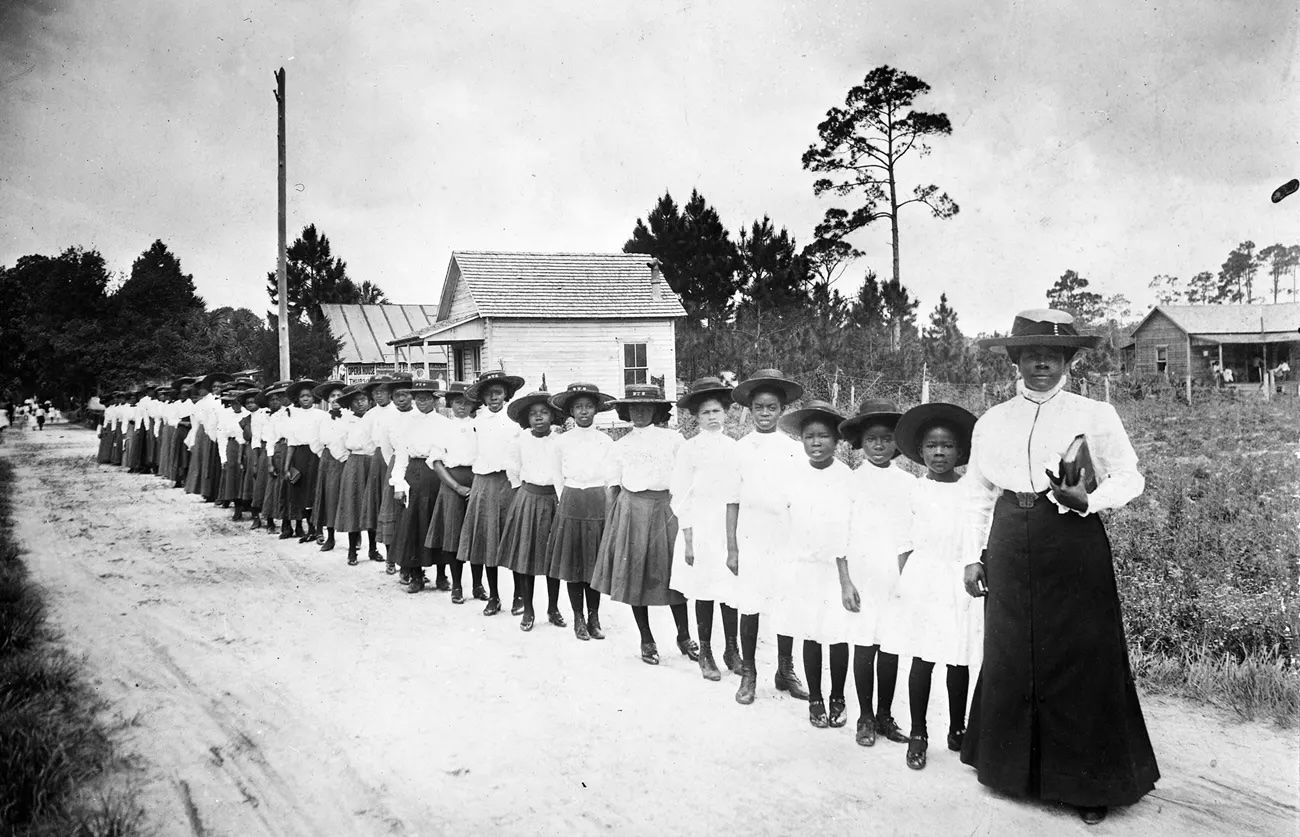
Pioneering American educator and civil rights leader Mary McLeod Bethune with her students at the one-room schoolhouse she founded, the Daytona Normal and Industrial School for Negro Girls, 1905. Photo Source: Library of Congress.
Bethune's influence extended far beyond campus. She founded the National Council of Negro Women (NCNW) in 1935, bringing together major Black women's organizations to fight for both civil rights and labor rights. During the Great Depression, President Franklin D. Roosevelt appointed her as Director of Negro Affairs of the National Youth Administration (NYA) in 1936, making her the highest-ranking Black woman in government. In this role, she fought to ensure Black youth received fair access to NYA job training programs and employment opportunities.
Through her work at the NYA, Bethune connected different aspects of the freedom struggle. She used her position to create opportunities for Black educators, hiring them as NYA supervisors and administrators. She built networks between Black colleges, labor unions, and civil rights organizations.
She used her position to create job training programs for Black youth and insisted that NYA facilities be desegregated. When white officials in the South resisted, she went directly to Eleanor Roosevelt, with whom she had formed a close friendship.
Her influence extended into organized labor as well. She worked closely with A. Philip Randolph and other Black labor leaders, understanding that unions could be powerful tools for racial advancement. When Randolph threatened his March on Washington in 1941, Bethune served as an intermediary between Black leaders and the Roosevelt administration, helping secure Executive Order 8802.
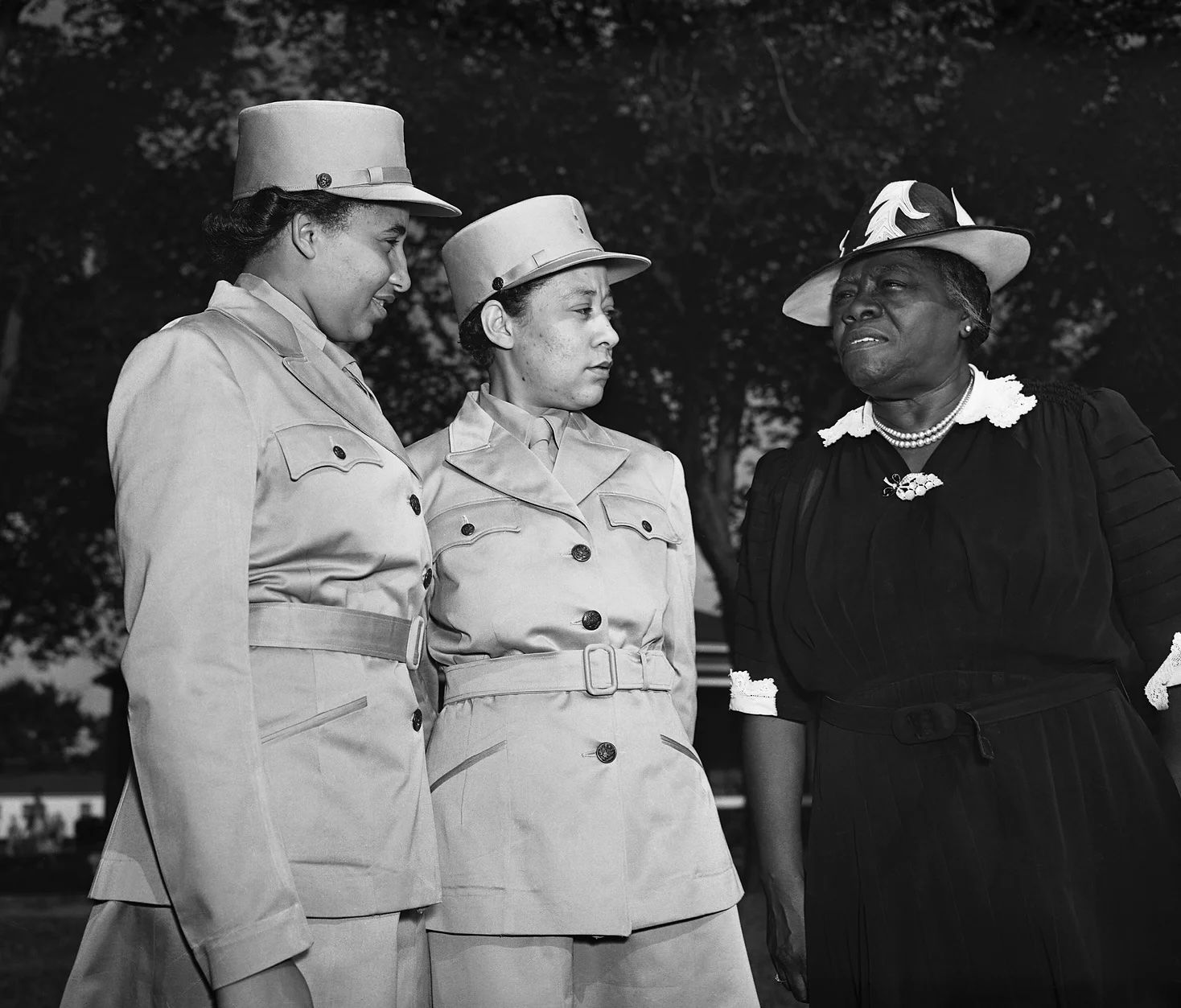
Mary McLeod Bethune (right) in conversation with Vera Harrison and Mary Bordeaux, women in the Women's Auxiliary Army Corps (WAAC) during a visit to Fort Des Moines, Iowa. Photo Source: Getty Images
Throughout her career, Bethune remained focused on creating opportunity through both education and economic empowerment. She established the World War II Bethune-Victory Staff, which helped Black women secure defense industry jobs. as a member of the American Women’s Voluntary Services (AWVS), She rallied so women of all racial backgrounds could contribute, and be supported, by the military.
"Without faith, nothing is possible," she wrote. "With it, nothing is impossible." Her faith in the possibility of change, combined with practical organizing skills and political savvy, made her one of the most effective leaders of her era. When she died in 1955, she left behind not just a thriving college, but a model for combining educational, economic, and civil rights activism.
Reflection Questions
Bethune believed that education without economic opportunity was incomplete. How do you see this connection between education and economics playing out in your community today? What can you do to support both educational and economic justice?
Consider Bethune's strategy of working both within and outside the system for change. How can you use your own position and influence, whatever it may be, to create opportunities for others?
Learn More
Visit the Mary McLeod Bethune Council House National Historic Site in Washington, D.C., which preserves her home and the original headquarters of the National Council of Negro Women.Read "Building a Better World: Essays and Selected Documents" by Mary McLeod Bethune, which collects her writings on education, labor, and civil rights.Explore the Mary McLeod Bethune Digital Archive at Bethune-Cookman University, containing photographs, correspondence, and documents from her career.Visit the National Museum of African American History and Culture's exhibit on Black education and labor, which features materials related to Bethune's work.Watch "Mary McLeod Bethune: Champion for Education," a documentary about her life and legacy.
Never miss a story
Get stories of overlooked and untold Black history in your inbox, free every week.