Fred Hampton Aquatic Center
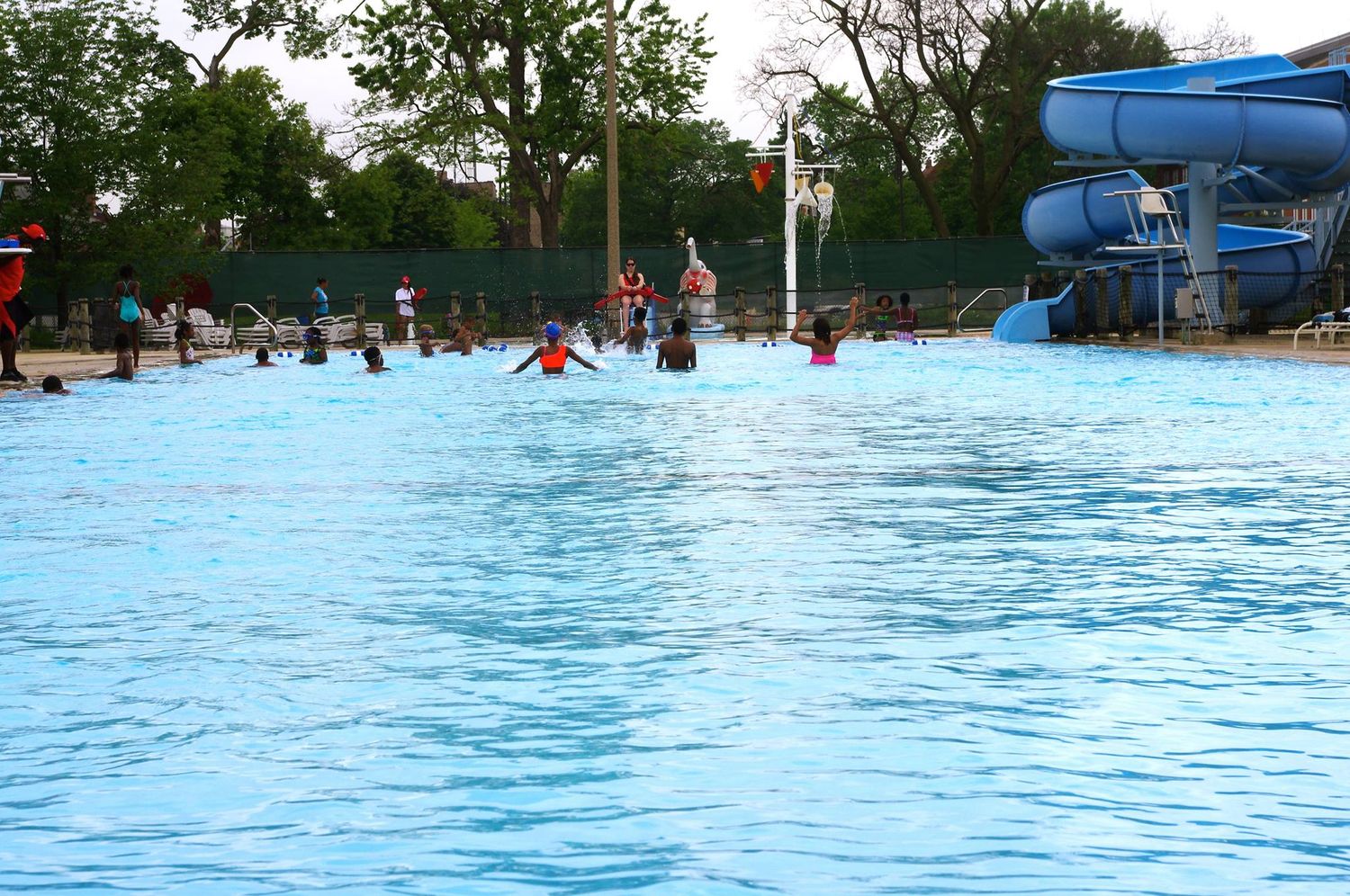
Before becoming the revolutionary leader of the Black Panther Party, Fred Hampton was a youth organizer who spent his summers organizing trips for neighborhood kids to pools where they were allowed to swim. To honor his legacy, the Fred Hampton Aquatic Center in Maywood, Illinois, was established in 1970 to give the local community a space to swim in his honor.
Born on August 30, 1948, Fred Hampton grew up in Maywood, Illinois. As a teenager working with the NAACP youth chapter, he showed a talent for organizing that extended beyond his years. He led the chapter from a handful of members to hundreds, and organized protests while still in high school. After joining the Illinois Black Panther Party in 1968, Hampton quickly rose to become its chairman. He gained recognition as a powerful speaker who built coalitions across racial lines, forming what he called a "rainbow coalition" with Puerto Rican and poor white Appalachian groups. He established free breakfast programs for children and health clinics in Chicago's neglected neighborhoods.
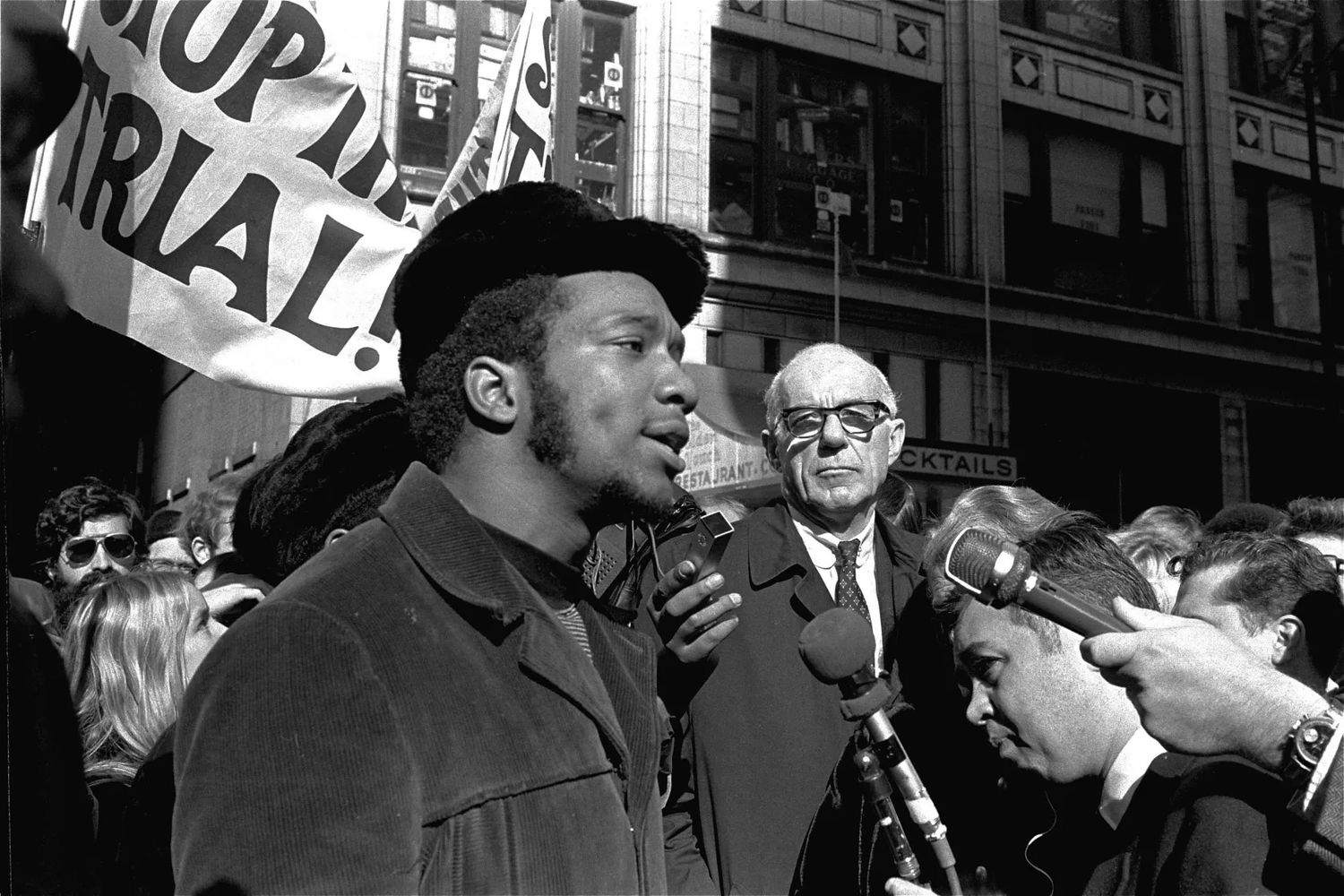
A black and white photograph of Fred Hampton, center, speaking to reporters at a rally outside the federal courthouse in Chicago on Oct. 29, 1969. Doctor, athlete and activist Benjamin Spock is on his left. Photo Source: AP News
Hampton was particularly passionate about equitable access to public spaces, including the public pool. The pool in Maywood was technically for all people, but Black residents described it as still being whites-only. So, each summer, Hampton planned daily field trips for Black kids to travel to other pools where they'd be allowed to swim. Hampton's mother, Iberia, would later recall how, even though Hampton didn't know how to swim himself, he'd take the kids each day, sometimes even making two trips so all the children had an opportunity to go.
Hampton wasn’t just confronting a local issue, but a national one. Public pools were a flashpoint for racial segregation. Even after the end of Jim Crow segregation, many communities maintained whites-only policies. Others closed their pools entirely, rather than following the law. Black swimmers were attacked if they attempted to use these public spaces. By the 1960s, access to basic summer recreation depended entirely on race.
Hampton rallied for a desegregated pool to be built in Maywood. He organized protests and demonstrations to raise awareness that public spaces were being denied to the city's Black community. One demonstration in June 1967 grew rowdy, and Hampton and several other young people were arrested. But this didn't deter him. He eventually raised funding from local businesses and convinced city officials to have an inclusive, non-segregated pool built for the community. Some believe this campaign inspired his commitment to the Black Panther Party.
I really appreciated this episode of NPR Code Switch, which unpacks the history of public pools, the privilege of learning how to swim, and how racial and gender segregation changed public pools today.
But Hampton wouldn't live long enough to see his dream realized. Hampton was shot and killed while asleep when Chicago police raided his apartment on December 4, 1969. Police claimed the confrontation was a shootout, but evidence showed they fired ninety-nine shots while only one came from inside the apartment. Witnesses said Hampton was executed with a point-blank shot to the head. Later, the assassination was revealed to be a conspiracy between local police and the FBI—a state-sanctioned murder as part of the FBI's secret and illegal counterintelligence program, COINTELPRO.
The pool Hampton had campaigned for opened in 1970, just seven months after his death. The Maywood Board of Trustees held a vote to determine whether or not the pool should be named in his honor. The three Black trustees voted in favor of the commemoration. The three white trustees voted against it, and rallied thousands of residents to sign a petition in opposition, too. Mayor Leonard Chabala, who was white, cast the tie-breaking vote in favor.
The Fred Hampton Aquatic Center was a neighborhood staple until winter 2018, when a polar vortex brought subzero temperatures that damaged the pool's concrete base. The city is currently planning a major renovation of its public spaces, and hopefully, the pool will reopen with them. There's also a bust of Hampton right near the pool's entrance. On the plaque, it includes a quote from him: "If I leave, I'll be back. And when I do come back, I'll be back to stay and join the revolution."
Reflection Questions
Hampton spent his summers organizing bus trips for children to swim at a pool five miles away, even though he couldn't swim himself. What does this tell us about effective community organizing?Mayor Chabala faced significant opposition when he cast the deciding vote to name the pool after Hampton. How do you feel about opposition? To which extent does the fear of being disliked affect how you rally for change?
Learn More
Read The Assassination of Fred Hampton by Jeffrey Haas to learn more about Hampton’s life and legacy.Read Images of America: Maywood by Douglas Deuchler to learn more about the historical aspects of the city.Watch Judas and the Black Messiah, a fictionalized look at Black Panther Party’s operations in Chicago and Hampton’s influenceLearn more about how racial segregation forever changed public pools in the U.S.
Never miss a story
Get stories of overlooked and untold Black history in your inbox, free every week.