Jackie Robinson Day
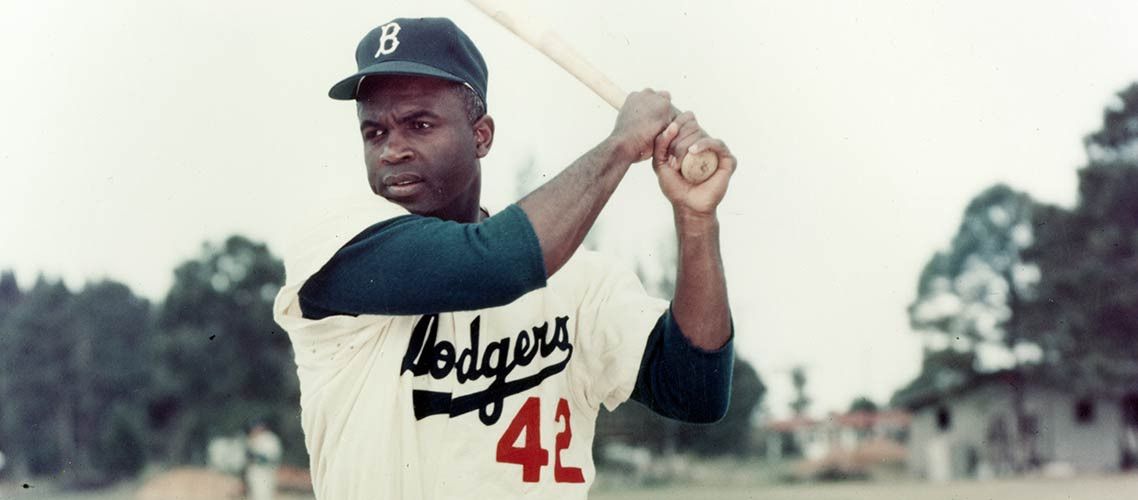
On April 15, 1947, Jackie Robinson stepped onto Ebbets Field in Brooklyn. Before a crowd of 26,623 spectators, more than 14,000 of whom were Black, Robinson became the first Black player in Major League Baseball's modern era, and ended the 80+ year baseball color line for good.
Jackie Robinson was born in Cairo, Georgia, in 1919 and raised in Pasadena, California. His athletic genius was quickly evident at UCLA, where he became the first athlete in the school's history to win varsity letters in four sports: baseball, basketball, football, and track. During school he was always advocating rallying against discrimination and was konwn for being a dedicated studnet. His sports was interrupted when he was drafted for service during World War II, and served as a second lieutenant in the U.S. Army. While stationed at Fort Hood, Texas, Robinson was court-martialed for refusing to move to the back of a segregated bus, and was eventually honorably discharged.
After, Robinson played for the Kansas City Monarchs in the Negro Leagues, where the caught the attention of Branch Rickey, general manager of the Brooklyn Dodgers. At the time, he was one of the few people advocating for the end of racial segregation in baseball. He saw the success of the platers in the Negro Leagues, and felt that if he could address racism anywhere, it could start in his field. He knew that, between, Robinson’s skills and the respect he garnered from his peers and his growing fanbase, Robinson would be the ideal person to break the color line. On April 15, 1947, Robinson made his major league debut at Ebbets Field, becoming the first Black player in the modern major leagues.
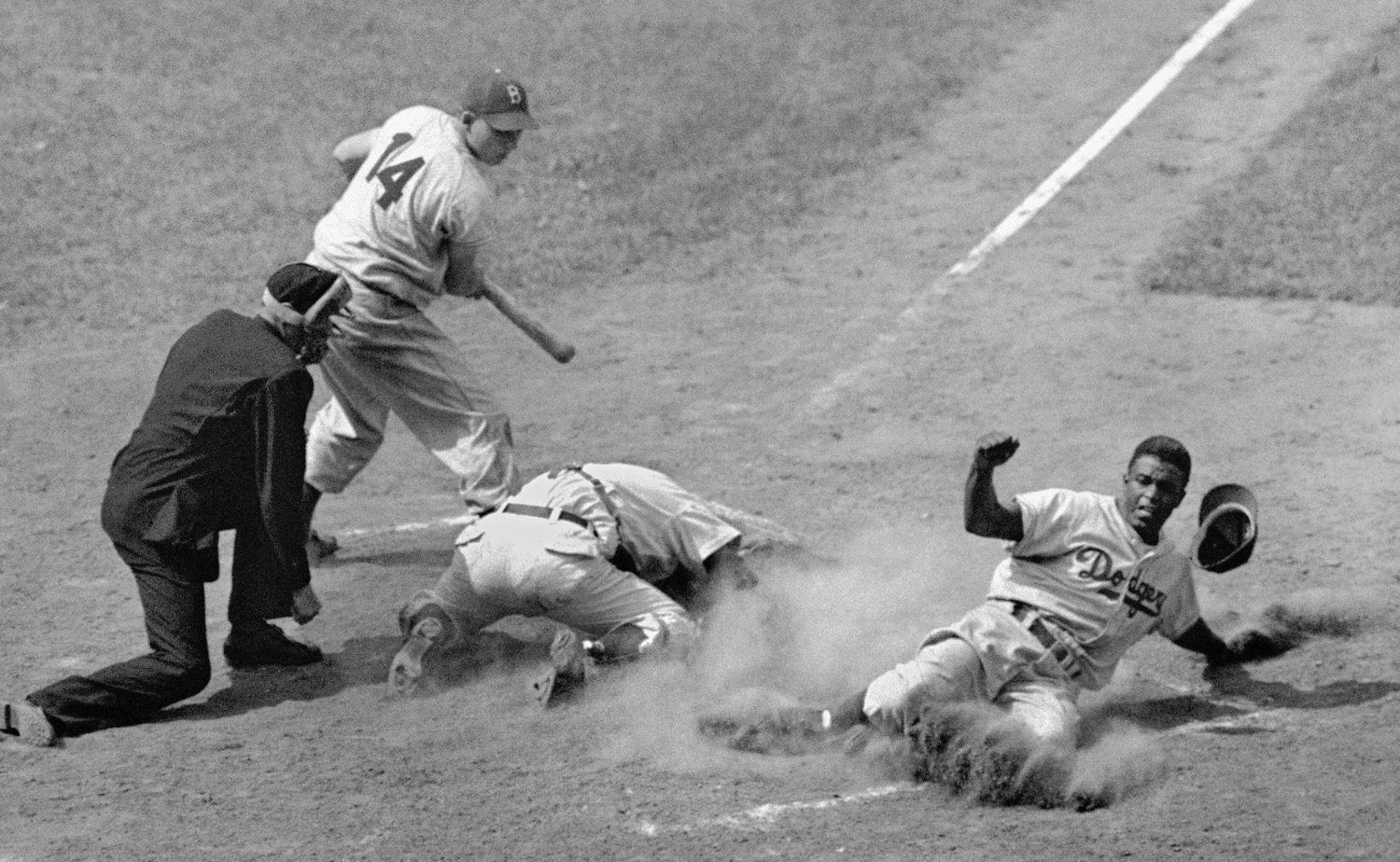
A black and white photograph of Robinson, right, sliding into home base while two players admonish their loss and the umpire watching closely to make a call. Photo Source: Associated Press
During his first season, he faced intense racism. Fans and members of opposing teams would yell racial slurs. Players would intentionally slide into him, cleats out, to cause him pain. His own teammates tried and failed to have other Dodgers players sign a petition to have Robinson removed from the team roster. Nevertheless, he finished the year winning the inaugural Rookie of the Year Award. And the Dodgers had thousands of new fans, predominantly Black people who'd travel across state lines to glimpse Robinson in action.
Robinson played ten seasons with the Dodgers, compiling a .311 career batting average and helping the team win six National League pennants and one World Series championship in 1955. He was selected to six All-Star teams and won the National League Most Valuable Player Award in 1949. Robinson retired from baseball after the 1956 season rather than accept a trade to the New York Giants. In 1962, he became the first Black player inducted into the Baseball Hall of Fame.
From here, Robinson invested more time in civil rights work. He campaigned actively for the NAACP and worked with political leaders, including President Richard Nixon and New York Governor Nelson Rockefeller, to advance civil rights legislation and economic opportunities for Black Americans. In 1963, Robinson and his family publicly joined the March on Washington, where Dr. Martin Luther King Jr. delivered his famous "I Have a Dream" speech, bringing more visibility and credibility to the movement.
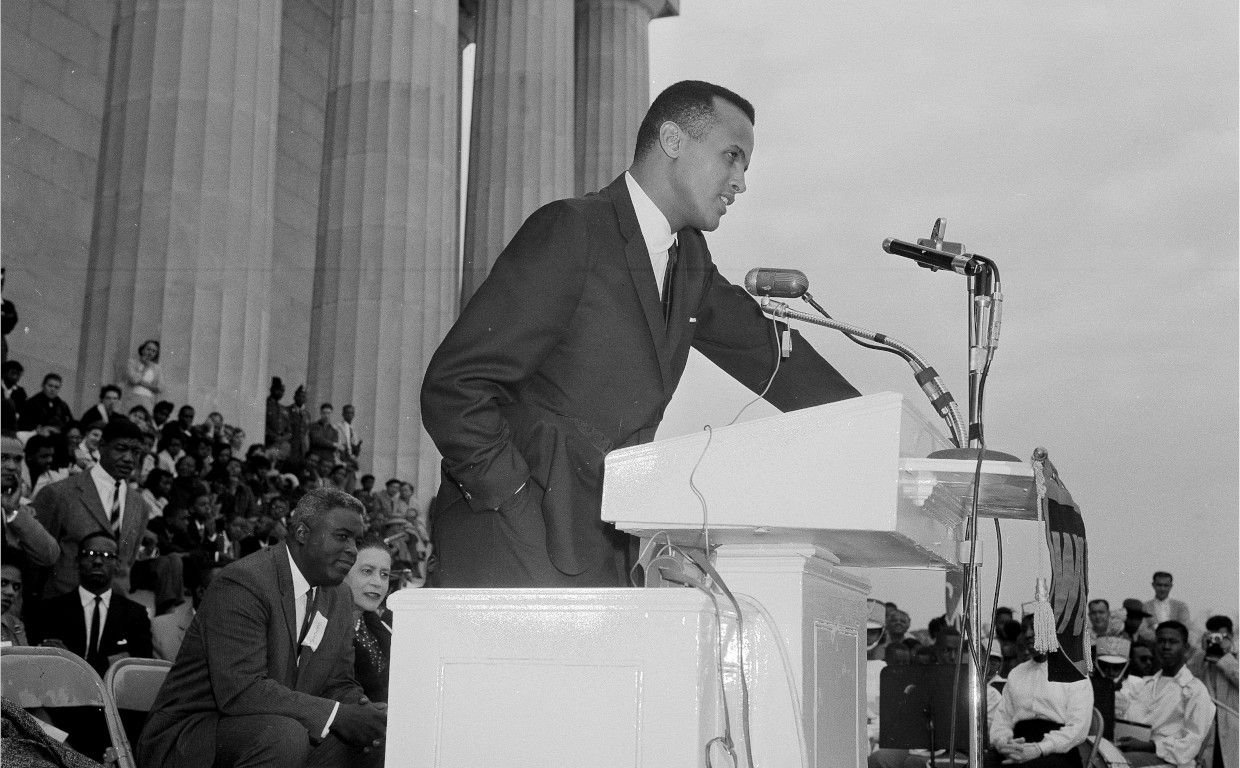
Harry Belafonte speaking at a lectern at the Youth March for Integrated Schools. Jackie Robinson can be seen sitting behind him at left. Photo Source: Associated Press
In March 2004, MLB Commissioner Bud Selig announced that April 15th would be "Jackie Robinson Day" across the league, honoring his achievements both on and off the field. "Baseball's proudest moment and its most powerful social statement came on April 15, 1947," Selig declared.
Now, every ballpark in the MLB celebrates Jackie Robinson by sharing his story and honoring recipients of the Jackie Robinson Foundation, an organization created by Rachel Robinson, Jackie Robinson's wife, that provides four-year scholarships coupled with mentoring, job placement and leadership development opportunities. And since 2007, on this day, all players, coaches, managers, and umpires across Major League Baseball wear number 42—the only number retired league-wide in any professional sport. No one will ever be assigned the number "42" for any team again.
But this commemoration of Robinson's appearance at Ebbets Field wasn't the first Jackie Robinson Day. Bill "Bojangles" Robinson, a prominent dancer and entertainer, announced that September 23, 1947, the last day of the season, was Jackie Robinson Day. He partnered with the New York Amsterdam News to hold a pre-game ceremony at Ebbets Field, where he presented Jackie Robinson with a new car, a gold watch and other fine gifts—all funded by donations from individuals and businesses across the U.S. There was also a post-game event in Harlem that drew major crowds. This celebration gave a way for New York's Black community to show their support for Robinson and the desegregation of Major League Baseball.
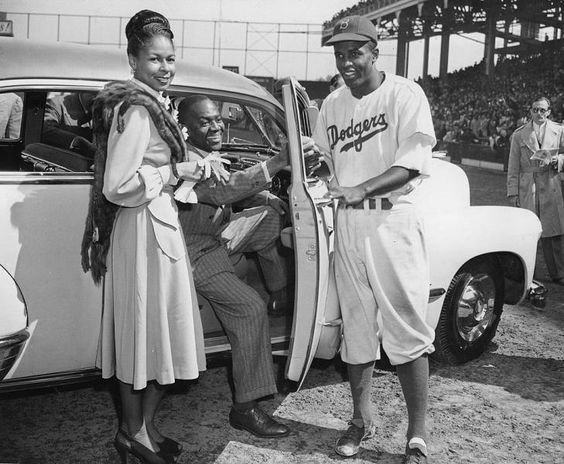
Brooklyn Dodgers baseball player Jackie Robinson (right) receives the keys to a car from tap dancer Bill “Bojangles” Robinson (center) as Jackie Robinson's wife, Rachel (left), looks on at Ebbets Field in New York. Photo Source: Teambrown
Jackie Robinson died of a heart attack at his home in Stamford, Connecticut, on October 24, 1972, at age 53. Nine days before, he had attended Game 2 of the 1972 World Series, where he expressed hope for the first Black manager in MLB.The legacy of Jackie Robinson persists and stands in the face of hateful policies and practices. Because of his courage and commitment to his sport, the civil rights movement was propelled forward, and his advocacy efforts persist today.
Reflection Questions
Jackie Robinson faced racism from fans, opposing players, and even his own teammates, yet he persevered. What gives you the strength to stand up against injustice when others oppose you?Branch Rickey saw baseball as a place where he could start addressing racism. Where do you see opportunities in your own work or community to challenge discrimination?The Trump administration recently removed references to Jackie Robinson's military service and DEI content from official sites. How can we ensure that important civil rights histories like Robinson's are preserved?
Learn More
Watch 42, a 2013 film starring Chadwick Boseman that brought Robinson's story to modern audiences.Read I Never Had It Made: An Autobiography of Jackie Robinson for Robinson's own account of his experiences and philosophy.Explore the Jackie Robinson Foundation, established by Robinson's widow Rachel in 1973, which provides scholarships and leadership development for minority students.Visit the National Baseball Hall of Fame in Cooperstown, New York, which houses extensive Robinson artifacts and exhibits.Watch The Jackie Robinson Story, the 1950 biographical film in which Robinson played himself, offering a unique historical document of how his story was understood in its immediate aftermath.
Never miss a story
Get stories of overlooked and untold Black history in your inbox, free every week.