Haiti Independence Day
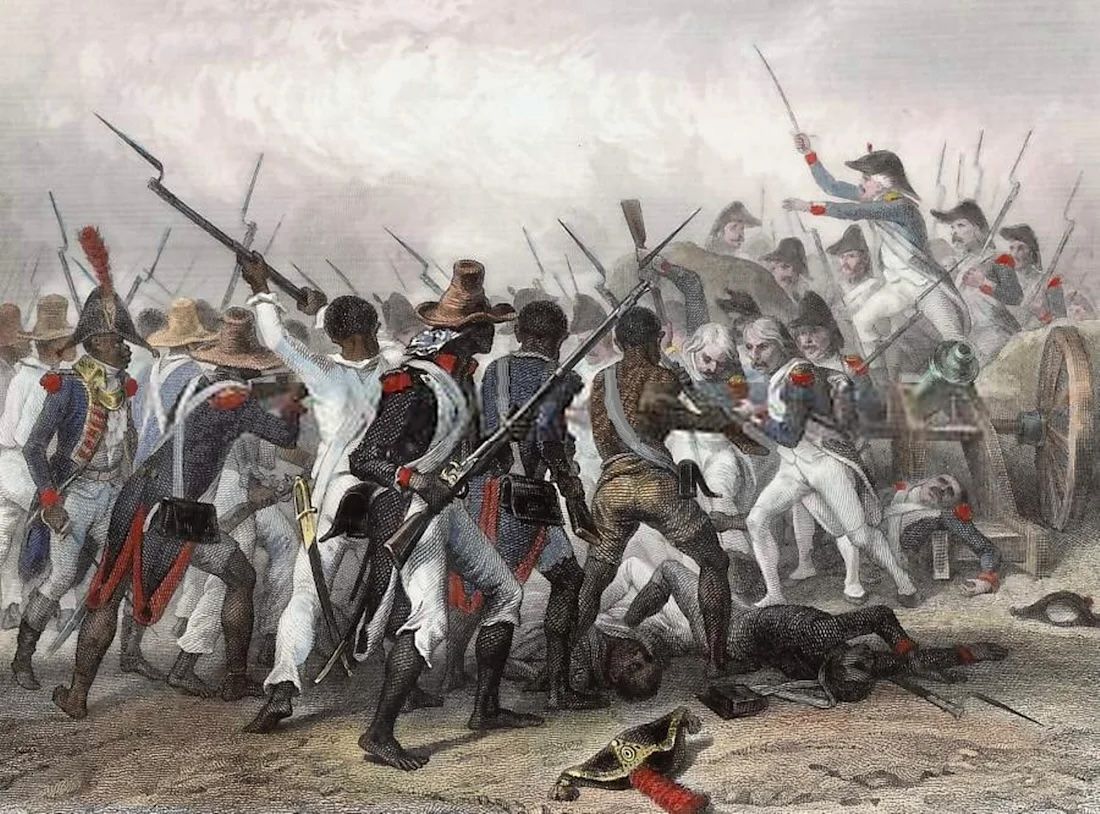
An engraving entitled "Attack and take of the Crête-à-Pierrot (4 - 24 March 24, 1802)” by Auguste Raffet and Ernst Hébert. The Battle of Crête-à-Pierrot was a major battle during the period where French attempted to regain control of Saint-Domingue. Image Source: NMAAHC
On January 1, 1804, in the port city of Gonaïves, Jean-Jacques Dessalines stood before a crowd and declared that they were free. Once a French colony named Saint-Domingue, they were now an independent nation, the second in the Western Hemisphere and the only Black republic in the world. He returned its name, Haiti, meaning "land of high mountains" in the native people's language. This moment marked the end of thirteen years of revolt against French colonial rule.
Until this moment, the colony of Saint-Domingue had been one of France's most important possessions—built on the forced labor of enslaved Africans. During its century-long occupation, the French had transported nearly a million enslaved African people to the island, more than any other part of the French Caribbean. The colony made approximately 40% of Europe's sugar and 60% of its coffee, and was the most valuable colony in the West Indies. But even though the French Revolution was unfolding abroad, it gave the oppressed people of colony a blueprint to how they could claim their freedom.
Leaders like Toussaint L'Ouverture, an enslaved African man, organized an effective resistance, uniting the community around shared ideals and creating an army that could swiftly coordinate and attack French troops. Spain, eager to fuel unrest in the region, chose to support their move for freedom, and Britain invaded the island to claim it as their own, only further muddying the situation. France, clear they couldn't stave off the revolt and fight Spain and Britain on the island, acquiesced, and abolished slavery in the region in 1793.
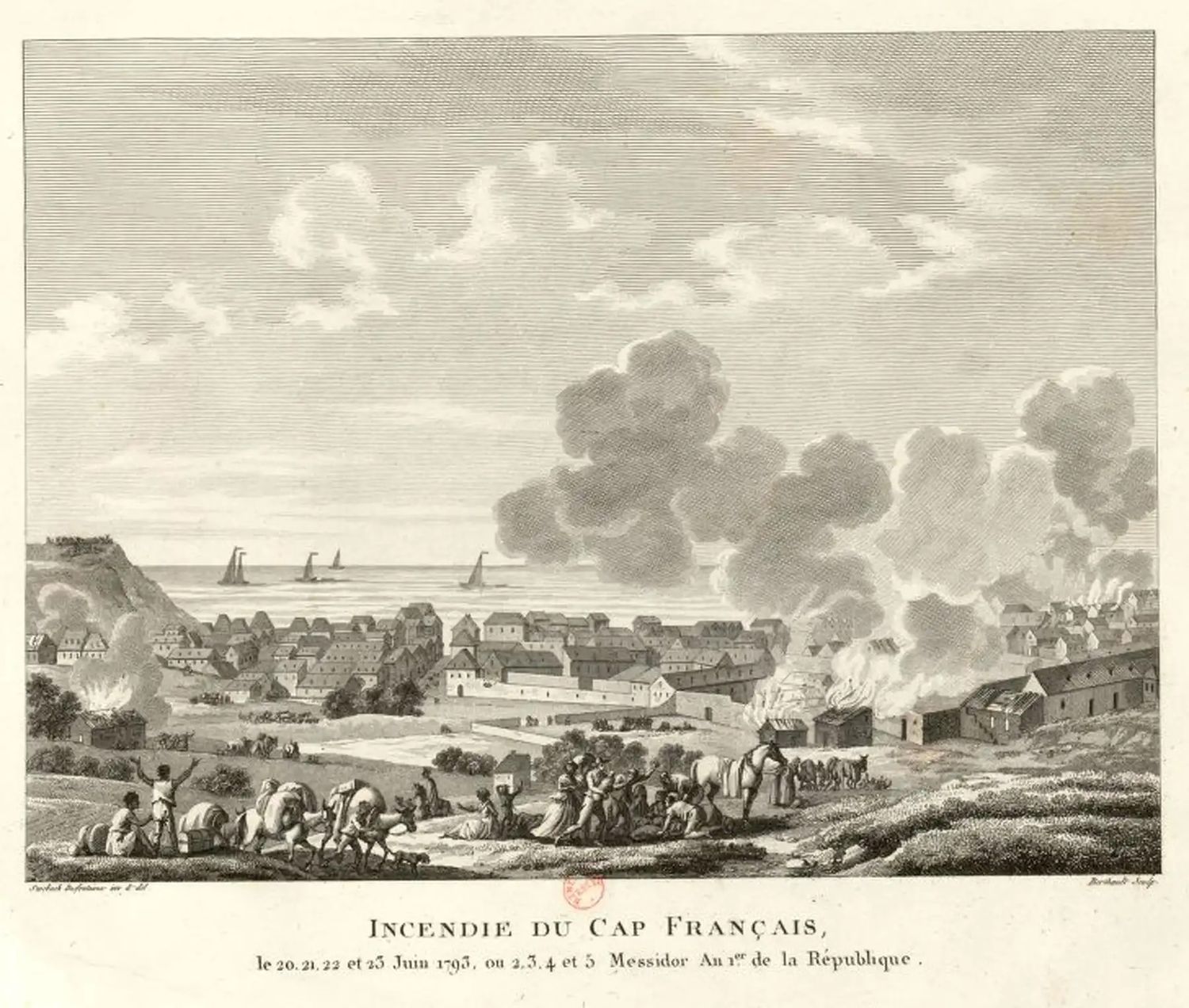
A lithograph of The Battle of Cap-Français in 1793, one of the many battles that led to the rebel’s win, made in 1795. The image depicts French colonists fleeing the city by sea as the fighters rejoice amidst destruction on the shores. Image Source: NMAAHC
Or at least until 1799, when Napoleon seized power in France. He was intent on reclaiming the empire France once had in the Western Hemisphere, and needed the colony of Saint-Domingue to generate enough money to fund it. So, he had troops sent to the colony to capture L'Ouverture, its de-facto leader, and reinstate slavery, which was met with immediate opposition. A guerrilla war broke out. Both sides fought viciously, but the rebels had the home-field advantage. There were also waves of yellow fever that decimated French troops. Finally, on November 18, 1803, Dessalines, who adopted L’Ouverture’s role after his imprisonment, led forces to victory at the Battle of Vertières, defeating the remaining French troops.
Now free, Haiti faced some massive challenges, many of which it still struggles with today. The nation had lost nearly 200,000 people during its fight for freedom. Its economy was now in ruins. Plus, in 1825, the French demanded that Haiti pay 150 million gold francs as reparations to France's former slaveholders for the "property" they lost through the revolt. It took Haiti over 100 years to pay this back, further bankrupting the country.
The revolution challenged the institution of slavery throughout the Americas and inspired liberation movements worldwide. For enslaved people in the states, the revolt acted as a beacon of hope. It inspired the 1811 German Coast uprising, the largest rebellion led by enslaved people in U.S. history, and inspired revolts led by Denmark Vesey and Nat Turner. It also helped to shape the Pan-African identity we know today, and encouraged Black people to see our unique struggles against oppression as interconnected, building our collective intellectual and political power. It even contributed to changing the shape of the country–literally. Discouraged by the threat of revolt, Napoleon sold the Louisiana Territory to the United States in 1803.
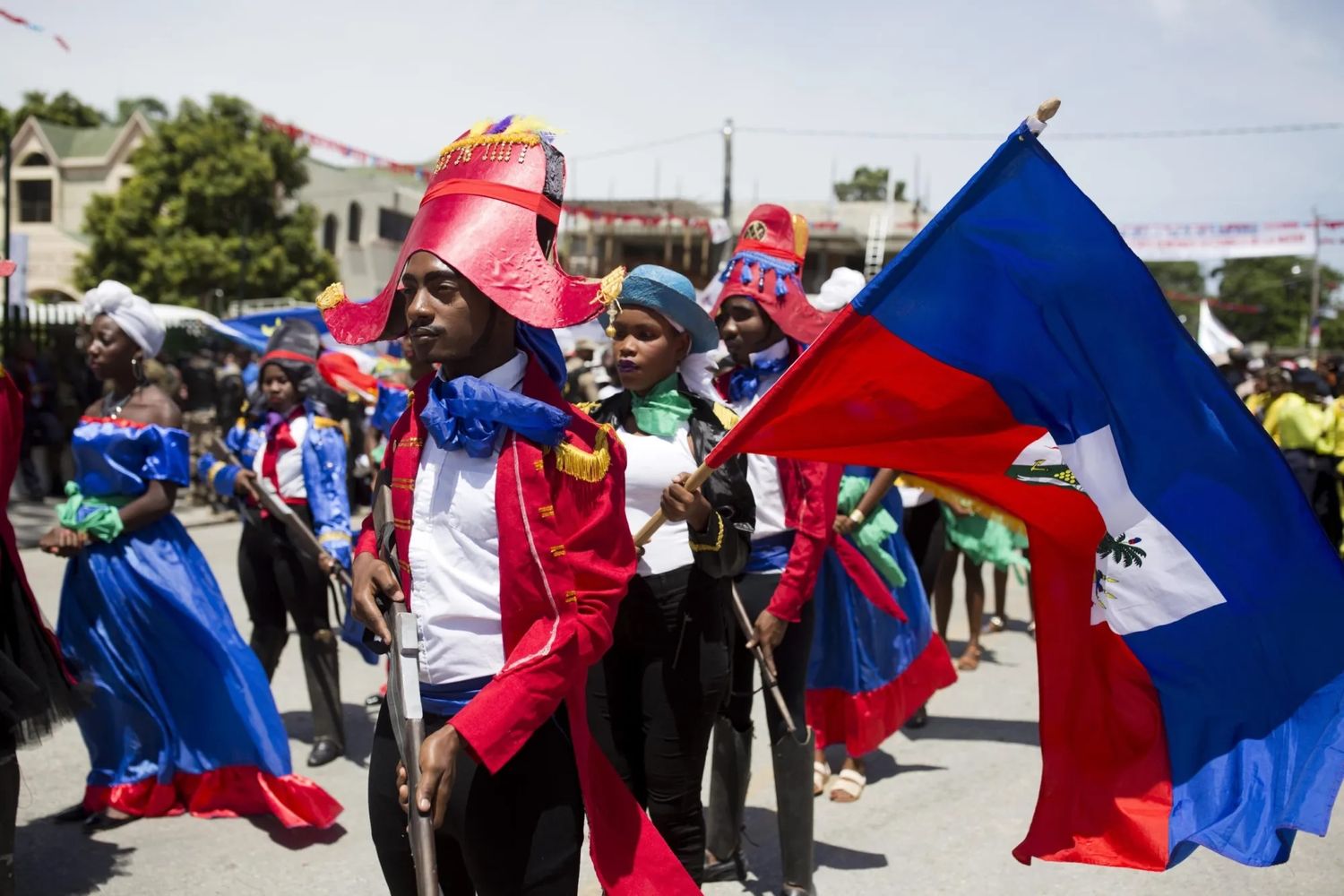
A photograph of a young man dressed as independence hero Jean Jacques Dessalines marching with others celebrating Haiti’s independence in 2018. Photo Source: AP.
Now, Haiti Independence Day is officially commemorated on January 1st with government ceremonies, military parades in Port-au-Prince, the nation’s capital, and patriotic speeches by officials. The national anthem "La Dessalinienne" is sung at official gatherings, and wreaths are laid at monuments dedicated to revolutionary heroes. Haiti Independence day celebrations can be found in cities around the world. November 18th, the date of the final battle, is commemorated as Armed Forces Day, honoring all those who fought for their country and the liberation of Black people worldwide. And January 2nd is known as Ancestors' Day, a day of remembrance of those that lost their lives during the Revolution.
The central tradition of the day is eating and preparing soup joumou, a hearty pumpkin soup. During the colonial era, enslaved Haitians grew the squash and prepared the soup for French masters but were forbidden from eating it themselves. On the first Independence Day in 1804, Marie-Claire Heureuse Félicité Bonheur Dessalines, Haiti's first empress and Jean-Jacques Dessalines's wife, is said to have distributed the soup to freed Haitians. Since then, eating soup joumou on January 1 has symbolized freedom and dignity. In 2021, UNESCO recognized the practices surrounding soup joumou as part of the Intangible Cultural Heritage of Humanity.
Reflection Questions
What other revolutions throughout history have you learned about? How have they influenced your understanding of protest and dissent? Soup joumou went from a forbidden food under slavery to a powerful symbol of freedom and dignity. What other foods or dishes do you know of that communities have reclaimed?
Learn More
Use this resource from PBS if you want to teach about the Haitian Revolution to middle school and high school students.Watch this video to learn about what sparked the Haitian Revolution, and the distinct social groups in the colony that played a role in the rebellion.Abolitionist Frederick Douglass was deeply moved by the Haitian Revolution, and also served as the United States’ first Black ambassador to the country from 1889-1891. Read his speeches about Haiti to learn more about how it inspired his activism.Learn the stories of women whose bravery and strength propelled the Haitian Revolution. Read Myriam J.A. Chancy’s, Framing Silence: Revolutionary Novels by Haitian Women, which highlights stories about the revolution from women’s perspectives.Learn how to make soup joumou in this cooking tutorial.Read “From Harlem to Haiti,” an article that highlights how Haiti influenced the Harlem Renaissance.
Never miss a story
Get stories of overlooked and untold Black history in your inbox, free every week.