Harriet Tubman Day
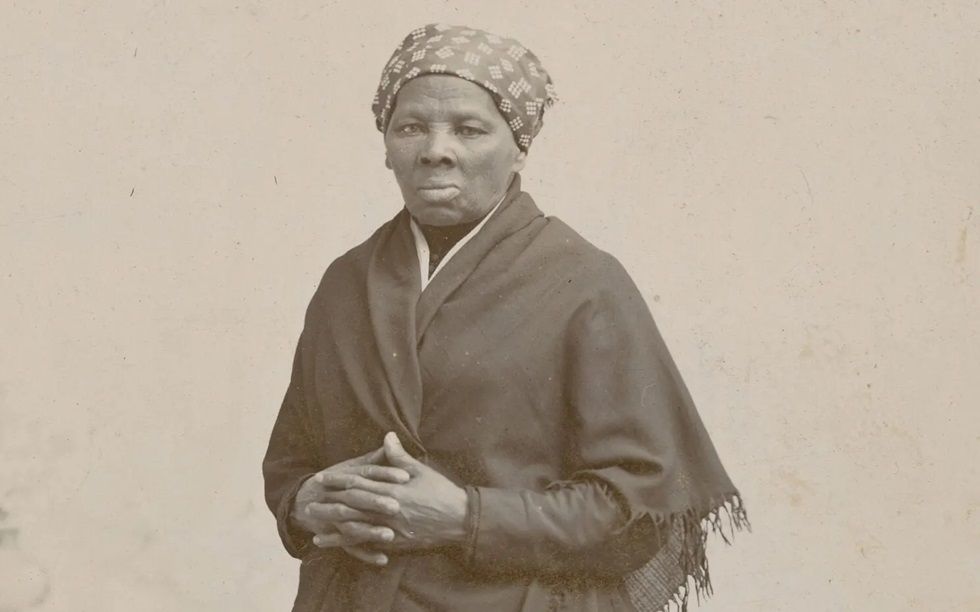
A sepia toned image of Harriet Tubman looking at the camera wearing a bandana around her head and a shawl draped around her shoulders. Her hands are clasped in front of her and she looks at the camera with a solemn gaze. Photo Source: Library of Congress
On March 10 each year, Americans pause to honor Harriet Tubman, a woman who risked everything to lead others from slavery to freedom. Born around 1822 in Dorchester County, Maryland, Tubman entered the world as Araminta Ross, the daughter of enslaved parents Harriet Green and Benjamin Ross. Her early years were marked by separation and hardship. Her enslaver, Edward Brodess, rented her out to work for other families starting when she was just six years old, taking her away from her mother and siblings for long stretches of time.
When Tubman was thirteen, she was at a local store when she encountered an enslaved person trying to escape. Trying to stop the runaway, an enslaver threw a two-pound weight in their direction. It missed the runaway and hit Tubman in the head instead. The blow fractured her skull and left Tubman with chronic headaches, hallucinations and sudden sleeping spells. During these episodes, Tubman experienced vivid visions that she understood as messages from God, showing her a path to freedom.
Despite her injury, Tubman was forced back to work in the fields immediately. She later recalled working "with the blood and sweat rolling down my face til I couldn't see." Over time, she negotiated with her enslaver to choose her own work assignments as long as she paid him a yearly fee. These jobs took her to different parts of Maryland, and she learned from each place: she worked alongside her father in timber fields, giving her insight into the forest. She worked late on farmland in the marshy terrain, giving her time to study the stars. On the docks, she connected with Black sailors who told her about the Underground Railroad, a network of people and safe houses that was routing enslaved people to freedom.
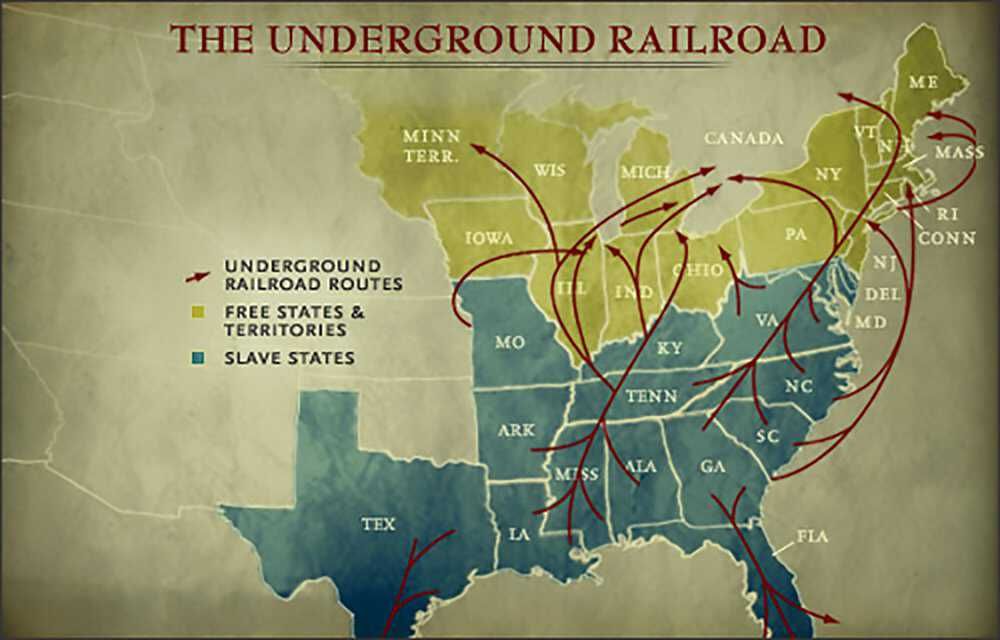
A map of the eastern side of the United States, which shows which states were slave states, which weren’t, and the general direction of the journeys enslaved people would take to find freedom in the North. Photo Source: New York Public Library
By 1849, her enslaver was in financial trouble and was considering selling her and her brothers. Tubman refused to wait for that fate, and, using her new connections, devised a plan for the three of them to escape to Philadelphia. They set off as a team until they heard that their enslaver's widow had posted a reward for their return. Her brothers, fearful of recapture, turned back, and Tubman continued alone, guided by the North Star and helped by abolitionists along the way.
In Philadelphia, Tubman met William Still, a conductor on the Underground Railroad. Tubman learned the system and soon returned to Maryland to bring her family to freedom. Between 1850 and 1860, she made nineteen trips back to states where slavery was still legal, and led about seventy people to freedom. The 1850 Fugitive Slave Act, which incentivized everyday people and law enforcement to return escaped slaves to their enslavers, made travel to the north more dangerous, so Tubman started taking people all the way to Canada.
Enraged, enslavers posted bounties for Tubman's capture. One was for $40,000, which would be worth over $1.5 million today. But she persisted, and through her years of travels never lost a single person. "I never ran my train off the track and I never lost a passenger," she said proudly. People called her "Moses" after the biblical figure who led his people to freedom.
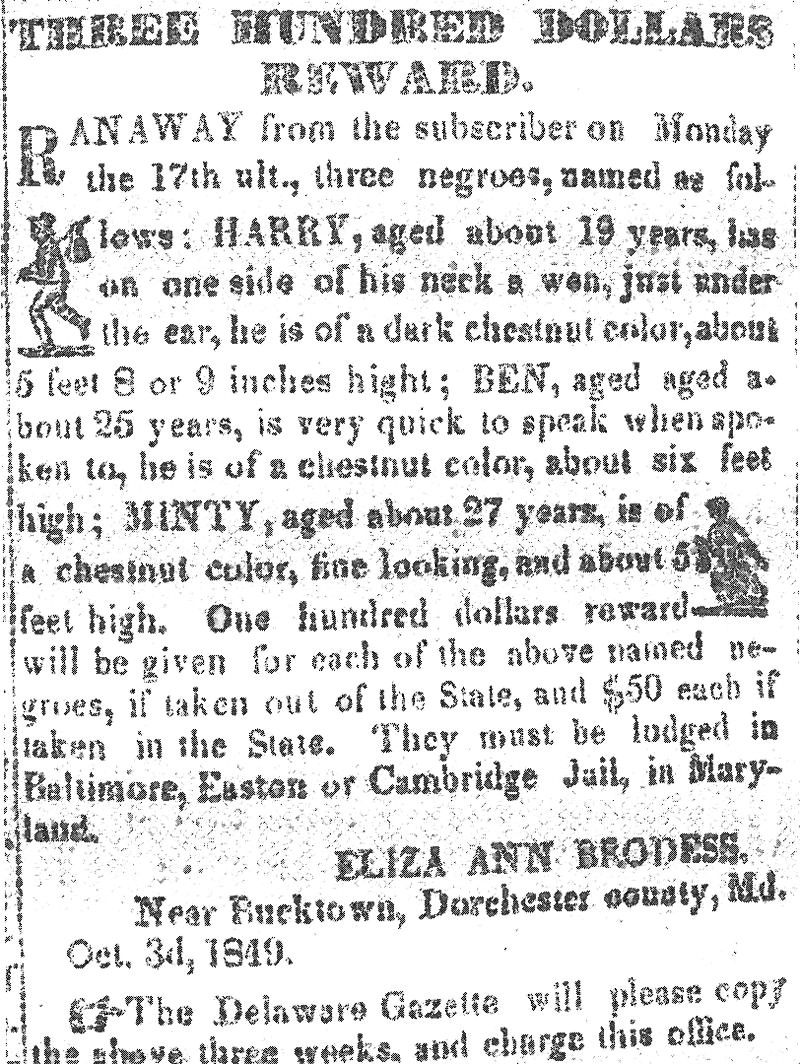
An image of a black and white notice published in the newspaper Cambridge Democrat (1849), offering a reward for the return of Harriet Tubman’s two brothers, posted 3 October 1849. Image Source: Wikimedia Commons
When the Civil War began in 1861, Tubman joined the Union Army as a nurse, treating wounded soldiers with natural medicines. In 1863, she became a scout and organized formerly enslaved people to work as spies. She helped plan the Combahee River Raid in South Carolina, which freed about 750 enslaved people and destroyed several plantations. This made Tubman the first woman in American history to plan and lead a military raid. In 2021, the Army recognized this achievement by inducting her into the Military Intelligence Corps.
After the war, Tubman settled in Auburn, New York, with her second husband, Nelson Davis. She founded the Home for the Aged to care for elderly Black people who had no one to help them. She also worked with women fighting for the right to vote by attending conferences and speaking about freedom and equality. When she died on March 10, 1913, at age ninety-one, she had spent her entire life helping others find freedom.
A black and white photograph of Tubman (far left) posing alongside her husband Nelson Davis, adopted child Gertie, Lee Chaney (neighbor's child), "Pop" John Alexander (elderly border in Tubman's home), Walter Green (neighbor's child), Blind "Aunty" Sarah Parker (elderly border), Dora Stewart (great-niece and granddaughter of Tubman's brother Robert Ross aka John Stewart), taken in 1887 in Auburn, NY. Photo Source: The New York Times
The push to create Harriet Tubman Day began decades after her death. On March 6, 1990, the United States Senate passed a joint resolution to establish the holiday. The House of Representatives passed it the next day. President George H.W. Bush signed Proclamation 6107 on March 9, 1990, making March 10 an official day to honor Tubman's courage and legacy. The date was chosen because it marks the day she died, though it also happens to be close to her birth month.
New York made Harriet Tubman Day an official state holiday in 2003. Maryland, where Tubman was born and conducted many of her rescue missions, began its own annual celebrations in 2000. Each year on March 10, Maryland presents the Harriet Ross Tubman Lifetime Achievement Award to someone carrying forward her legacy. The state also hosts lectures, readings of the governor's proclamation, and programs honoring her work. In 2017, the Harriet Tubman Underground Railroad Visitor Center opened in Maryland, giving people a place to learn about her life and the routes she traveled. In 2024, the United States Mint released commemorative coins featuring her image, and Maryland's governor posthumously named her a brigadier general on Veterans Day.
Harriet Tubman Day reminds us of one woman's determination to fight for freedom despite the daunting risks. Her story shows what people can accomplish when they refuse to accept injustice and work tirelessly to help others. Every March 10, communities across the country honor not just what she did, but what she represents—the belief that everyone deserves freedom and dignity.
Reflection Questions
Tubman used her knowledge of Maryland's landscape and connections with helpful people to guide others to freedom. What knowledge or connections do you have that could help someone in your community?Despite facing chronic pain and the constant threat of capture, Tubman made nineteen dangerous trips to bring others to freedom. What cause or person in your life is worth taking risks for?Tubman spent her later years running the Home for the Aged and supporting women's right to vote. How can you continue working for justice even after achieving your own goals?
Learn More
Take a virtual tour of some of Tubman’s items on display at the National Museum of African American History and Culture, including a brick from her home and a shawl gifted to her from Queen Victoria.Learn more about the Underground Railroad.There’s been much controversy over Harriet Tubman’s physical looks, a conversation that grew when consideration began to add her to the $20 bill. Read more about it and the importance of honoring her life and legacy accurately.Watch the 2019 film Harriet starring Cynthia Erivo on Netflix.Read the book She Came to Slay: The Life and Times of Harriet Tubman by Erica Armstrong Dunbar for an overview of her life, or Night Flyer: Harriet Tubman and the Faith Dreams of a Free People by Tiya Miles for a look at the communities that propelled Tubman’s work forward.
Never miss a story
Get stories of overlooked and untold Black history in your inbox, free every week.