Homecoming
Before the Civil War, most African Americans in the United States were enslaved. Getting an education was nearly impossible, especially in the South. In many places, it was actually illegal for Black people to learn to read and write. In response, Black communities partnered with religious missionary organizations and the Freedman's Bureau to open their own, but these were limited.
Things changed when the Morrill Land-Grant Act of 1862 was passed, which gave states funding to open educational institutions. A second act, added in 1890, was aimed at Confederate states, which were still actively discriminating against their Black residents despite efforts during Reconstruction. These states were required to show that race wasn't considered as part of admission, or they'd have to create a separate school for Black people. Fearful of integration, Southern states chose the latter and moved to open schools for predominantly Black students. These historically Black colleges and universities (HBCUs) flourished, and by 1900, more than 90 institutions had been established.
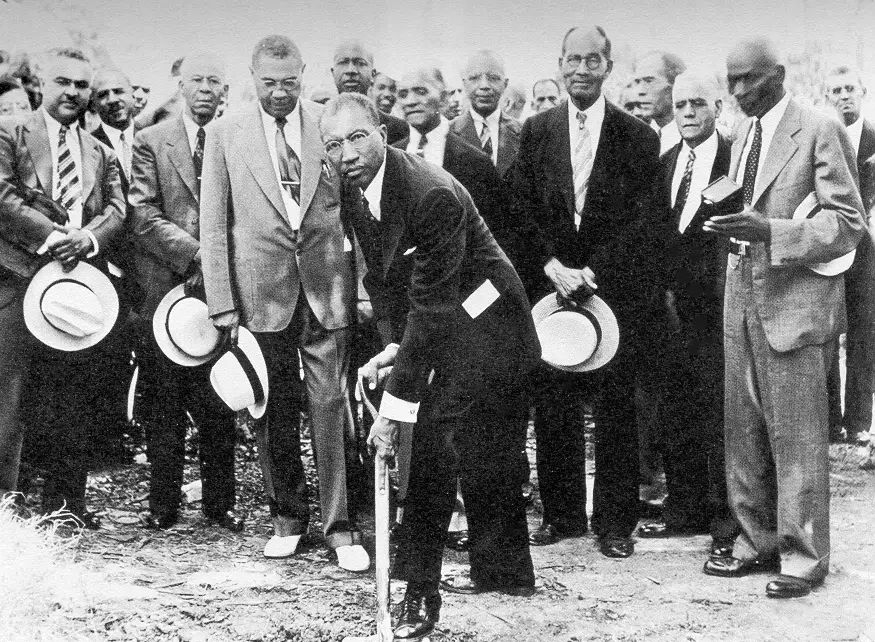
A black and white photograph of a groundbreaking ceremony at Clark Atlanta University, one of the first HBCUs in the South. The image depicts about a dozen men waiting one, center, press a shovel into the dirt in front of him. Photo Source: Georgia Encyclopedia
These universities provided educational opportunities to people who had been historically disenfranchised from learning. A story from APM highlights how one Black man, Zach, grew up enslaved on the Hubert plantation in Georgia. After becoming freed, he and his wife had twelve children, each of whom was able to attend college when grown. Opportunities like these changed the trajectory for generations of families, and helped to spark the Great Migration of Black people moving north to find jobs with the skills they acquired while studying.
They also shaped the Black intellectual movement by creating space for prominent leaders to learn from educators and one another. Booker T. Washington, W.E.B. Du Bois, Dr. Martin Luther King Jr., Stokely Carmichael, Dr. Joseph Lowery, and Diane Nash attended HBCUs, and that time in classrooms and on campuses shaped their ideas of racial equity and liberation.
HBCUs were also at the center of the civil rights movement of the 1960s. Students would galvanize their campuses for change. A famous example was on February 1, 1960, when four freshmen from North Carolina A&T State University sat down at a "whites only" lunch counter in Greensboro. When they were refused service and asked to leave, they stayed in their seats. Now known as the Greensboro sit-in, this peaceful protest sparked a series of nonviolent protests against Jim Crow that spread across the South. The students who led these protests would also join the Student Nonviolent Coordinating Committee, a coordinated group for direct action that engaged colleges across the country.
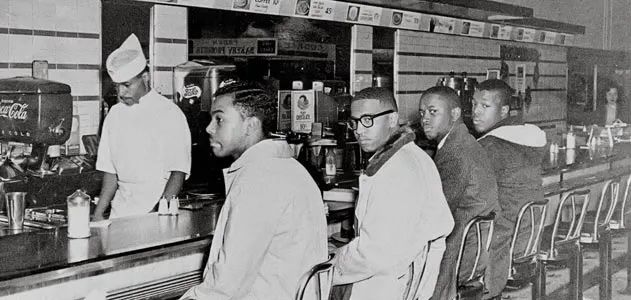
A black and white photograph of four students–Joseph McNeil, Franklin McCain, Ezell Blair Jr., and David Richmond–seated at the “whites only” counter to protest racial segregation. Photo Source: Jack Moebes / Corbis
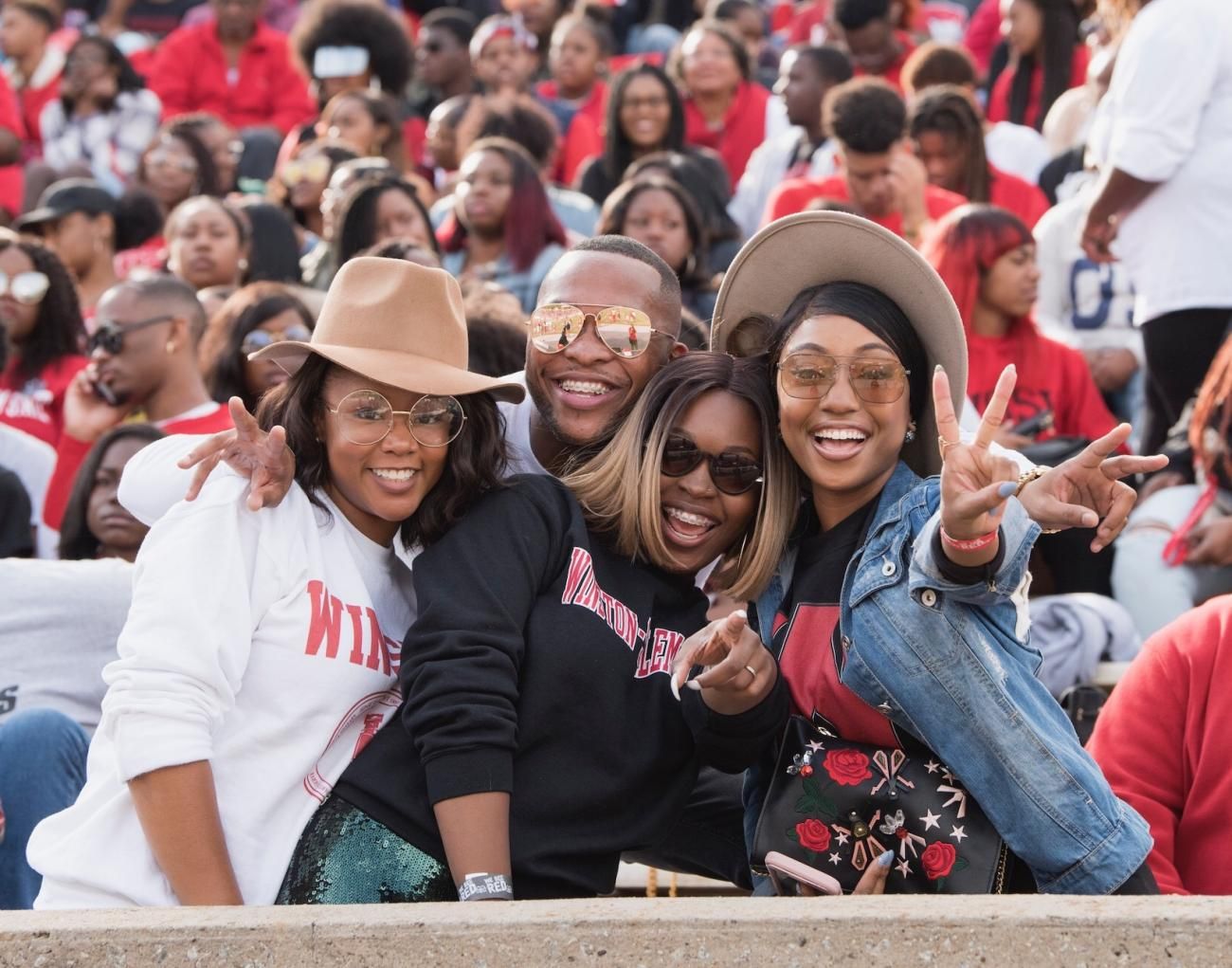
Above all else, HBCUs gave Black people a safer space to gather, connect, ideate, and rest with one another during the violence of Jim Crow. It was common for white people to attack gatherings of Black people, whether at church, school, or a casual night out. Celebrations on campus became not just social outings, but a form of resistance; a reclamation of joy and togetherness in a world intent on destroying and ostracizing them. One of these is homecoming, an annual tradition that has come to define not just HBCU life, but Black culture altogether.
There are conflicting accounts of which school started homecoming first, but they quickly became a common practice at universities–HBCUs and otherwise–in the early 1900s. They almost always center a football game where alumni are invited to "come home" to enjoy the festivities, connect with new students, and consider being a supporter of the university. The festivities center around the game, including tailgating, watching the marching band and majorettes, and enjoying a halftime performance. Held in October each year, homecoming at HBCUs can also include parades, concerts, dance performances, and other events held around the game.
Homecomings have become so enduring in Black culture that they've defined culture at large. They're responsible for introducing step dance, a percussive form of dance with African roots, to the broader community, which influences tap, cheerleading, and other forms of movement, and inspiring the movies Drumline and Stomp The Yard. Beyoncé's 2018 Coachella performance and subsequent live album, Homecoming, were directly inspired by the HBCU experience, showcasing marching bands, stepping, and majorettes to a global audience.
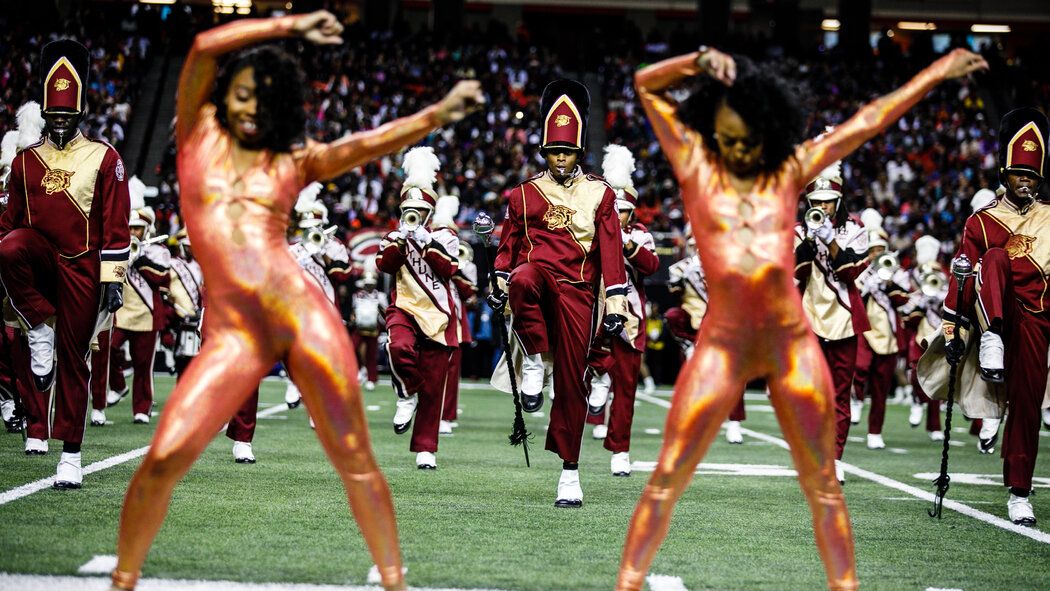
A photograph of Bethune-Cookman University "14 Karat Gold" dancers alongside their marching band performing on the field at homecoming. Photo Source: NYTimes.
Today, HBCUs endure as a key driver for economic mobility, culture,and community. Despite representing only 3% of colleges and universities in the country, they produce nearly 20% of all Black graduates with an undergraduate degree. 40% of all Black engineers, 50% of Black lawyers, and 80% of Black judges have graduated from HBCUs, demonstrating how important they've become to ensuring diverse representation in coveted, white-collar industries. And they are still a prominent hub for cultural moments, supporting a network of Black artists, activists, and influencers.
Yet HBCUs have remained historically underfunded. All HBCUs combined receive less federal research funding than a single large predominantly white institution (PWI). A 2023 analysis by the Biden administration and federal officials revealed that 16 states underfunded their land-grant HBCUs by approximately $12.6 billion over the past thirty years. This chronic lack of resources holds schools back from providing an equitable experience for their predominantly Black student base.
Reflection Questions
The piece describes HBCU homecomings and campus life as "a form of resistance." What are some current examples of communities creating spaces of celebration and connection in the face of ongoing challenges?What other organizations can you think of today are driving social change through college chapters?How do you find time to be around people that reflect your identities? To which extent do public spaces, like schools, libraries, etc. help you achieve that?
Learn More
Use Donorschoose to support classroom teachers who graduated from a HBCU.Read HBCU Experience: The Book, a collection of essays celebrating the Black college experienceRead stories of what homecoming means to these HBCU alums.Explore this list of famous people who have attended HBCUs through the years.
Never miss a story
Get stories of overlooked and untold Black history in your inbox, free every week.