Jamaica Kincaid
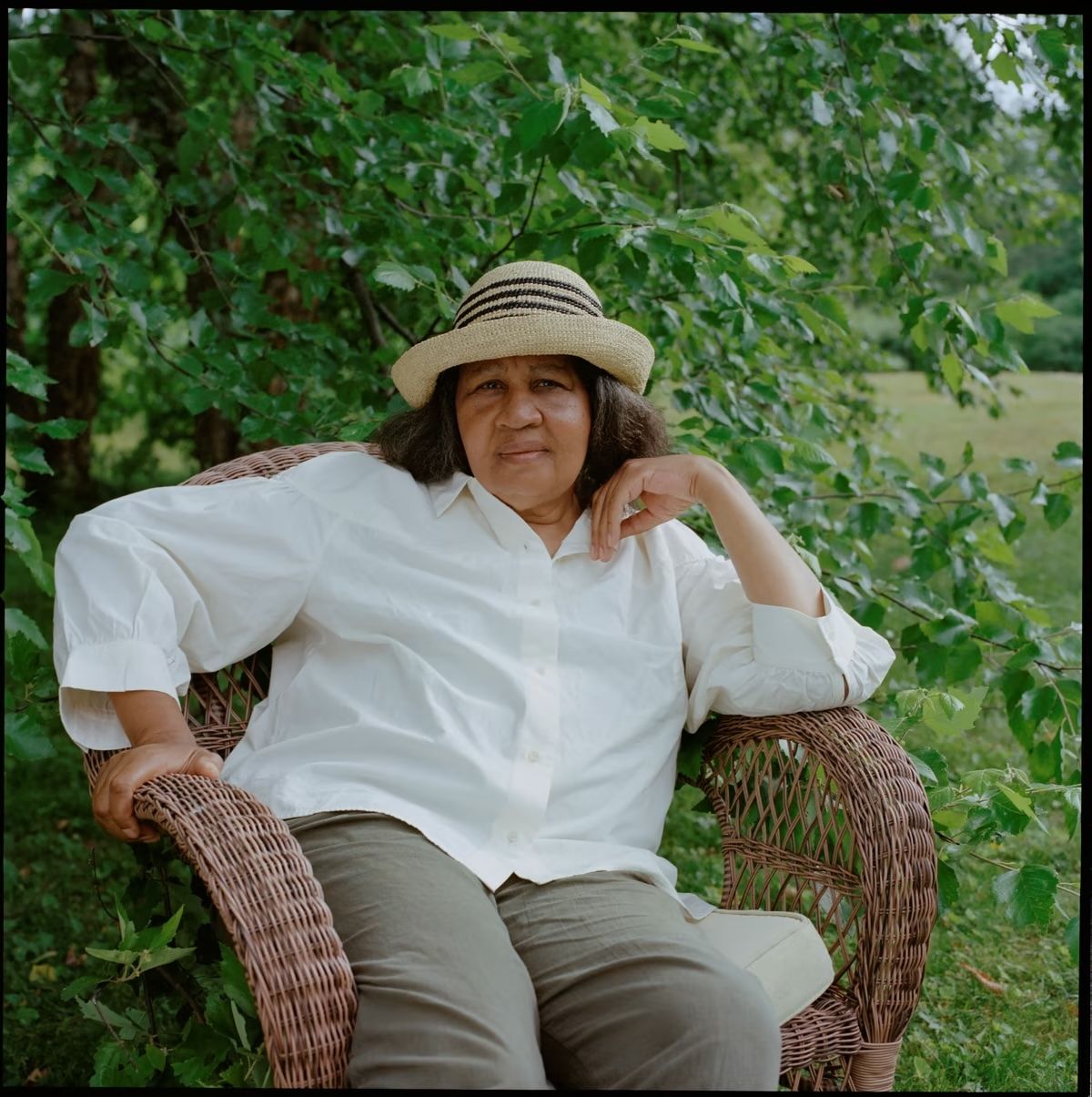
A color photograph of Kincaid, seated in an outdoor armchair in her garden in Vermont, wearing a striped hat, a white button down and green linen slacks, looking contemplatively at the camera. Photographed by Miranda Barnes. Photo Source: Financial Times
Jamaica Kincaid moved to the U.S. from Antigua to become an acclaimed author and Harvard professor. Her powerful writing confronts colonialism, family relationships, and displacement, giving voice to Caribbean and American experience.
Her work is deeply influenced by her gardening, giving us inspiration to explore our roots in a nuanced and intentional way.
World-renowned author and essayist Jamaica Kincaid was born Elaine Potter Richardson in 1949 in Antigua. The Caribbean island nation was at the time a British colony, as it would remain for the next three decades. At 16, Kincaid left school to support her family before being sent to New York to work as an au pair: a “sacrifice,” she would later say, sent to a foreign country to work as a servant (The Paris Review). She began taking community college classes and received a full scholarship to Franconia College in New Hampshire, where she studied for one year before dropping out and moving to New York City. After writing for a girls’ magazine, she was hired as a staff writer at The New Yorker in 1976. She wrote the “Talk of the Town” column for almost a decade and remained at the magazine for twenty years (African American Literature Book Club).
“I have no credentials. I have no money. I literally come from a poor place. I was a servant. I dropped out of college. The next thing you know I’m writing for the New Yorker, I have this sort of life, and it must seem annoying to people,” she later reflected (Salon).
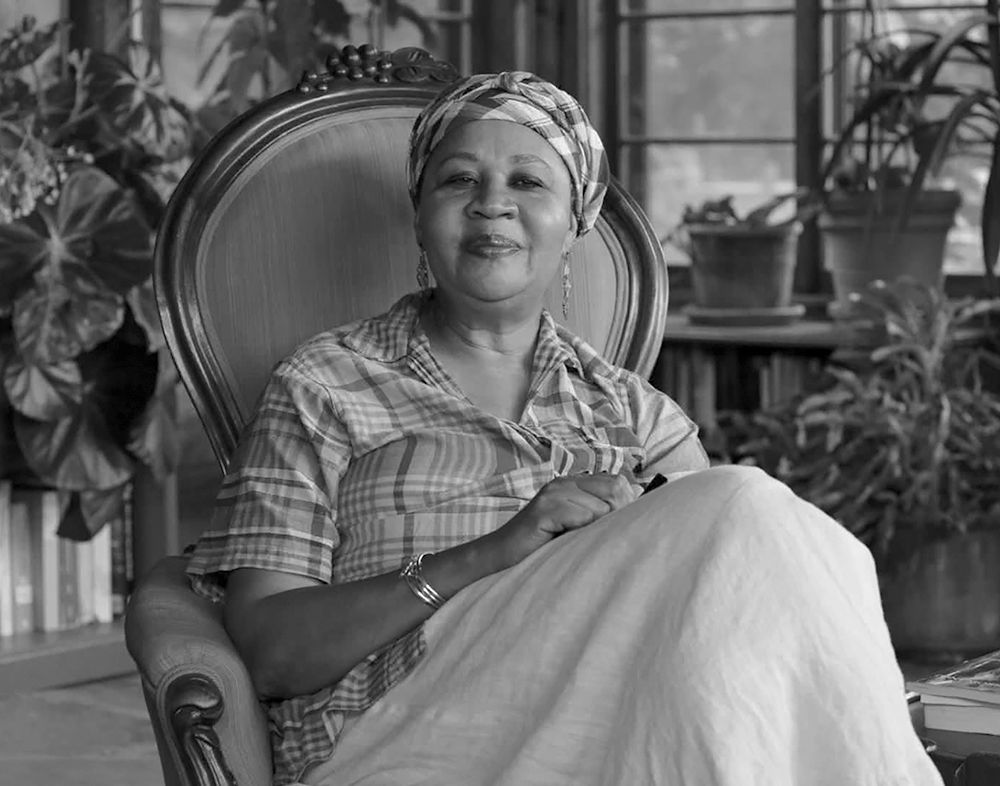
A black and white photograph of Kincaid, seated in an armchair in a light—filled room filled with plants and books. She is wearing a long skirt, plaid button down, and has her hair wrapped in a checkered scarf. Photo Source: The Paris Review
Kincaid’s published work includes a short story collection, At the Bottom of the River; novels Annie John, The Autobiography of my Mother, Mr. Potter, and See Now Then; a book on neocolonialism and tourism, A Small Place; and My Brother, which describes her brother’s experience with AIDS. She has also written on botany and gardening in work including My Garden and Among the Flowers: A Walk in the Himalayas. Kincaid is a professor at Harvard University in the English, African and African-American Studies Department (British Council Literature).
In her work, Kincaid explores family dynamics, the lingering legacy of colonization, the hypocrisy of American capitalism, and bigotry both in the Caribbean and in the United States. She writes from the “status of the uprooted subject,” blending genres to craft “elusive” works composed in a “deceptively simple and unadorned style” (British Council Literature).
“People only say I’m angry because I’m Black and a woman. But all sorts of people write with strong feeling, the way I do,” she pointed out. “But if they’re white, they won’t say it. I used to pretend I didn’t notice it, and now I just think I don’t care. There are all sorts of reasons to not like my writing. But that’s not one of them. Saying something is angry is not a criticism. It’s not valid. It’s not a valid observation in terms of criticism. You can list it as something that’s true. But it’s not critical” (Salon). “I suppose that my work is always mourning something,” Kincaid said in 2022. “The loss of a paradise–not the thing that comes after you die, but the thing that you had before” (The Paris Review).
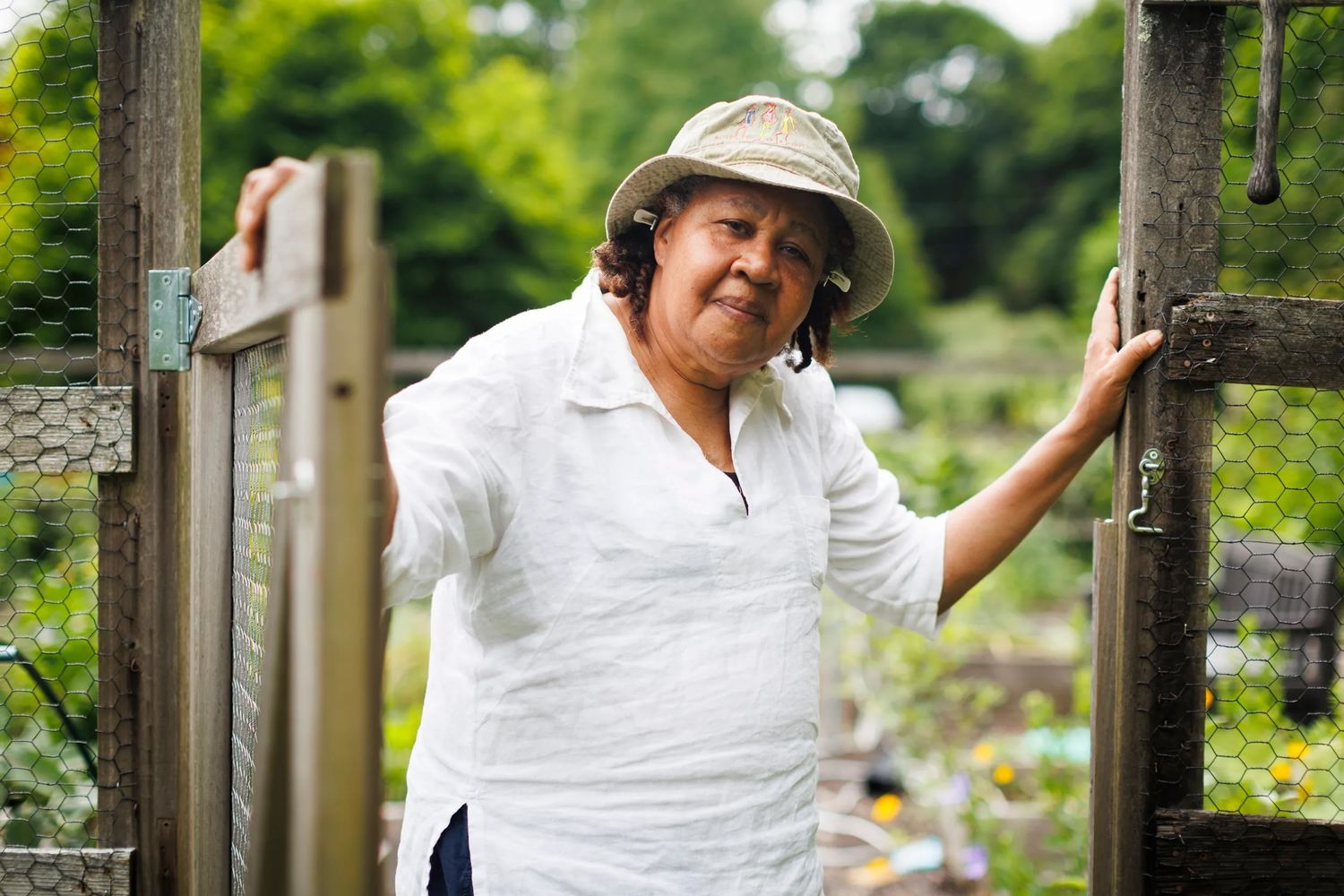
A portrait of Kincaid standing in her gardens, holding a fence door open, wearing a bucket hat and linen blouse, looking at the camera with a friendly gaze. Photo Source: Harvard Gazette.
Jamaica Kincaid's writing is deeply influenced by her love for gardens, which she views as a space for both personal reflection and a lens through which to examine colonialism and power dynamics. In "My Garden," Kincaid explores the role of gardens in colonial history, examining how the introduction of plants and gardening practices from colonizing powers impacted the colonized. She also sees gardens as a place for memory, a place for resistance., and most urgently – a place for hope.
“There’s hope in planting. You wouldn’t do it if you didn’t have hope that it would become the thing you have in your mind. Hope, oh gosh, I would say hope is as big an ingredient as fertilizing or composting.”
Jamaica Kincaid, in an interview for LitHub
Jamaica Kincaid's remarkable journey is powered by her unflinching truth-telling. Throughout her career, she has refused to compromise her voice or soften her critiques of colonial legacies and family complexities, and her works resonate because of their honesty. She has permanently shifted the literary landscape by insisting that the experiences of Black women, immigrants, and colonized peoples are essential to understanding our shared human condition.
Reflection Questions
Kincaid writes about the "loss of paradise" and explores the experiences of displacement and colonization. How do you connect to the ideas of home and belonging?Throughout her career, Kincaid has been labeled as "angry" when expressing strong opinions, particularly about colonialism and power dynamics. How might this reaction to her work reflect broader patterns in how society receives critical voices from marginalized communities? How does her refusal to soften her critique challenge readers to confront uncomfortable truths?
Learn More
Watch Kincaid talk about her writing approach in a series of interviews with the Louisiana Channel.Watch this fireside chat with Kincaid about The Hidden History of Gardens at the Chicago Humanities Festival. Explore these recommended reads by Kincaid including her latest, “An Encyclopedia of Gardening For Colored Children.”Go on a visual tour of Jamaica' Kincaid’s gardensRead Lucy, a short piece written by Jamaica Kincaid for the New Yorker
Never miss a story
Get stories of overlooked and untold Black history in your inbox, free every week.