Shelton Tappes
Day 21: Shelton Tappes
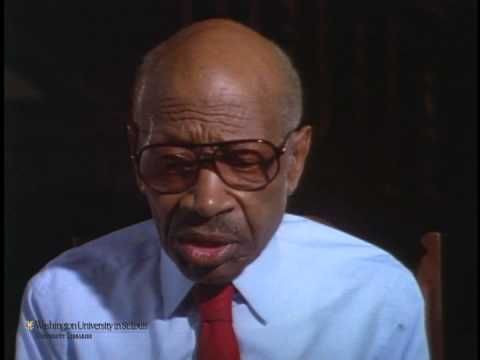
A video still of Tappes, center, wearing a blue button down shirt and a red tie and glasses, mid-conversation during a 1990 interview., speaking to a crowd at a disability and labor rights protest. Photo Source: Washington University Film and Media Archives
Shelton Tappes' leadership in the UAW during the 1930s and 1940s demonstrated how Black workers could build power within predominantly white unions while fighting for both labor rights and racial equality. Through his work at Ford's River Rouge plant and his leadership in UAW Local 600, he helped make the UAW one of America's most progressively integrated unions.
Shelton Tappes became a powerful figure in American labor history through his commitment to workers' rights and racial equality. Born in Omaha, Nebraska, he briefly attended the University of Nebraska before moving to Detroit with his family, and began working for Ford Motor Company in 1928 – first at the Briggs plant before moving to the River Rouge plant.
The Depression shaped Tappes' perspective. In a 1990 interview, he recalled the solidarity among working-class communities: "We had a common problem... we didn't have too much food and a lot of us couldn't pay the rent on time so we were closer together in those days." This community spirit crossed racial and ethnic lines. In 1932, he participated in the Ford Hunger March, where unemployed auto workers from all backgrounds attempted to present demands to Henry Ford. The company at the time was deeply anti-union, and the protestors were met with violence, resulting in five deaths.
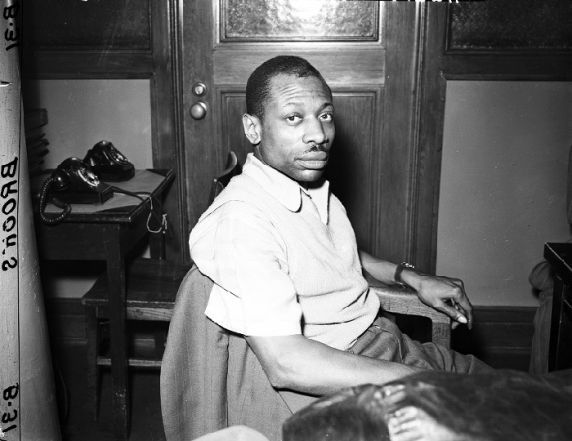
A black and white photograph of Tappes seated in pants and a polo, looking at the camera. Photo Source: The Reuther Library
Tappes' most prominent contribution to the movement came through organizing Black workers for the United Auto Workers (UAW). From 1937, he joined efforts to unionize Black workers in the Rouge plant. He helped organize the foundry unit and became its first chairman, overcoming skepticism in Detroit's Black community and stymied fears of harsh retaliation.
The UAW initially struggled to recruit Black workers at Ford because many felt loyalty to Henry Ford, who had hired them when other companies wouldn't. Many also feared Black workers would be "pushed aside and ignored" once the union secured their votes. Tappes worked to bridge this gap, speaking on local radio and collaborating with the National Negro Congress.
In 1941, Ford employees voted to join the UAW-CIO. As a member of the union negotiating team, Tappes drafted Clause #78 in the first Ford-UAW contract, an anti-discrimination provision that stated: "The provisions of this contract shall apply to all employees covered by this agreement, without discrimination on account of race, color, national origin, sex, or creed." This groundbreaking clause set a precedent for integrating civil rights protections in workplace agreements nationwide. The Ford-UAW contract, signed June 20, 1941, became a template for other organizations advocating for both racial and labor rights.
Tappes also demonstrated how their collective power could chane working conditions. In the same year, he helped organize a sit-in that demanded everyone in the foundry earn ninety-five cents an hour. This win raised the wages of almost half of the foundry workers.
From 1942 to 1944, Tappes served as recording secretary of his local union branch with more than 60,000 members. Though he later lost an election, the UAW hired him as an "authority on contract interpretation and grievance procedure." Tappes compared processing discrimination complaints to working in "a fire station," saying "when the bell rings we run to put out the fire."
Tappes and others recognized that labor rights and civil rights were intrinsically linked, a philosophy later echoed by William Lucy during the 1968 Memphis Sanitation Workers' Strike. Both understood that union organizing could advance economic and racial justice simultaneously.
His commitment extended beyond his professional work. His wife, Louise Tappes, co-founded the Women's Public Affairs Committee of 1000 in 1964, which included Rosa Parks among its members. Here’s a really beautiful firsthand account of what their relationship was like.
Shelton Tappes served as a UAW international representative until retiring in 1976. His legacy lives on in labor contracts that now routinely include anti-discrimination provisions and in the understanding that labor and civil rights are indivisible. His pioneering work helped transform the UAW into an advocate for both economic and racial justice, creating a template for future labor leaders.
Reflection Questions
Tappes had to organize Black workers who were sometimes skeptical of unions due to histories of discrimination. How can today's labor movement build trust across racial lines?
Consider how Tappes connected workplace organizing with broader community protection. What role should unions play in addressing social justice issues beyond the workplace?
Learn More
If you can only do one thing, watch this interview with Shelton Tappes for "The Great Depression" Pilot Episode, recorded in 1990.Visit the Walter P. Reuther Library at Wayne State University to explore their extensive UAW and Detroit labor history archives.Research the history of Local 600 through their union hall museum in Dearborn, Michigan.Study the oral histories of Black autoworkers in the Detroit Black Community Oral History Project.Read "The Rouge: Pictured in Its Prime" to understand the context of Tappes' organizing work.
Never miss a story
Get stories of overlooked and untold Black history in your inbox, free every week.